
Smells of smoke or damp in Binghamton, NY
You walk past the fireplace and get a sour, smoky, ashtray smell. Maybe a damp, musty edge to it. It is worse on warm days, worse in summer, and worse when the windows are shut and the air conditioning is running. Almost always, the smell is the creosote itself. Creosote is the tarry residue left on the flue walls by burning wood, and it holds odour the way a cold ashtray does. Add moisture to it and it gets much stronger.
Phones answered around the clock · free estimate
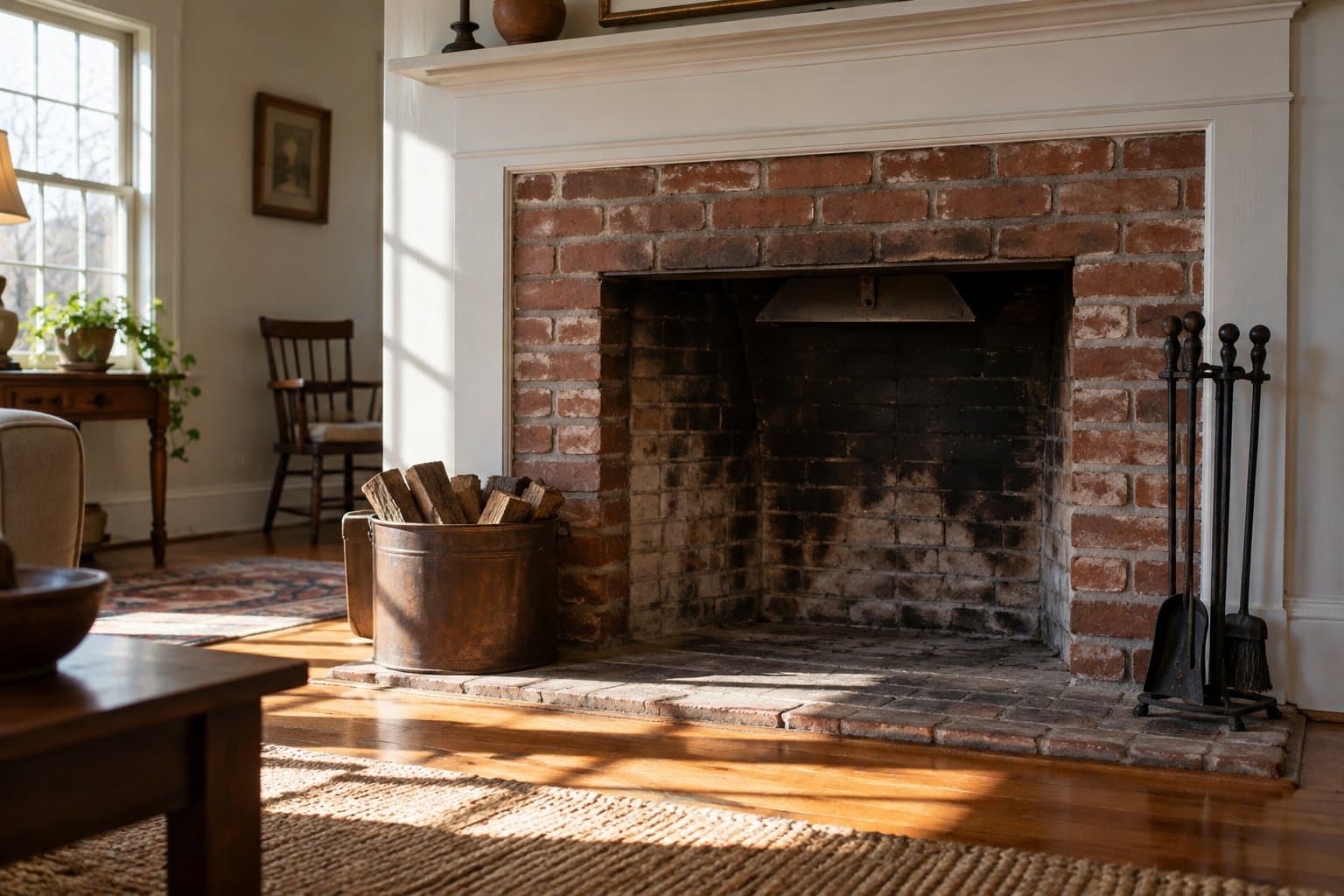
The second half of the problem is airflow. A chimney only smells into the room when air is moving down it instead of up. In summer, warm humid outside air meets a cool masonry flue and the draft reverses, so the chimney breathes into the house. Binghamton gives that a lot to work with. Summers here are humid, the area has some of the cloudiest, dampest weather in the country, and the long heating season from October through April means the flue has been loaded with creosote all winter. Much of Binghamton's housing predates 1940, and a lot of those original masonry chimneys were built for coal or oil and later lined for gas — tall, cool, absorbent flues that stay damp and hold smell.
While you wait — please don't
- Do not treat headaches or nausea as a smell problem. If anyone in the house has headaches, nausea, dizziness or drowsiness along with the odour, treat it as carbon monoxide until proven otherwise — get everyone outside into fresh air and call 911.
- Do not shut the damper and spray air freshener. Masking the smell hides a flue that may still be full of fuel, and the creosote that is causing the odour is the same creosote that burns in a chimney fire.
- Do not burn to 'clear it out'. A fire in a dirty flue adds creosote rather than removing it, and if the smell comes with smoke pushing back into the room, stop using the fireplace until it has been inspected.
- Do not assume a damp smell means only damp. Water getting into the flue through a cracked crown, a failed cap or bad flashing soaks the creosote and also rots mortar and liners out of sight.
What the technician does
- Inspection first, price secondThe technician looks at the chimney before quoting anything. You get the price and the reasoning before any work begins, and you approve it first.
- Sweeping the flueBecause the smell is usually the creosote itself, removing it is the main fix. A proper sweep takes the deposits off the flue walls and the smoke chamber rather than just the firebox.
- Finding and closing the moisture pathWater makes the odour far worse, so the cap, the crown and the flashing get checked. Closing the path that lets rain and snowmelt into the flue is part of solving the smell, not a separate job.
- Clearing nests and animal debrisLeaves, twigs, nesting material and droppings rot in a damp flue and smell strongly. They also block draft, which makes the chimney more likely to push air down into the room.
- Damper repair or a top-sealing damperA throat damper that no longer seals lets the flue breathe into the house all summer. A top-sealing damper closes the flue at the top instead, which keeps warm humid air and odour out of the chimney entirely.
- Looking at house pressureBath fans, kitchen fans, dryers and a tight house can pull air down the chimney. The technician considers how the house is pulling air before deciding the odour is purely a flue problem.
Why this happens in Binghamton, NY
Binghamton's weather is the hard part. Repeated freeze-thaw cycles crack chimney crowns and open mortar joints, and once water has a way in, it stays in — the flue absorbs it, the creosote gets wet, and the smell shows up months later in July. The same damp, cloudy pattern that keeps the region humid in summer keeps unused flues from ever drying out properly. Houses on the steep hillside streets of the North Side and East Side, and the older stock on the West Side and First Ward, often have tall chimneys that have been standing through those cycles for decades.
Timing matters too. Across New York, demand climbs in late summer and fall as people get ready for the heating season, and again mid-winter when draft and odour problems surface. Locally the same pattern holds, with a second spike at the spring thaw when freeze damage comes to light. If you are smelling the chimney now, getting it swept and the moisture path closed before October means the flue goes into the Binghamton heating season clean and dry instead of carrying a winter's worth of creosote into the next one.
Questions people ask
- Why is the smell worse in summer than in winter?
- In winter the fire pushes air up the flue, so the odour goes outside with the smoke. In summer the flue is cool and the outside air is warm and humid, so the draft reverses and the chimney breathes into the room. Binghamton's humid summers make that reversal very common.
- Will sweeping alone get rid of it?
- Often it does a great deal, because the creosote is the source of the smell. But if water is still getting in through the crown, cap or flashing, or a damper no longer seals, the odour tends to come back. That is why the technician looks at the whole path rather than just cleaning.
- My chimney was built for coal and later lined for gas. Does that matter?
- It is a common setup in Binghamton's pre-1940 housing. Those chimneys are often tall, cool and absorbent, and old deposits can sit behind or around a later liner. The inspection should cover the liner's condition as well as the smell.
- Do I need a permit for this?
- In New York, permits are issued locally by the municipal or county building department, not by a state agency. Routine sweeping and inspection generally do not require one, but relining a flue as part of an appliance installation or structural masonry work usually does. Call the local building department before that kind of work starts.
- Is One Call Chimney the company that does the work?
- No. One Call Chimney is a referral and scheduling service that arranges chimney work with independent sweeps and masons across all fifty states. We are not the contractor and we do not perform the work.
One call
Call (866) 576-7943 and we will arrange for an independent sweep to look at your chimney in Binghamton. The estimate is free, the technician inspects first and gives you the price before any work starts, and nothing happens until you approve it.
More from One Call Chimney
Nearby
Answers
Free tool
Something else in this area
- Rebuild or new chimney
- Smoke comes back into the room
- Never been swept
- Water coming in
- Something living up there
- Damper stuck or broken
- Cracked crown or crumbling brick
- Liner damaged or missing
One Call Chimney arranges the visit; the technician does the work and gives you the price.