
Chimney Rebuild in Binghamton, NY
You have looked up and the chimney does not look right. Maybe the brick above the roof is bowing or leaning. Maybe mortar is washing out of the joints, or pieces of brick are lying in the gutter or on the lawn. That usually means water has been getting into the masonry for a long time and the structure has lost strength. A chimney in that condition is not something to patch over, and it needs to be looked at before the next heating season.
Phones answered around the clock · free estimate
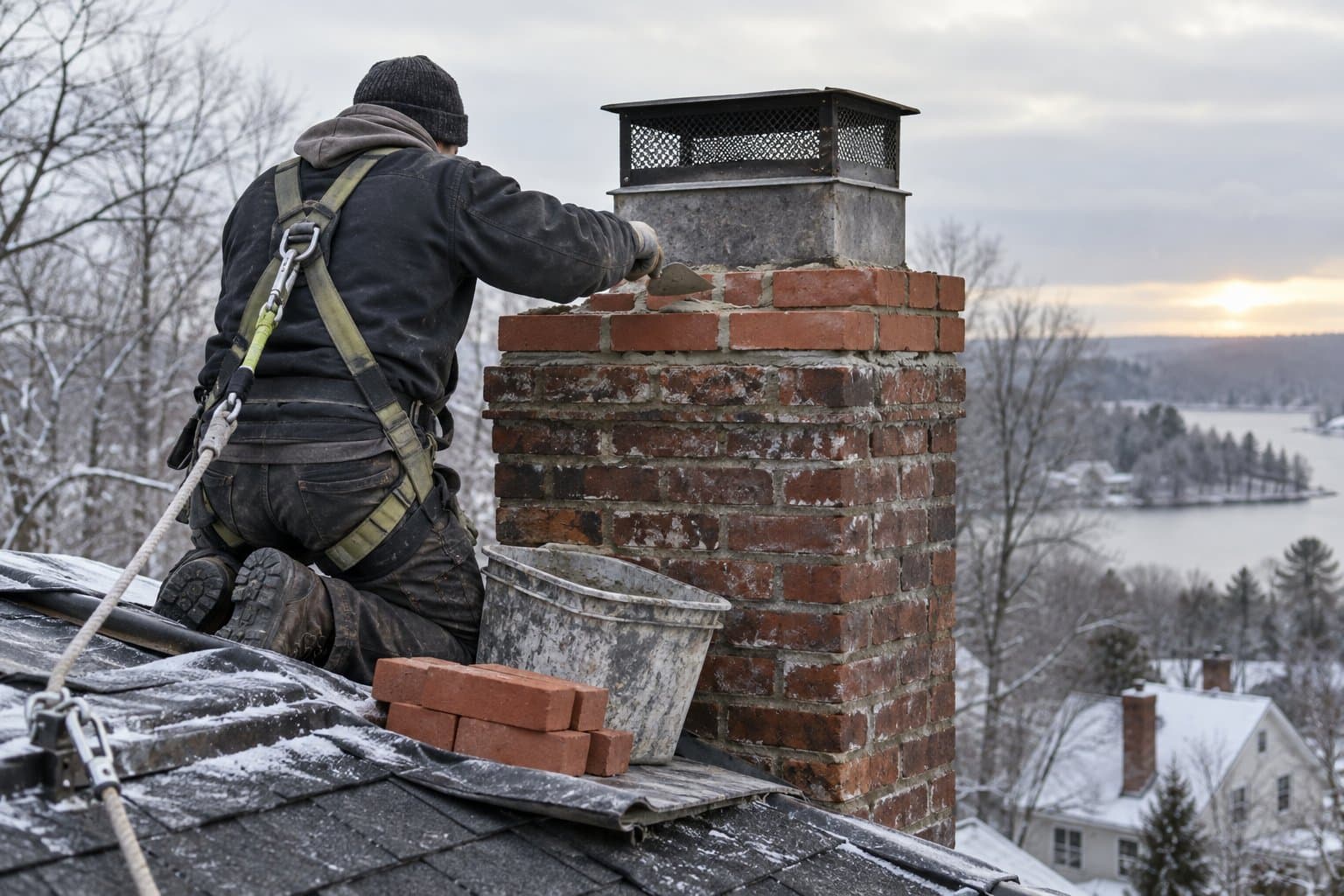
Binghamton is hard on brick. Winters are cold and snowy, and the freeze-thaw cycle is the main threat here — water soaks into mortar and brick, freezes, expands, and breaks the material apart a little more each time. The city also gets some of the cloudiest, dampest weather in the country, so masonry stays wet longer. A lot of Binghamton housing predates 1940, with original masonry chimneys built for coal or oil heat and later lined for gas. Those stacks have been through a great many winters, and the part above the roofline takes the worst of it.
While you wait — please don't
- Stop using the fireplace. A fireplace or stove should not be used under a stack that is leaning or shedding brick, because the flue inside may be broken open.
- Get out and call 911 if anyone feels ill. Headache, dizziness, nausea or a carbon monoxide alarm means everyone leaves the house first and calls 911 from outside.
- Keep people away from the base of the chimney. Falling brick is heavy, so stay clear of that side of the house and move cars and trash cans out from under it.
- Don't climb up for a closer look. Loose masonry and an icy or sloped roof are a bad mix, and photographs from an inspection will show you more than a glance from a ladder.
- Don't repoint over a stack that is moving. Fresh mortar on a leaning chimney hides the problem instead of fixing the structure underneath it.
What the technician does
- Inspection with photographsThe technician inspects the chimney and photographs what is failing — the joints, the brick faces, the crown, the flashing and the flue. You get to see the condition for yourself rather than take it on description.
- Deciding how far down to goA rebuild above the roofline is the usual answer, because that is the section exposed to weather and freeze-thaw. The sound masonry below stays where it is.
- Full rebuild where the structure has goneIf the chimney has failed further down, it comes out and goes back with a proper footing and new flashing where it meets the roof.
- New crown, cap and linerA new crown and cap go on as part of the work, and a liner is fitted so the flue is sound and sized for the appliance it serves.
- Matching the brick and mortarBrick and mortar are matched as closely as the house allows, which matters on older Binghamton homes where the original material is no longer made.
- Price before anything startsThe technician gives you the price after the inspection, and you approve it before any work begins.
Why this happens in Binghamton, NY
Timing matters here. Masonry needs temperatures above freezing to cure properly, so rebuilds in a cold region like Binghamton are warm-month work. If your chimney fails inspection in January, the usual approach is a temporary cover over the stack to keep weather out until conditions allow the masonry to be done properly. Across New York, exterior masonry rebuilding and repointing concentrate in the warmer months for exactly this reason.
Demand in Binghamton peaks in late summer and fall as people get chimneys ready before the heating season, and again during the spring thaw when freeze damage shows itself. If you noticed crumbling brick in March, that is the common pattern. Homes on the steep hillside streets of the North Side and East Side and the older stock across the West Side and First Ward often have tall original stacks that catch a lot of weather. Permits for chimney work in New York are issued locally, so for structural masonry above the roofline, check with the Binghamton code enforcement office before work begins — the contractor will usually handle this, but it is worth confirming.
Questions people ask
- Does the whole chimney have to come down?
- Usually not. Rebuilding above the roofline is the common answer, because that section takes the weather and the freeze-thaw damage. A full rebuild with a new footing is for cases where the structure itself has gone.
- Can this be done in a Binghamton winter?
- Mortar needs temperatures above freezing to cure, so rebuilds here are warm-month work. If the chimney is failing in the middle of winter, a temporary cover can protect the stack until the weather turns.
- My house was built before 1940 — will the new brick match?
- Brick and mortar are matched as closely as the house allows. Much of Binghamton's housing stock predates 1940, and exact matches for old brick are not always available, so the technician will show you what is possible.
- Can I use the fireplace until the rebuild happens?
- No. A fireplace should not be used under a stack that is leaning or shedding brick, because the flue may be broken open inside. Wait until the inspection tells you where things stand.
- What should I ask the technician?
- Ask to see the photographs of what is failing and ask for the reasoning in writing. You should understand why the rebuild stops where it stops before you approve the price.
One call
One Call Chimney is a referral and scheduling service — we arrange the work with independent sweeps and masons, and we are not the contractor. Call (866) 576-7943 for a free estimate in Binghamton; the technician inspects the chimney and gives you the price, and nothing starts until you approve it.
More from One Call Chimney
Nearby
Answers
Free tool
Something else in this area
- Smoke comes back into the room
- Never been swept
- Water coming in
- Something living up there
- Smells of smoke or damp
- Damper stuck or broken
- Cracked crown or crumbling brick
- Liner damaged or missing
One Call Chimney arranges the visit; the technician does the work and gives you the price.