
Smells of smoke or damp in Syracuse, NY
You walk past the fireplace and get a whiff of old smoke, or something damp and sour. It is worse on humid days and worse in summer, when the fire has not been lit for months. Almost always, the smell is the creosote itself. It is the tar and soot left on the flue walls by past fires, and when it gets damp it gives off that sharp campfire-ashtray odor.
Phones answered around the clock · free estimate
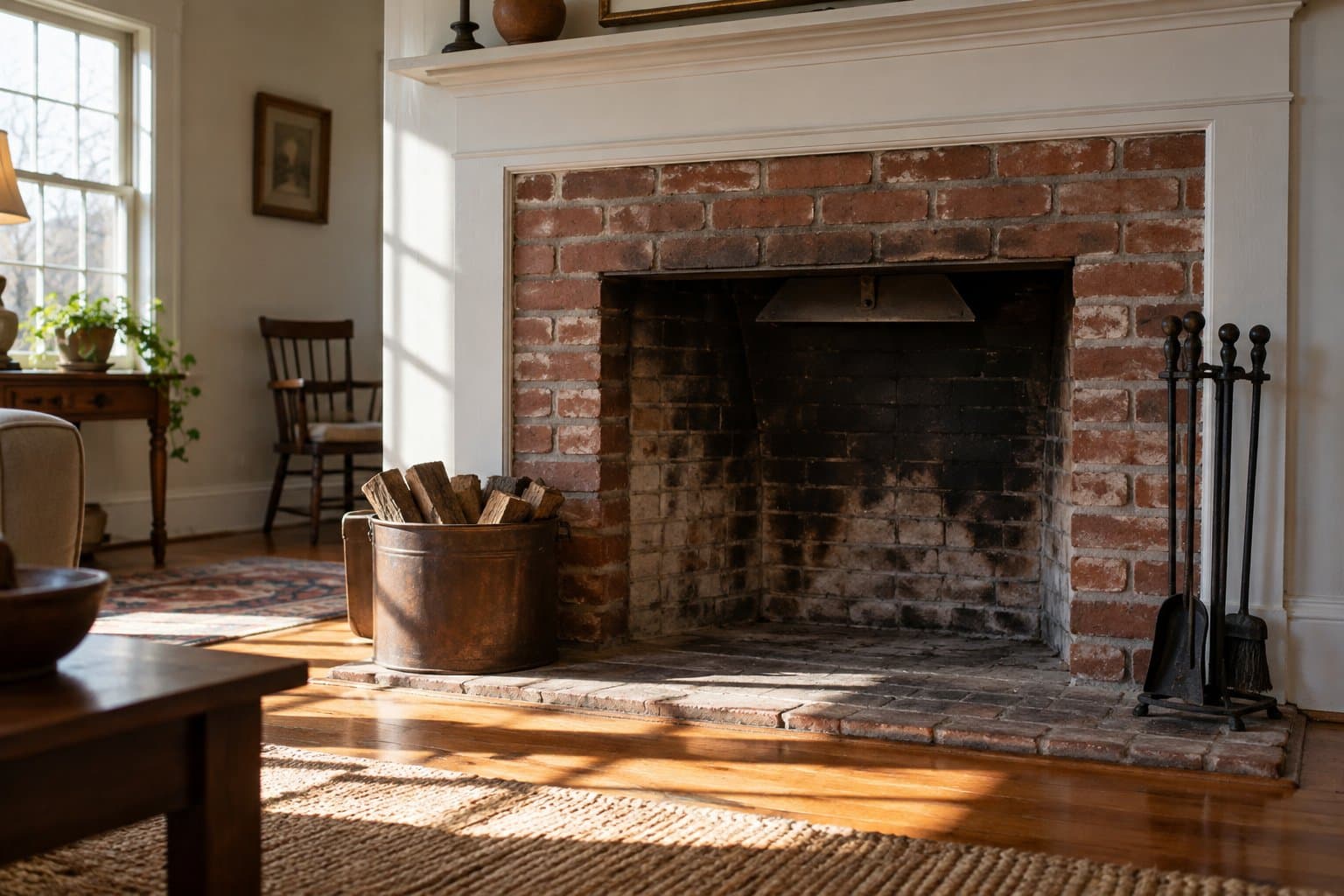
The reason you notice it in warm weather is airflow. Warm humid air outside and a cool masonry flue inside means the chimney stops drawing up and starts breathing down into the house. Add water getting in at a cracked crown, a missing cap or failed flashing, and the deposits stay wet all season. Syracuse makes this worse from both ends: long heating seasons keep flues in near-constant use, so there is plenty of creosote built up, and humid summers keep unused flues damp. Freeze-thaw cycling on century-old brick chimneys around the city opens mortar joints and crowns, which is exactly how the moisture gets in.
While you wait — please don't
- Do not treat headaches or nausea as a smell problem. If anyone in the house has headaches, nausea, dizziness or drowsiness along with the odor, treat it as carbon monoxide until proven otherwise — get everyone outside and call 911.
- Do not just shut the damper and add air freshener. Masking the smell hides a flue that may be packed with creosote, which is fuel for a chimney fire.
- Do not light a fire to burn the smell off. If the flue is heavily loaded or partly blocked by a nest or debris, a fire makes the situation far more dangerous, not less.
- Stop using the fireplace if smoke comes into the room. Smoke pushing back into the living space points to a blockage or a draft problem, and the appliance should stay cold until someone has looked up the flue.
What the technician does
- The flue gets sweptSince the smell is usually the creosote itself, removing the deposits removes the source. This is the first and biggest step on most odor calls.
- Nests and animal debris come outLeaves, twigs, droppings and dead material in the smoke chamber or flue smell strongly once they get wet. The technician clears what is up there and looks at how it got in.
- The moisture path gets closedThe tech checks the cap, the crown and the flashing, because wet creosote smells far worse than dry creosote. Whatever is letting water in is what keeps the odor coming back.
- The damper is repaired or replacedA worn throat damper that will not seal lets the chimney breathe into the room all summer. A top-sealing damper at the crown closes the flue off at the top instead, which also keeps rain and animals out.
- House pressure is consideredIf the house pulls air down the chimney, the flue becomes the path of least resistance for makeup air. The technician looks at what is competing for air in the home before blaming the chimney alone.
- You get the findings and a price firstThe technician inspects the chimney and gives you the price before any work starts, and you approve it first. Ask to see the camera footage and ask for the reasoning in writing.
Why this happens in Syracuse, NY
Much of Syracuse's housing stock was built before 1940 — wood-frame houses with full basements, pitched roofs and masonry chimneys, plus a lot of two-family homes near the university. Masonry chimneys and fireplaces are widespread in that older housing, and across New York, unlined or clay-tile flues needing relining are very common. Older neighborhoods like Eastwood, Westcott, Tipperary Hill and Strathmore are full of exactly this kind of chimney. Repeated freeze-thaw cycles cause spalling and mortar loss on century-old brick here, and those open joints and cracked crowns are how water reaches the soot inside.
Timing matters too. Lake-effect snow off Lake Ontario makes for a long heating season, so a Syracuse flue does a lot of work between fall and spring. Then summer arrives humid, the flue sits cool and damp, and the smell shows up. Demand in the area spikes in early fall as people prep heating systems before the snow, and again in the spring thaw when winter damage surfaces — so a summer odor call is a good moment to get the flue looked at before the fall rush. If the fix involves repointing or masonry work, that concentrates in the warmer months anyway, since mortar needs to cure without freezing.
Questions people ask
- Why is the smell worse in summer than in winter?
- In winter, a hot fire sends air up the flue, so you never smell what is on the walls. In summer, warm humid air and a cool chimney reverse that flow and the chimney breathes into the house. Humidity also dampens the creosote, which makes it smell much stronger.
- Will sweeping alone get rid of it?
- Often, yes, because the deposits are the source. But if water keeps getting in at the crown, cap or flashing, or the damper will not seal, the odor tends to return. That is why the technician looks at the whole path, not just the soot.
- Do I need a permit for this in Syracuse?
- Routine sweeping and inspection generally do not require a permit in New York. Permits are usually needed for installing a wood stove or insert, relining as part of an appliance installation, or structural masonry work such as rebuilding above the roofline. Permits are issued locally, so call the Syracuse building department before that kind of work begins.
- Is the smell dangerous on its own?
- The odor itself is mostly unpleasant, but it tells you there is creosote in the flue, and creosote is fuel. The real danger is ignoring it. If the smell comes with headaches, nausea or dizziness, treat it as carbon monoxide, get outside and call 911.
- Who actually comes out?
- One Call Chimney is a referral and scheduling service. We arrange the work with independent sweeps and masons; we are not the contractor and we do not perform the work. Licensing for this trade is handled locally in New York rather than by the state, so you can verify current requirements with your city or county office.
One call
One call sets up a free estimate on the chimney, wherever you are in Syracuse or nearby in DeWitt, Liverpool, Camillus or Manlius. The technician inspects the chimney and gives you the price before any work starts, and nothing happens until you approve it — call (866) 576-7943.
Something else in this area
- Never been swept
- Smoke comes back into the room
- Water coming in
- Something living up there
- Damper stuck or broken
- Cracked crown or crumbling brick
- Liner damaged or missing
One Call Chimney arranges the visit; the technician does the work and gives you the price.