
Smells of smoke or damp in Mount Vernon, NY
You walk past the fireplace and get a wave of old smoke, or a sour damp smell. It is usually worse in summer, and worse on humid days. In most cases the smell is the creosote itself — the tarry deposit left on the flue walls by past fires. It has been there a while. Warm, wet air hits it and it starts to give off odour.
Phones answered around the clock · free estimate
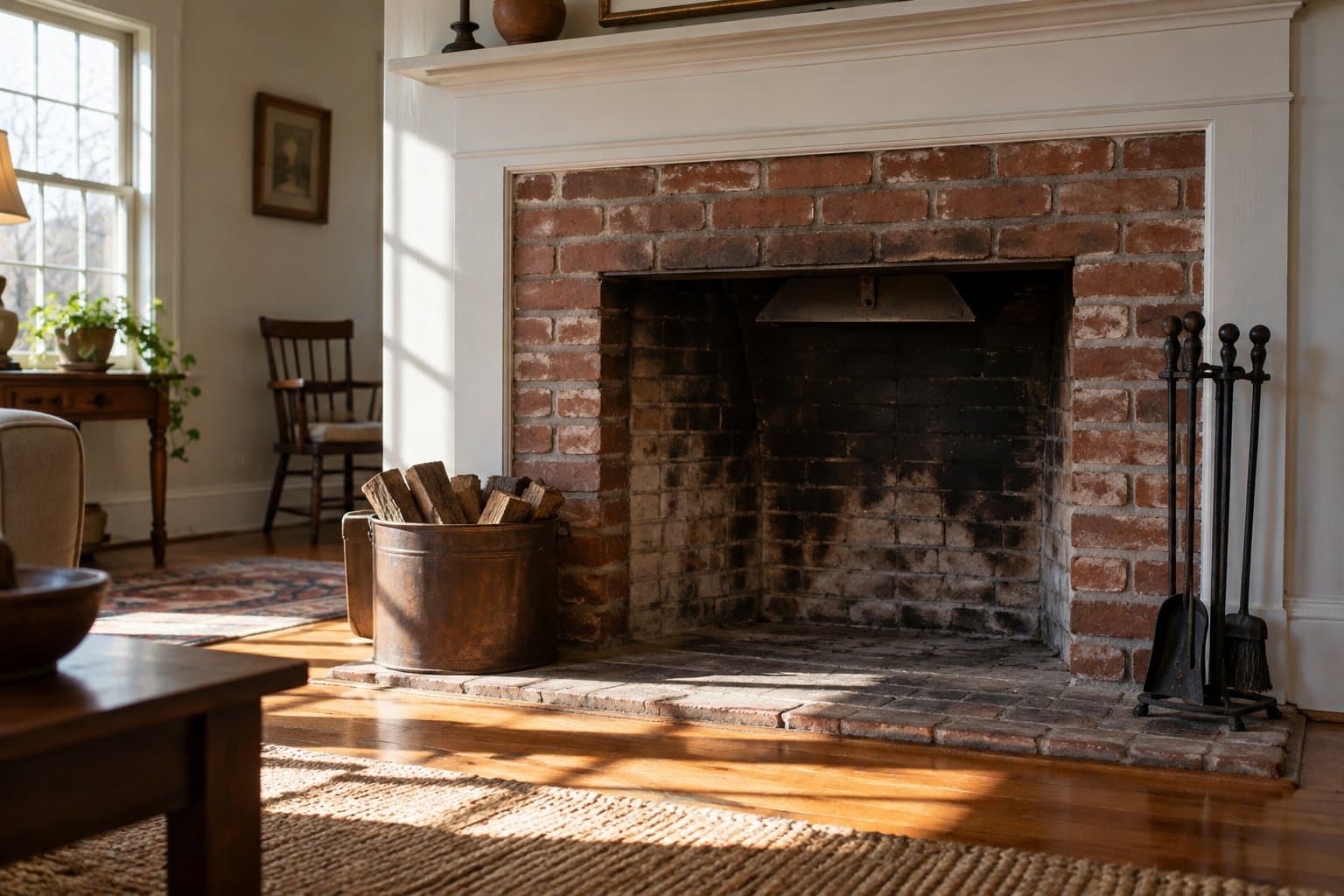
The second part is airflow. On a hot, sticky day the flue is cooler than the house, so the chimney stops pulling up and starts breathing down into the room. Mount Vernon summers are humid, which makes that reversal common here. The other half of the problem is water. Freeze-thaw cycles work on crowns, mortar joints and brick faces all winter, and once a chimney has absorbed moisture, an unused flue stays damp through the warm months. Damp plus old soot is exactly what you are smelling.
While you wait — please don't
- Do not treat headaches or nausea as a smell problem. If anyone in the house feels sick, dizzy or has a headache along with the odour, get everyone outside and call 911 — that is carbon monoxide until proven otherwise.
- Do not just shut the damper and spray air freshener. Masking the smell hides a flue that may still be lined with fuel, and it leaves the moisture path open.
- Do not light a fire to burn the smell off. A flue with heavy creosote in it is the thing that catches fire, so adding heat is the wrong direction.
- Do not seal the fireplace up solid. Blocking the opening traps damp inside the masonry and can interfere with an active venting flue if your heating appliance uses the same chimney.
What the technician does
- The flue is sweptSince the smell is usually the creosote itself, taking the deposit out is the first and biggest step. Less fuel on the walls means less odour and less fire risk.
- Nests and animal debris are clearedLeaves, twigs and droppings rot and smell, especially when wet. Anything found in the flue or on the smoke shelf comes out.
- The moisture path is traced and closedThe technician checks the cap, the crown and the flashing — the three places rain usually gets in. A dry flue smells far less than a wet one.
- The damper is checkedA damper that will not seat lets the chimney breathe into the room all summer. It is either repaired, or a top-sealing damper is fitted at the top of the flue to close it off up there.
- House pressure is consideredExhaust fans, dryers and a tight house can pull air down the chimney. If pressure is driving the smell, sweeping alone will not fix it, and that gets explained to you.
- You get the findings and the price firstThe technician inspects, then tells you what they found and what it costs. Nothing starts until you approve it.
Why this happens in Mount Vernon, NY
Mount Vernon's housing stock is mostly pre-WWII — 1900s to 1950s brick, stucco and wood-frame homes, plus a large share of two- and three-family houses. Masonry chimneys and original fireplaces are common in the older single-family streets, in Fleetwood, Chester Heights, Vernon Heights and the North and South Sides. Chimneys that old have usually seen decades of fires and decades of weather. Repointing is an everyday issue in this city, and open mortar joints are one way water gets into the masonry and keeps a flue damp.
Weather does the rest. Winters here regularly drop below freezing, and the freeze-thaw cycle is hard on crowns and mortar. Nor'easters and the remnants of tropical systems drive rain at the chimney from the side, where flashing and brick faces take it. Then summer arrives humid, the flue stays cool, and the airflow reverses. That is why so many people in Mount Vernon only notice the smell in July, not in January. Across New York, demand climbs in late summer and fall as people get ready for the heating season, so if you are smelling it now, it is a reasonable time to deal with it.
Questions people ask
- Why is the smell worse in summer?
- Warm, humid air meets a cool flue and the chimney starts drawing downward into the house instead of up and out. Add damp creosote on the walls and the odour comes with it. In winter, hot gas going up the flue carries the smell away from you.
- Will sweeping get rid of it completely?
- Usually it makes a large difference, because the creosote is the source. If water is still getting in through a cracked crown or failed flashing, or the damper will not seal, those need addressing too. The technician will tell you which of those applies to your chimney.
- My house in Mount Vernon was converted from oil to gas. Does the old flue still matter?
- Oil-to-gas conversions are common in Mount Vernon, and the old flue often stays in place. Whether it is still an active venting flue or sitting unused, it can hold deposits and damp, and both can smell. It is worth having looked at either way.
- I live in a two-family house. Does that change anything?
- Many Mount Vernon homes are two-family conversions, which can mean more than one flue in the same stack. The smell in your unit may be coming from a flue you do not use. The inspection should cover which flue serves what.
- Do I need a permit for this?
- In New York, permits are issued by your local building department, not a state agency, and routine sweeping and inspection generally do not require one. Relining or structural masonry work above the roofline usually does. Call the Mount Vernon building department before that kind of work begins.
One call
Call (866) 576-7943 and One Call Chimney will arrange for an independent sweep to come out and look at it. Every job gets a free estimate — the technician inspects the chimney, gives you the price, and you approve it before any work starts.
More from One Call Chimney
Nearby
Answers
Free tool
Something else in this area
- Cracked crown or crumbling brick
- Damper stuck or broken
- Liner damaged or missing
- Rebuild or new chimney
- Smoke comes back into the room
- Never been swept
- Water coming in
- Something living up there
One Call Chimney arranges the visit; the technician does the work and gives you the price.