
Stop using the fireplace
Smoke in the room in Binghamton, NY
You lit a fire and the smoke came at you instead of going up. That means the chimney is not pulling. Something is in the way, the damper is not opening fully, or the air in the flue is too cold and heavy to rise. Until that is sorted out, the fireplace is not safe to use.
Phones answered around the clock · free estimate
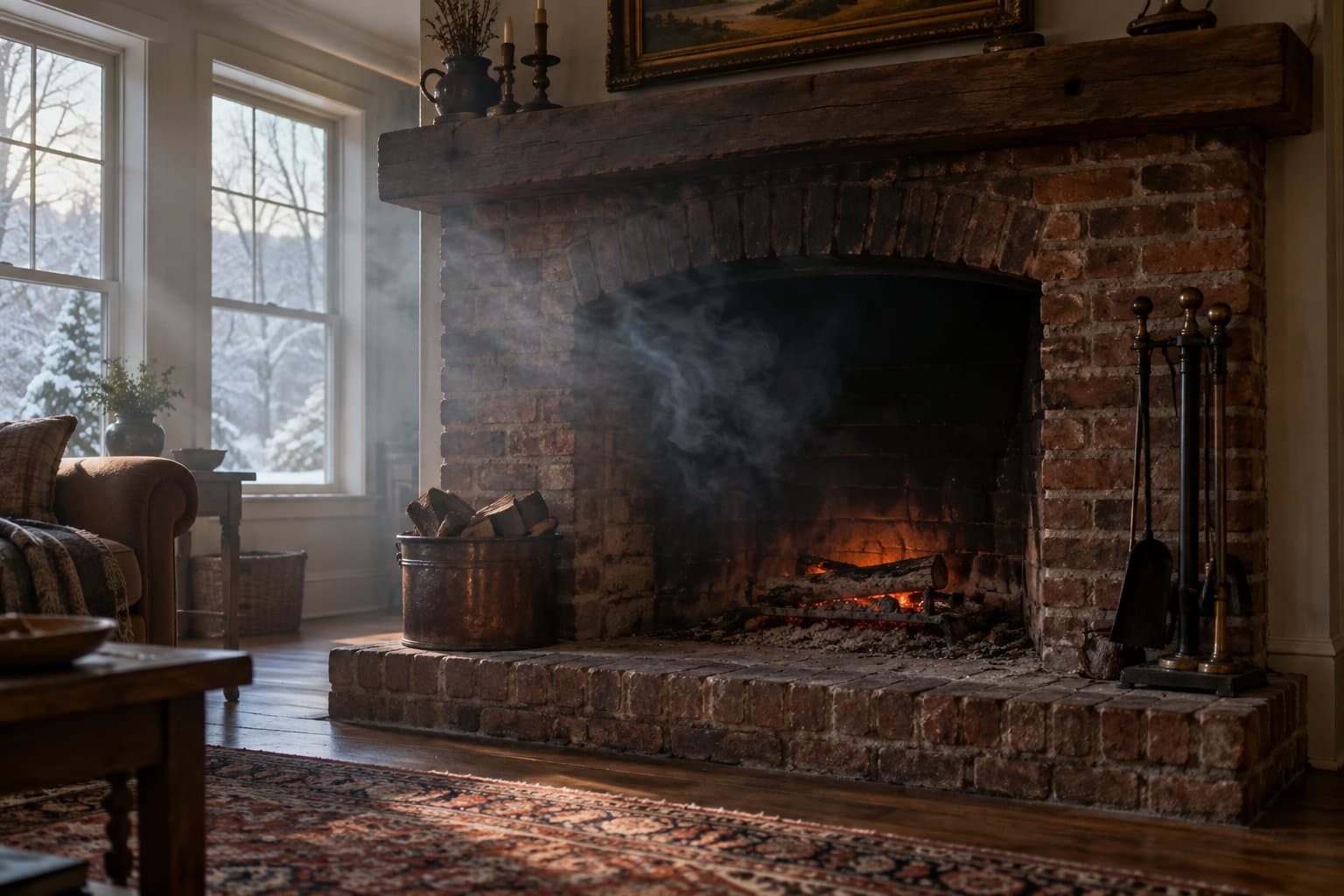
This is common in Binghamton housing. Much of the city's housing stock predates 1940 — wood-frame Victorians, foursquares and two-family homes with full basements and original masonry chimneys. Many of those chimneys were built for coal or oil heat and later lined for gas, so the flue size and the fireplace may not match well. Add Binghamton's long heating season, roughly October through April, and repeated freeze-thaw cycles that crack crowns and open mortar joints, and you get chimneys that draw poorly or leak draft. Damp, cloudy weather keeps masonry wet, and a wet, cold flue is a slow-starting flue.
While you wait — please don't
- Put the fire out and open a window. Smoke in the room means combustion gases in the room, and carbon monoxide comes with them.
- Get outside and call 911 if anyone feels ill. Headache, dizziness or nausea after a smoky fire can be carbon monoxide poisoning, and that is an emergency, not something to wait out.
- Stop using the fireplace until it has been inspected. If the flue is blocked or the damper will not open, the next fire will push smoke back into the room again.
- Do not light a bigger fire to force the draft. More fuel in a chimney that is not drawing just makes more smoke and more gas in the room.
- Do not run the kitchen or bath extractor while the fire is lit. A tightly sealed house or a powerful extractor fan can beat the chimney for air and pull the smoke back down the flue.
What the technician does
- The flue is swept and camera-inspectedThe sweep clears the flue and then runs a camera up it to find the blockage or the damage. Ask to see the footage — it is your chimney and you should look at it.
- The damper is checkedA damper that is rusted part-open, warped or jammed will choke the draft. It is freed, repaired or replaced depending on what the technician finds.
- Draft is tested and the cause identifiedThe technician tests how the chimney is actually pulling and works out why it is not. A cold flue, a blockage, house air pressure and flue sizing all get ruled in or out.
- Cap and crown are checkedA crushed or clogged cap stops smoke leaving the top, and a cracked crown lets water into the masonry. Both are looked at from the roof.
- The smoke chamber is cleaned and pargedThe smoke chamber sits above the firebox and guides smoke into the flue. Soot build-up and rough, stepped brickwork in there slow the smoke down, so it is cleaned and parged smooth.
- You get the findings and the price firstThe technician inspects the chimney and gives you the price before any work starts, and you approve it before anyone begins. Ask for the reasoning in writing.
Why this happens in Binghamton, NY
Binghamton chimneys work hard. The heating season runs roughly October through April, and many homes here still vent an active appliance rather than a decorative fireplace. A chimney that is used that long, that often, builds deposits. Freeze-thaw cycles then work on the crown and the mortar joints all winter, and the damp, cloudy weather this area is known for keeps masonry wet between freezes. Water in the brick, a cracked crown and a cold flue all make the same problem worse: the chimney will not start pulling when you light the match.
The older two- and three-unit houses on the West Side, East Side, North Side and First Ward often have original masonry chimneys built for coal or oil, later adapted. Some low-lying homes still carry changes made after the 2006 and 2011 floods, when basements were rebuilt and mechanicals relocated — if an appliance was moved, the flue it vents into may no longer be a good match. The busy time for this work is late summer and fall, before the heating season, with a second rush in the spring thaw when freeze damage shows up. If you have had smoke in the room, do not wait for either rush to pass.
Questions people ask
- Is smoke in the room dangerous or just annoying?
- It is dangerous. Smoke in the room means combustion gases in the room, and carbon monoxide travels with them. Put the fire out, open a window, and if anyone feels headachy or dizzy get outside and call 911.
- Why does it only happen on the first fire of the evening?
- A cold flue draws badly until it warms up. In Binghamton, with cold, damp winters and a long heating season, a chimney that has sat unused for days can be very cold and slow to start. If it never settles down and keeps smoking, something else is wrong and it needs inspecting.
- Could my house be the problem rather than the chimney?
- It can be. A tightly sealed house or a powerful kitchen extractor can beat the chimney for air and pull smoke back down. The technician tests the draft, so the cause gets identified rather than guessed at.
- Do I need a permit in Binghamton?
- In New York, permits are issued locally by the municipal or county building department, not by a state agency. Routine sweeping and inspection generally do not need one, but installing a stove or insert, relining a flue as part of an appliance installation, or rebuilding masonry above the roofline usually does. Call the local building department before work begins.
- Is One Call Chimney the company that does the work?
- No. We are a referral and scheduling service that arranges chimney work with independent sweeps and masons across all fifty states. We are not the contractor and we do not perform the work.
One call
Call (866) 576-7943 and we will arrange for a chimney technician to come out to your Binghamton home and find out why the smoke is coming back at you. The estimate is free, and you hear the price and approve it before any work starts.
More from One Call Chimney
Something else in this area
- Rebuild or new chimney
- Never been swept
- Water coming in
- Something living up there
- Smells of smoke or damp
- Damper stuck or broken
- Cracked crown or crumbling brick
- Liner damaged or missing
One Call Chimney arranges the visit; the technician does the work and gives you the price.