
Smells of smoke or damp in Rochester, NY
Most of the time, the smell is the creosote itself. It is the tar-like residue left on the flue walls by wood smoke, and it holds odour for years. Damp air lands on it, and you get that sour campfire smell in the living room even though nothing has been burned since winter.
Phones answered around the clock · free estimate
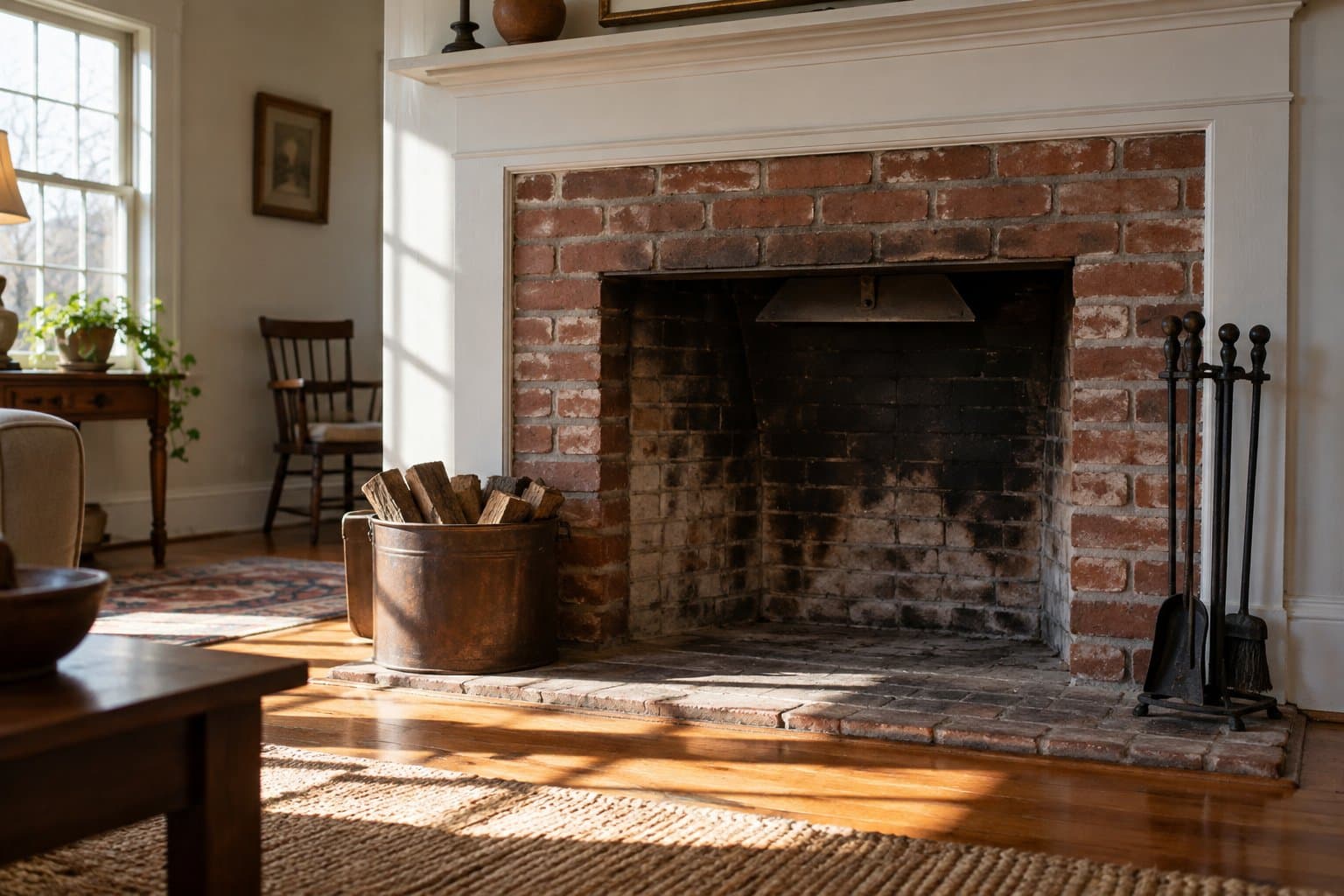
Then there is the airflow. In summer the air outside is warm and humid and the masonry flue stays cool, so the draft reverses. Instead of the chimney pulling air up and out, it breathes down into the house. Rochester summers are warm and humid, and a lot of homes here still have their original brick chimneys, so this is a common call. If rain is also getting in past a cracked crown, bad flashing or a missing cap, the damp smell rides in with it. A nest or animal debris sitting on the smoke shelf will do the same thing.
While you wait — please don't
- Get out if anyone feels ill. A smell paired with headaches, dizziness or nausea is carbon monoxide until proven otherwise — get everyone outside into fresh air and call 911.
- Do not cover it up. Shutting the damper and adding air freshener hides the odour but leaves a flue that may still be loaded with creosote, which is fuel.
- Do not light a fire to burn the smell off. If the flue is lined with creosote or partly blocked by a nest, a fire makes the situation worse, not better.
- Do not ignore a smell that got worse suddenly. A change usually means something changed — water getting in, an animal, or a damper that has failed — and it is worth having looked at before the heating season.
What the technician does
- The flue is inspectedThe technician looks at the whole flue, the smoke chamber and the smoke shelf to find where the smell is actually coming from. Ask to see the camera footage if a camera is used.
- The chimney is sweptSince the odour is usually the creosote deposit itself, removing it removes most of the smell. This is the core of the job on a smell call.
- Nests and debris are clearedAnimal nesting material, leaves and droppings sit on the smoke shelf and rot when damp. They come out.
- The moisture path is closedWater coming in through a cracked crown, failed flashing or a missing cap keeps the flue wet all summer. The technician traces where it is entering and tells you what is needed to close it.
- The damper is checked or upgradedA throat damper that no longer seals lets flue air into the room. It can be repaired, or a top-sealing damper fitted at the top of the flue so the chimney is closed off at the crown.
- House pressure is consideredBath fans, kitchen fans, dryers and a tight house can pull air down the chimney. The technician factors this in rather than just treating the flue.
Why this happens in Rochester, NY
Much of Rochester's housing stock predates 1940 — Victorians, foursquares, colonials and bungalows in neighborhoods like Park Avenue, Corn Hill, the South Wedge and the 19th Ward. Many of those homes still have their original masonry chimneys, and a fair number have undersized or unlined flues. Older brick and old mortar absorb moisture, and that damp masonry is exactly what carries an odour indoors on a humid day.
Winter is hard on the top of the chimney here. Rochester sits just south of Lake Ontario and gets heavy lake-effect snow and long stretches below freezing, and repeated freeze-thaw cycles work on crowns, mortar joints and brick faces. A crown that cracked over the winter lets water into the flue, and you smell the result in July. That is also why the smell calls tend to come in summer while the sweeping calls spike in late fall, before the first hard freeze. Getting it dealt with in the warm months means the flue is clean and sealed before you want to use it.
Questions people ask
- Why is the smell worse in summer than winter?
- In winter the fire and the cold outside air push the draft up and out. In summer the warm humid air outside and the cool flue reverse that, so the chimney breathes into the room. Damp also reactivates the odour in creosote deposits.
- Will sweeping alone fix it?
- Often yes, because the creosote is usually the source. But if water is getting in through the crown, flashing or an open top, or an animal has been nesting, those need closing off too or the smell comes back.
- Is the smell dangerous?
- The odour itself is mostly unpleasant rather than harmful, but two things matter. A flue full of creosote is a fire risk, and if anyone in the house has headaches or nausea, treat it as carbon monoxide, get outside and call 911.
- Do I need a permit in Rochester for this?
- Routine sweeping and inspection generally do not require a permit in New York. Installing a stove or insert, relining a flue as part of an appliance installation, or structural masonry work above the roofline usually does. Permits are issued by your local building department, so call them before that kind of work begins.
- Who actually comes out?
- One Call Chimney is a referral and scheduling service. We arrange the work with independent sweeps and masons — we are not the contractor and we do not perform the work ourselves. The technician inspects your chimney and gives you the price before anything starts.
- Is there a charge to find out what is wrong?
- Every job gets a free estimate. The technician looks at the chimney, explains what they found, and gives you a price. Nothing happens until you approve it.
One call
Call (866) 576-7943 and we will arrange for a sweep to come out and look at your Rochester chimney. The estimate is free, and you agree the price before any work starts.
Something else in this area
- Water coming in
- Something living up there
- Smoke comes back into the room
- Liner damaged or missing
- Never been swept
- Rebuild or new chimney
- Cracked crown or crumbling brick
- Damper stuck or broken
One Call Chimney arranges the visit; the technician does the work and gives you the price.