
Never been swept in Binghamton, NY
You have burned wood for years and the chimney has never been cleaned. What is almost certainly inside is creosote — a tarry, flaky or glazed build-up that coats the flue walls, the smoke shelf and the damper. Creosote is flammable. A flue lined with it is fuel sitting inside your house, directly above a fire you light on purpose.
Phones answered around the clock · free estimate
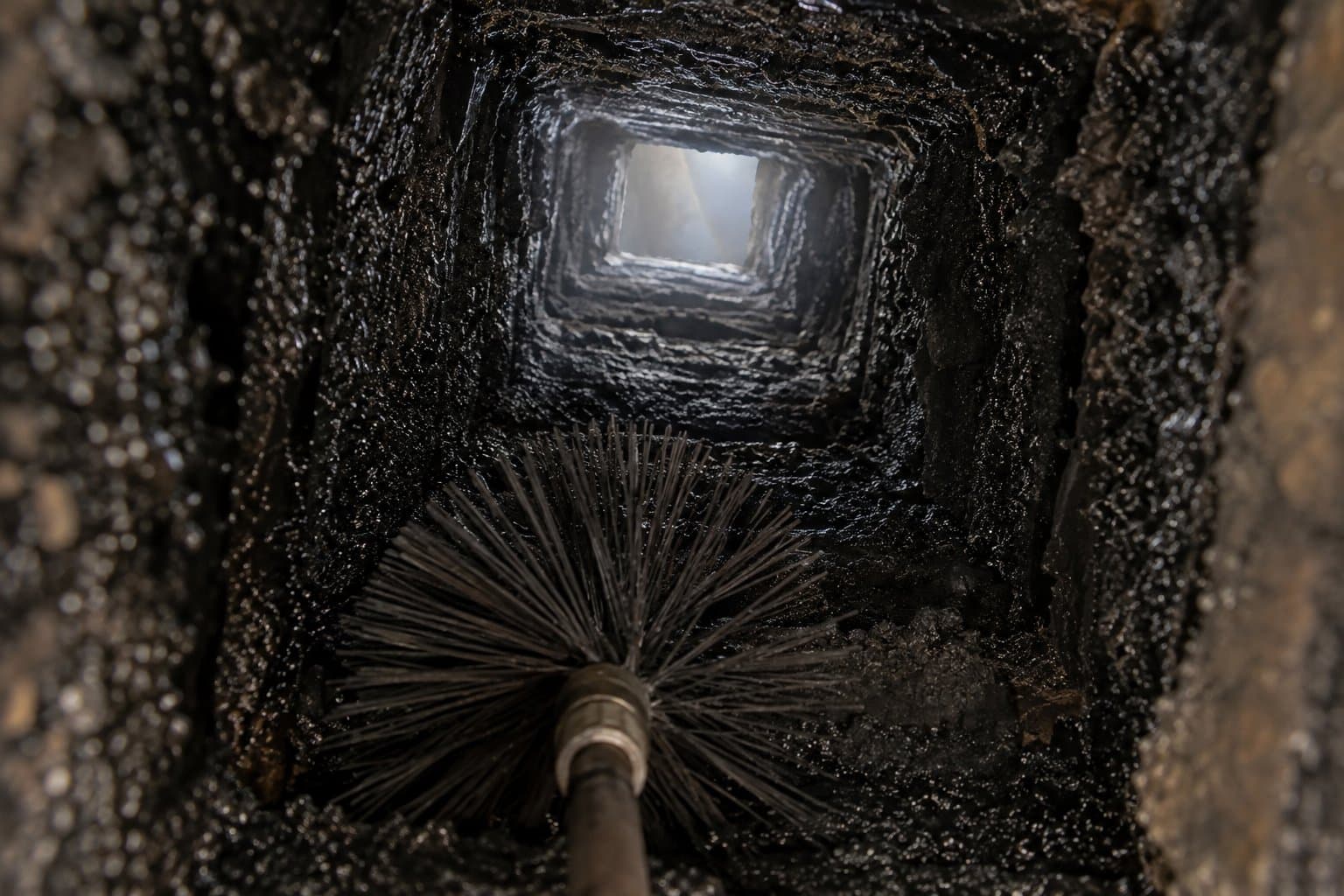
It builds faster here than people expect. Binghamton's heating season runs long, roughly October through April, so a wood-burning fireplace or stove works hard for months at a stretch. Unseasoned or wet wood and slow, smouldering fires lay down creosote far faster than hot, bright ones — and damp, cloudy weather makes it harder to keep firewood properly dry. A lot of Binghamton housing predates 1940, with original masonry chimneys built for coal or oil and later lined for gas, so what is actually inside that flue is often a surprise until someone puts a camera up it.
While you wait — please don't
- Do not light another fire until it has been looked at. You do not know how much creosote is in there or what condition the liner is in, and both of those decide whether the next fire stays in the firebox.
- If the chimney roars or you see flames at the top, get everyone out and call 911. That is a chimney fire, and it needs the fire department, not a garden hose.
- Do not try to burn the creosote off. A deliberately hot fire in a dirty flue is how chimney fires start, and the heat can crack tile liners and mortar joints.
- Do not rely on a quick look up from the firebox. Glazed creosote, cracked liner tiles and gaps at the joints sit well above where a flashlight reaches, which is why the inspection goes the full length of the flue.
- If smoke comes into the room or anyone feels dizzy or sick, get outside and call 911. Smoke spilling back into a room can mean a blockage or a damaged liner, and carbon monoxide gives you very little warning.
What the technician does
- A full sweep, top to bottomThe technician sweeps the whole flue and removes the debris rather than leaving it in the firebox or on the smoke shelf.
- Camera inspection of the whole flueA camera runs the full length so the inside of the chimney can actually be seen. Ask to look at the footage yourself — it is your chimney.
- The liner is checked for cracks and gapsClay tile liners in older Binghamton chimneys can crack or open at the joints, especially after years of freeze-thaw and absorbed moisture.
- Damper, smoke shelf and firebox cleanedThese are where build-up collects and where a stuck or coated damper starts causing draft problems.
- Cap and crown inspectedThe technician checks the cap and the crown at the top, since cracks there let water into masonry that then freezes and opens them further.
- You get the findings and the price before anything else happensIf the inspection turns up repairs, ask for the reasoning in writing so you can read it at your own pace.
Why this happens in Binghamton, NY
Binghamton gets some of the cloudiest, dampest weather in the country, and repeated freeze-thaw cycles are the main threat to masonry here. Water soaks into a crown or a mortar joint, freezes, and widens the crack a little more each winter. Humid summers keep an unused flue damp, which is often where creosote odours and interior staining come from. On an old chimney that has never been swept, those two things stack up — a dirty flue holding moisture against liner tiles and brick for decades.
The housing stock matters too. Wood-frame Victorians, foursquares and two-family homes across the West Side, East Side, North Side and First Ward usually have full basements and original masonry chimneys, many converted over the years from coal or oil. Some are still active venting flues for heating equipment, not just decoration. Demand climbs in late summer and fall as people get ready for winter, and again during the spring thaw when freeze damage shows itself, so booking a first sweep outside those peaks is usually easier.
Questions people ask
- We have burned wood for years. Is it too late?
- No. It just means the sweep is likely to be a bigger job and the camera inspection matters more. The technician looks at what is actually in there and what shape the liner is in before anything is quoted.
- Do I need a permit for a sweep in Binghamton?
- Routine sweeping and inspection generally do not require a permit in New York. Permits are issued locally, so if the inspection turns up relining or masonry work above the roofline, call the Binghamton building department before that work begins.
- Does New York license chimney sweeps?
- New York does not issue a statewide chimney sweep or chimney inspection license — this work is regulated locally rather than by a state trade board. Many upstate municipalities require only local registration or nothing at all, so check with the city or county consumer affairs or licensing office covering your address.
- Why does my chimney get dirty so fast here?
- Binghamton's heating season runs roughly October through April, so the flue is in use for months. Wet or unseasoned wood and slow smouldering fires build creosote far faster than hot bright ones, and damp local weather makes firewood harder to season properly.
- Are you the ones doing the work?
- No. One Call Chimney is a referral and scheduling service that arranges chimney work with independent sweeps and masons across all fifty states. We are not the contractor and we do not perform the work.
- What does the estimate cost?
- The estimate is free on every job. The technician inspects the chimney and gives you the price before any work starts, and you approve it first.
One call
One call to (866) 576-7943 gets a sweep and inspection scheduled for your Binghamton chimney, and the estimate is free. You see the price before any work starts, and nothing goes ahead until you approve it.
More from One Call Chimney
Something else in this area
- Rebuild or new chimney
- Smoke comes back into the room
- Water coming in
- Something living up there
- Smells of smoke or damp
- Damper stuck or broken
- Cracked crown or crumbling brick
- Liner damaged or missing
One Call Chimney arranges the visit; the technician does the work and gives you the price.