
Water coming in in Binghamton, NY
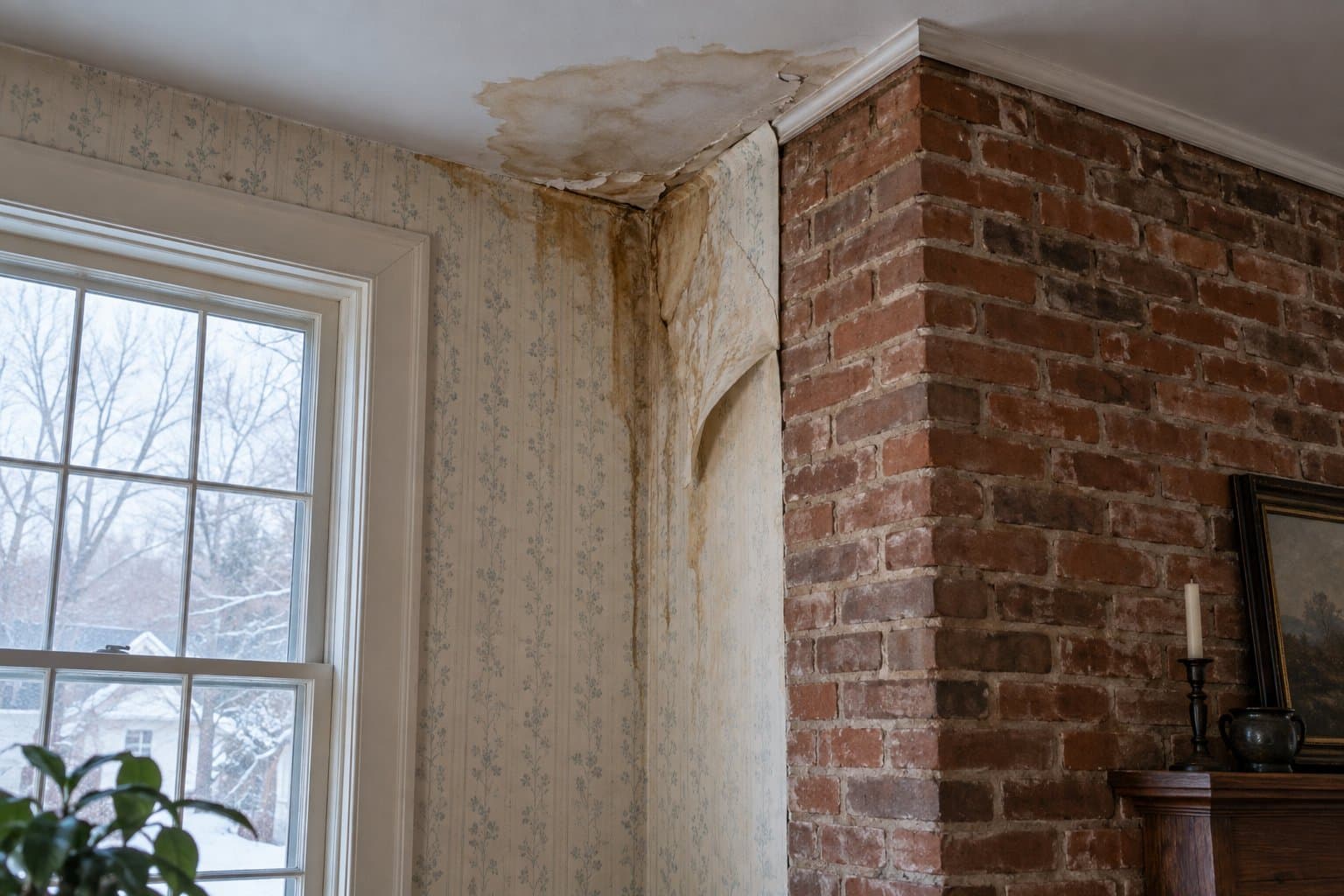
A damp patch on the ceiling next to the chimney means water is getting into the chimney or past the roof around it, then travelling down inside the structure until it finds plaster. The stain is rarely directly under the hole. Water runs along framing and brick and shows up a few feet from where it got in. That is why the entry point has to be traced, not just painted over.
Phones answered around the clock · free estimate
Binghamton makes this worse than most places. The winters are cold and snowy, and repeated freeze-thaw cycles widen every crack they find in a crown, a mortar joint or a brick face. Add some of the cloudiest, dampest weather in the country and a long heating season from October through April, and masonry rarely gets a chance to dry out. Wind-driven rain also gets in at flashing and crowns where ordinary rain just runs past.
While you wait — please don't
- Do not paint over the stain. Covering it hides the evidence a technician uses to trace where the water is actually entering.
- Do not smear sealant over the whole chimney. Coating brick with the wrong product can trap moisture inside the masonry, and a chimney that stays wet for years can become structurally unsound.
- Stop burning if smoke comes into the room. A wet chimney can draft badly or hide a damaged liner, so stop using the fireplace or stove until it has been inspected.
- Treat a CO alarm as an emergency. If the carbon monoxide alarm sounds, or anyone feels dizzy, sick or headachy near the appliance, get everyone outside and call 911.
- Keep away from the base of the chimney. Falling brick is a real hazard where long-term water has broken down mortar and brick faces.
What the technician does
- The entry point gets tracedThe technician works from the stain back to the source, inside and out, rather than sealing over the first crack they see. Water can enter well above where it shows.
- Flashing is checked and replacedWhere the roof meets the chimney is the most common way in. New flashing is counter-flashed into the mortar joint so water is shed, not just covered.
- The crown is repaired or recastThe concrete crown on top takes the full force of freeze-thaw. Cracks let water straight into the chimney structure, and a badly broken crown is recast rather than patched.
- A cap is fittedAn open flue is an open drain. A cap keeps rain and snow out of the flue and off the smoke shelf and damper.
- Repointing and brick replacementFailed mortar joints are raked out and repointed, and spalled brick — brick whose face has flaked off from frost — is replaced.
- Breathable water repellent where appropriateOn sound masonry, a breathable repellent sheds rain while still letting the chimney dry out. It is applied where it suits the chimney, not as a substitute for repairs.
Why this happens in in Binghamton, NY
Much of Binghamton's housing stock predates 1940 — wood-frame Victorians, foursquares and two-family homes with full basements and original masonry chimneys. Many of those chimneys were built for coal or oil heat and later lined for gas, so they are still active venting flues, not decoration. Old brick and old mortar joints take decades of salt-season freeze and thaw, and the damp climate keeps them from drying between soakings. That is the recipe for a leak that appears slowly, then gets much worse one winter.
Timing matters here too. Work picks up in late summer and fall as people get chimneys ready for the heating season, and again during the spring thaw when freeze damage finally shows itself as a stain on the ceiling. Exterior masonry — repointing, crown work, rebuilding above the roofline — needs warm enough weather for mortar to cure without freezing, so a leak found in March is worth looking at before the good months fill up. The same goes for homes on the steep North and East Side streets and across the river in Johnson City, Endicott or Vestal.
Questions people ask
- Is the leak definitely coming from the chimney?
- Not always, which is why the entry point is traced rather than assumed. Flashing, crown, cap, mortar joints and brick faces are all checked, along with how the water is travelling to the stain. Ask the technician to explain the reasoning and put it in writing.
- Can I keep using the fireplace while I wait?
- If smoke is entering the room, or you suspect the liner is damaged, stop using it until it has been inspected. If a carbon monoxide alarm sounds or anyone feels unwell near the appliance, get outside and call 911.
- Do I need a permit in Binghamton?
- In New York, permits are issued locally by the municipal or county building department, not by a state agency. Routine sweeping and inspection generally do not need one, but structural masonry work such as rebuilding a chimney above the roofline typically does. Call the local building department before work begins.
- Is a chimney sweep licensed by New York State?
- New York does not issue a statewide license for chimney sweeping, inspection or masonry repair — it is handled locally, and many upstate municipalities require only local registration or nothing at all. You can verify current requirements with the city or county consumer affairs office. Code questions go to the local building department or the NYS Division of Building Standards and Codes.
- Who is One Call Chimney?
- We are a referral and scheduling service that arranges chimney work with independent sweeps and masons across all fifty states. We are not the contractor and we do not perform the work ourselves. The technician inspects your chimney and gives you the price before anything starts.
One call
One call to (866) 576-7943 gets a chimney leak in Binghamton looked at, and the estimate is free on every job. The technician inspects the chimney and gives you the price first — nothing starts until you approve it.
More from One Call Chimney
Nearby
Answers
Free tool
Something else in this area
- Rebuild or new chimney
- Smoke comes back into the room
- Never been swept
- Something living up there
- Smells of smoke or damp
- Damper stuck or broken
- Cracked crown or crumbling brick
- Liner damaged or missing
One Call Chimney arranges the visit; the technician does the work and gives you the price.