
Smells of smoke or damp in White Plains, NY
You walk past the fireplace and get a wave of old smoke, soot or damp basement. It is usually worse on hot, humid days, and worse again when the air conditioning is running. What you are smelling is almost always the creosote inside the flue. Creosote is the tarry residue left behind by burning wood. It sits on the flue walls, it holds moisture, and when the air moves the wrong way it comes down into the room instead of going up.
Phones answered around the clock · free estimate
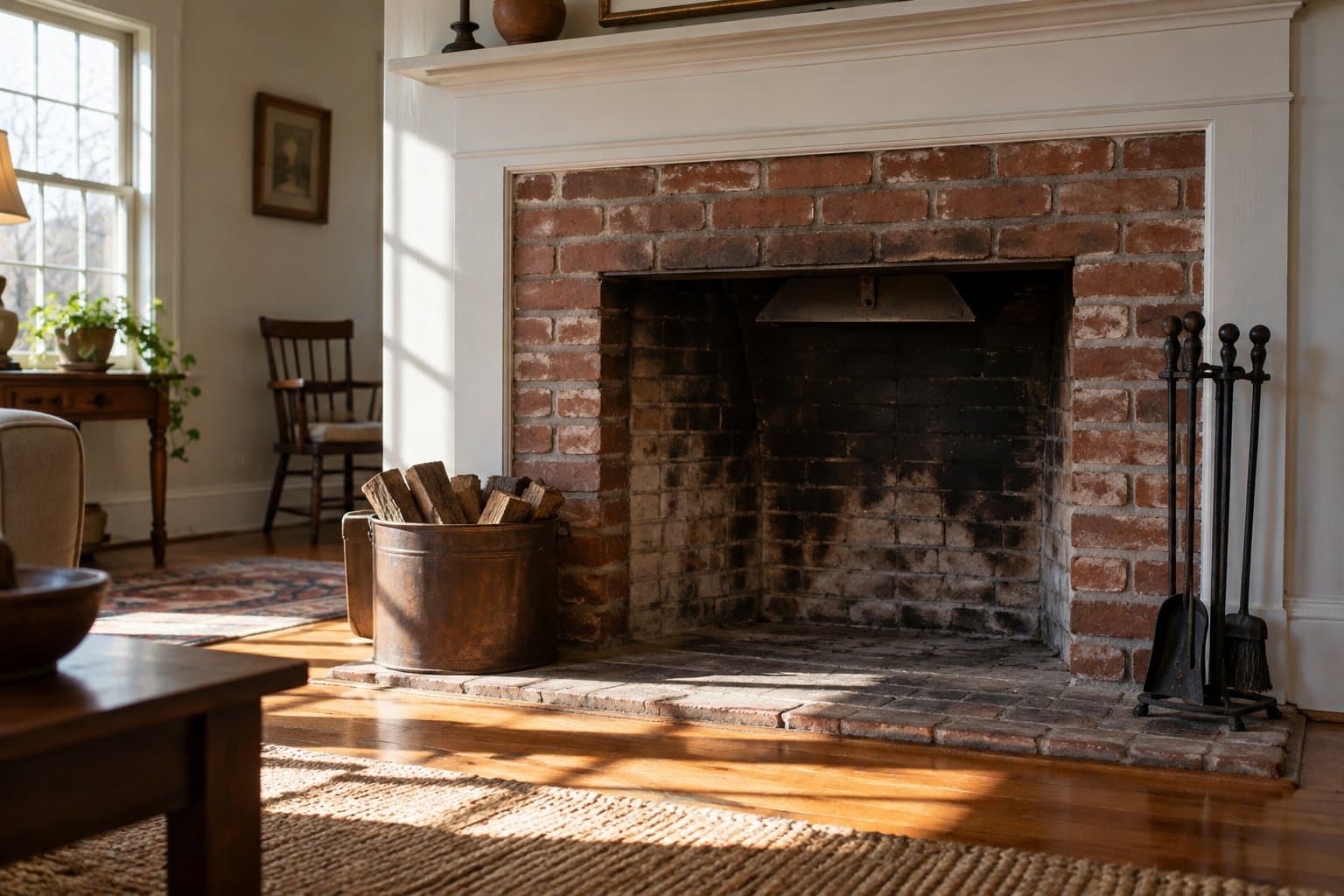
The other half of the problem is airflow. In summer, warm humid air outside and a cool flue inside reverse the draft, so the chimney breathes into the house rather than out of it. White Plains has exactly that kind of weather — a humid continental climate with hot, humid summers and a long heating season either side of it. Moisture makes it worse. Cold winters here bring repeated freeze-thaw cycles that are hard on chimney crowns and mortar joints, and once water is getting into the masonry, the flue stays damp and the smell gets stronger. Many homes in the older White Plains neighborhoods are pre-WWII colonials, Tudors and capes with original brick or stone chimneys, which is where damp and unlined or aging flues show up most.
While you wait — please don't
- Do not cover it with air freshener. Masking the smell leaves a flue that may still be full of creosote fuel, so you lose the warning instead of fixing the cause.
- Do not rely on a closed damper as the fix. Shutting the damper hides the odor but does nothing about what is coating the inside of the chimney.
- Treat headaches or nausea as carbon monoxide. If anyone in the house has headaches, nausea or dizziness along with the smell, get everyone outside and call 911 — assume carbon monoxide until someone proves otherwise.
- Stop using the fireplace if there is smoke in the room. A smell that turns into visible smoke during a fire points to a blockage or a damaged liner, and the fireplace should stay cold until it has been inspected.
What the technician does
- The flue gets sweptSince the smell is usually the creosote itself, removing it removes the source. This is the first and biggest step.
- Nests and animal debris come outLeaves, twigs, nesting material and anything an animal has left behind rot in a damp flue and smell badly. All of it gets cleared.
- The moisture path gets closedThe technician looks at the cap, the crown and the flashing to find where water is getting in. A wet flue keeps smelling no matter how clean it is.
- The damper is repaired or replacedA damper that no longer seals lets the chimney breathe straight into the room. In some cases a top-sealing damper at the top of the flue is the better answer.
- House pressure gets consideredAir conditioning, exhaust fans and a tight house can pull air down the chimney. The technician factors that in rather than just cleaning and leaving.
- You get the findings and the price firstThe technician inspects, explains what is causing the smell, and gives you the price before any work starts. You approve it before anyone begins.
Why this happens in White Plains, NY
Summer is when most White Plains homeowners notice this. The flue sat unused through spring, humid air moved in, and the reversed draft pushed the smell down into the living room. Downtown White Plains is dense with mid- and high-rise condo and apartment buildings and townhouse developments, and many of those carry HOA or condo-board rules — worth checking before anything is scheduled on a shared or roof-accessed flue.
In the older residential neighborhoods — Gedney Farms, Battle Hill, Fisher Hill, North Broadway and the rest — the heavy oak and maple canopy drops leaf litter into chimney caps every autumn, which holds water and adds to the damp smell. Those same older Tudor and colonial chimneys often need repointing and a liner evaluation before the heating season. Demand in White Plains spikes in early spring after winter freeze-thaw damage and again in the fall, so a summer smell is a good reason to deal with it before everyone else calls.
Questions people ask
- Why is the smell worse in summer than in winter?
- In winter the fire keeps the flue warm and the draft pulls upward. In summer, warm humid air outside and a cool flue reverse that airflow, so the chimney breathes into the house. Humidity also wets the creosote, which makes it smell much stronger.
- Will sweeping alone fix it?
- Often it does, because the creosote is the smell. But if water is still getting in through a cracked crown, a bad cap or failed flashing, the flue stays damp and the odor comes back. The technician checks the moisture path at the same visit.
- Do I need a permit in White Plains for this?
- Routine sweeping and inspection generally do not require a permit in New York. Permits here are issued locally, and chimney work in White Plains typically requires City of White Plains permits once it involves a stove or insert install, relining as part of an appliance installation, or structural masonry above the roofline. Call the City of White Plains building department before that kind of work begins.
- How do I check the technician is licensed?
- New York does not issue a statewide chimney sweep or chimney masonry license — it is handled locally. Westchester County runs its own home improvement contractor licensing program, so verify current requirements with the county consumer affairs or licensing office. We arrange the work; the credentials belong to the independent sweep or mason who does it.
- What if the smell comes with a headache?
- Get everyone out of the house and call 911. A smell combined with headaches or nausea means carbon monoxide until proven otherwise, and that is not something to test at home.
- Does the chimney smell mean the fireplace is unsafe to use?
- Not always, but it does mean the flue has not been looked at recently. If you have also seen smoke coming into the room, stop using the fireplace until it has been inspected. Ask the technician to show you the camera footage and to put the reasoning in writing.
One call
One call to (866) 576-7943 and we arrange a sweep or mason in White Plains to look at it, and the estimate is free. The technician inspects the chimney and gives you the price before any work starts, and you approve it first.
More from One Call Chimney
Nearby
Answers
Free tool
Something else in this area
- Never been swept
- Smoke comes back into the room
- Water coming in
- Something living up there
- Cracked crown or crumbling brick
- Damper stuck or broken
- Liner damaged or missing
- Rebuild or new chimney
One Call Chimney arranges the visit; the technician does the work and gives you the price.