
Smells of smoke or damp in Schenectady, NY
You walk past the fireplace and get a sour, smoky, ashy smell. It is worse on warm damp days, and worse in summer than in winter. In most cases the smell is the creosote itself. Creosote is the tarry residue left on the inside of the flue by burning wood. It sits there all year, and when it gets damp it gives off that odor. Sometimes there is more to it: water getting in through a cracked crown or bad flashing, or a nest and animal debris rotting in the flue.
Phones answered around the clock · free estimate
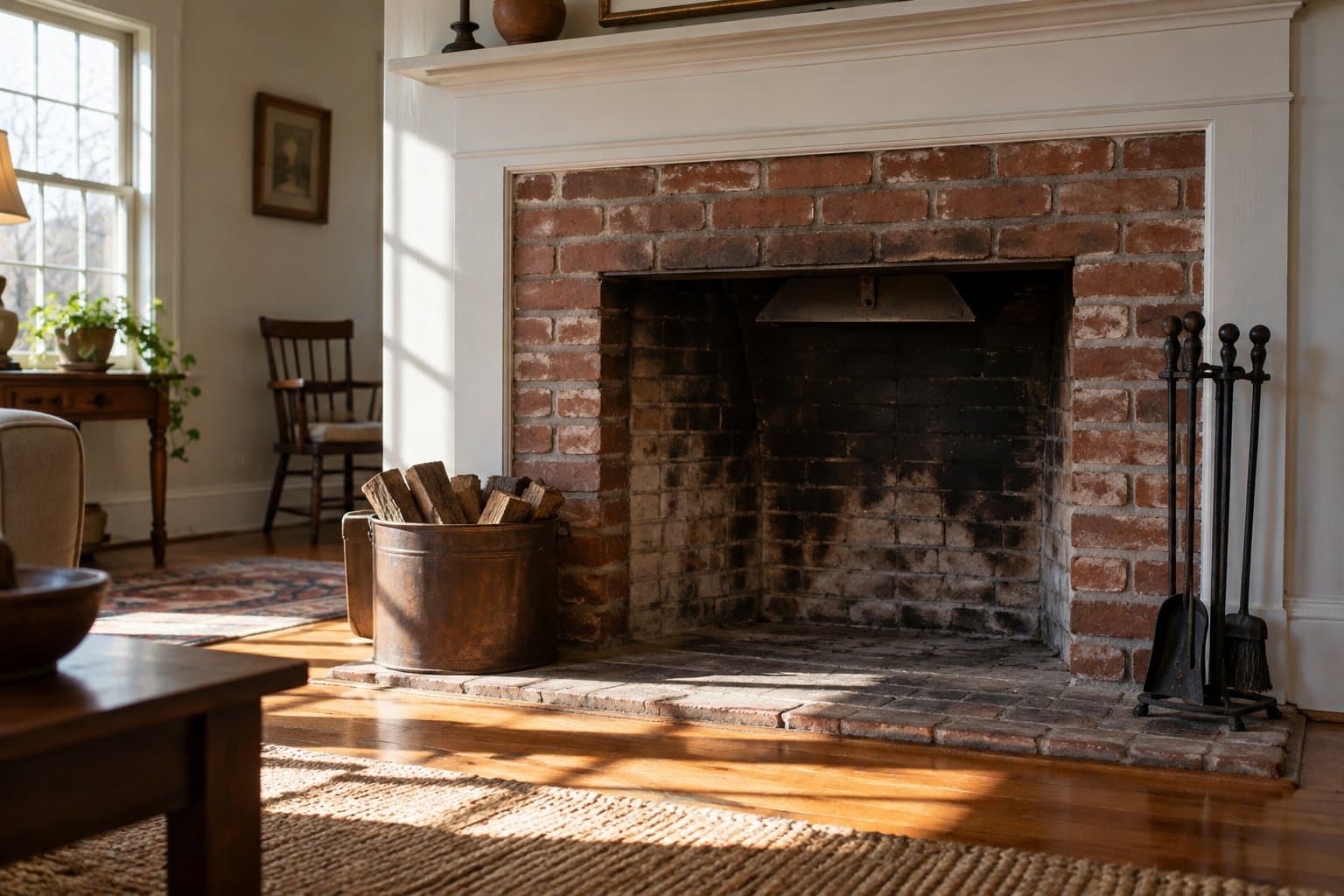
The other half of the problem is airflow. Warm humid outside air meets a cool flue, and the draft reverses. Instead of the chimney pulling air up and out, it breathes down into the house. Schenectady summers are warm and humid, so this is a normal seasonal complaint here, not a sign you did something wrong. A lot of the city's housing was built before 1940, during the General Electric and American Locomotive years, and those homes often have original masonry chimneys — some of them unlined. An unlined or porous flue holds moisture and odor far more readily than a sound lined one.
While you wait — please don't
- Leave the house if anyone feels sick. A smell combined with headaches, dizziness or nausea should be treated as carbon monoxide until proven otherwise — get everyone outside into fresh air and call 911.
- Do not just shut the damper and spray air freshener. Masking the odor hides a flue that may be packed with creosote, which is fuel for a chimney fire.
- Stop using the fireplace if you suspect a blockage. If the smell comes with smoke pushing into the room or a flue you think is blocked by a nest or debris, do not light another fire until it has been inspected.
- Do not seal the fireplace shut. Boarding or stuffing the opening traps the moisture that is feeding the smell and can interfere with an appliance that still vents through that chimney.
What the technician does
- Inspection first, then a priceThe technician looks at the flue, the firebox, the damper and the top of the chimney before quoting anything. You get the price and approve it before any work starts.
- Sweeping the flueSince the odor is usually the creosote itself, removing it removes most of the smell. This also takes away the fuel load that makes a chimney fire possible.
- Closing the moisture pathWater makes creosote smell far worse. The cap, the crown and the flashing are checked, and whichever one is letting water in gets addressed.
- Clearing nests and animal debrisBirds, squirrels and their nesting material rot in a warm flue and smell strongly. Anything found up there is removed and the cap is checked so it does not come back.
- Damper repair or a top-sealing damperA throat damper that no longer closes lets the chimney breathe into the room all summer. A top-sealing damper seals at the top of the flue instead, which keeps damp air out of the whole chimney.
- Looking at house pressureBath fans, range hoods and dryers can pull air down the chimney. The technician considers how your house is moving air, because the smell sometimes starts with something other than the chimney.
Why this happens in Schenectady, NY
Schenectady sits well inland on the Mohawk River, so there is no salt air working on your chimney. What does the damage here is freeze-thaw. Winter temperatures drop into the teens and below for days at a time, and water that soaked into a crown or a mortar joint expands when it freezes. Cracked crowns and spalling brick are routine in this city. Those cracks are also how water gets into the flue, and a wet flue is a smelly flue once the weather warms up.
The Stockade Historic District sits low along the Mohawk and has a long history of spring flooding and ice jams, so damp is already a known issue in that part of town. Elsewhere, century-old unlined masonry chimneys are a common service call across Schenectady, from the GE Realty Plot to Mont Pleasant and Woodlawn. Many of these chimneys are still active venting flues for oil or older gas heating, not just decorative. Late summer and fall are when people here get this sorted, ahead of the first freeze — but a summer smell is a good reason to call before the heating season starts.
Questions people ask
- Why is the smell worse in summer?
- Warm humid air outside and a cool flue inside can reverse the airflow, so the chimney breathes down into the house instead of up and out. Humidity also makes the creosote on the flue walls give off more odor. That is why Schenectady homeowners often notice it in July and not in January.
- Does the smell mean my chimney is dangerous?
- Not on its own, but it does tell you there is creosote, moisture or debris in the flue, and all three are worth dealing with. If the smell comes with headaches, dizziness or nausea, treat it as carbon monoxide, get outside and call 911. If smoke is entering the room, stop using the fireplace until it has been looked at.
- I have an old unlined chimney. Is that the cause?
- It can be a big part of it. Unlined and clay-tile masonry chimneys are very common in older New York housing, including much of Schenectady's pre-1940 stock, and porous masonry absorbs and holds moisture and odor. The technician will tell you what the liner condition is and explain the reasoning.
- Do I need a permit for this?
- In New York, permits are issued locally by your municipal building department and code enforcement officer, not by a state agency. Routine sweeping and inspection generally do not require one, but relining a flue as part of an appliance installation or structural masonry work usually does. Call the Schenectady building department before that kind of work begins.
- Is there a state chimney sweep license in New York?
- New York does not issue a statewide license for chimney sweeping, inspection or masonry repair — it is handled locally. Many upstate municipalities require only local registration, or nothing at all. You can confirm current requirements with your city or county consumer affairs office.
One call
One Call Chimney is a referral and scheduling service — we arrange the work with independent sweeps and masons and are not the contractor. Call (866) 576-7943 and we will set up a visit; the estimate is free, and the technician inspects the chimney and gives you the price before any work starts.
More from One Call Chimney
Nearby
Answers
Free tool
Something else in this area
- Never been swept
- Smoke comes back into the room
- Something living up there
- Cracked crown or crumbling brick
- Water coming in
- Damper stuck or broken
- Liner damaged or missing
- Rebuild or new chimney
One Call Chimney arranges the visit; the technician does the work and gives you the price.