
Smells of smoke or damp in Albany, NY
You are smelling the inside of your chimney. Most of the time the smell is creosote — the tarry residue left behind by wood smoke — sitting on the flue walls. Add moisture and it gets stronger. If the smell is more musty than smoky, water is getting in somewhere, or there is nesting material, leaves or animal debris up there soaking it up.
Phones answered around the clock · free estimate
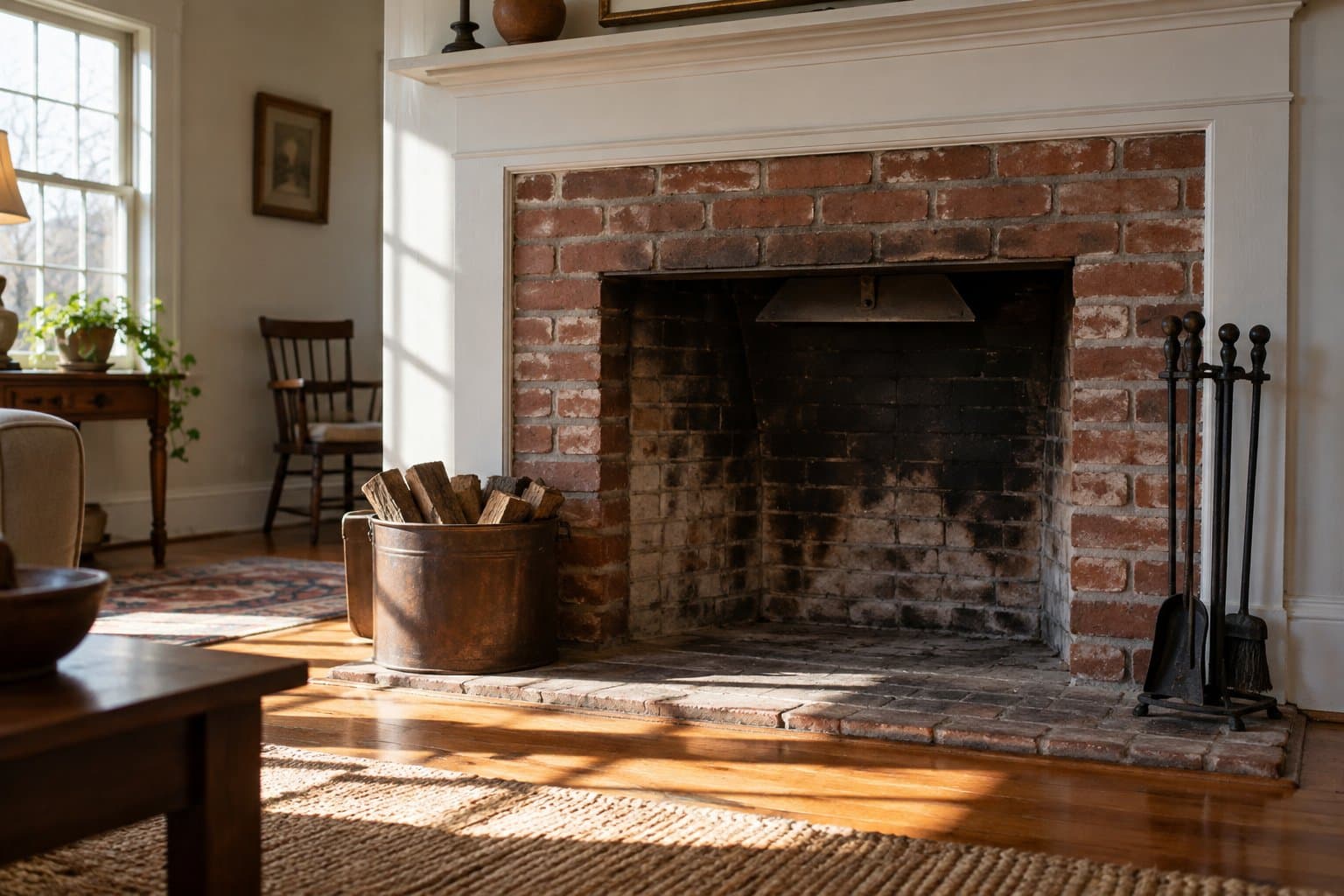
It is usually worse in summer, and that is normal. Warm humid air outside and a cool flue inside reverse the airflow, so the chimney breathes into the house instead of out of it. Albany summers are humid and sit in the 80s, so this is a common complaint here from June onward. Winter plays a part too: repeated freeze-thaw cycles crack chimney crowns and open mortar joints, and once a flue has absorbed moisture it stays damp and smelly long after the heating season ends.
While you wait — please don't
- Get outside if anyone feels ill. A smell along with headaches, dizziness or nausea means carbon monoxide until proven otherwise — get everyone out of the house and call 911.
- Don't just shut the damper and spray air freshener. Masking the smell hides a flue that may be full of fuel, and covering it up does nothing about the moisture or debris causing it.
- Stop using the fireplace if you also get smoke in the room. Smoke pushing back into the living space points to a blockage or a damaged flue, and both need looking at before you light another fire.
- Don't seal the fireplace opening off permanently. If the chimney also vents a heating appliance, blocking it can push combustion gases somewhere you don't want them.
What the technician does
- Inspection firstThe technician looks at the flue, the firebox, the damper and the top of the chimney to find where the smell and any moisture are coming from. Ask to see the camera footage of the inside of the flue.
- SweepingIn most cases the smell is the creosote itself, so cleaning the flue removes the source rather than covering it. This is the step that does most of the work.
- Debris and animals clearedNests, leaves and animal debris hold water and rot, and they smell badly in warm weather. Anything in the flue gets taken out.
- The moisture path closedWater gets in at the cap, the crown or the flashing. Whichever one it is gets identified and addressed, because a wet flue will keep smelling no matter how clean it is.
- Damper repaired or upgradedA damper that no longer seals lets the chimney breathe straight into the room. Repairing it, or fitting a top-sealing damper at the crown, closes that path at the top instead of the bottom.
- House pressure consideredBath fans, kitchen fans, dryers and a tight house can pull air down the chimney. The technician factors that in, because sweeping alone won't fix a pressure problem.
Why this happens in Albany, NY
Albany has some of the oldest housing stock in the country, with large numbers of pre-1940 brick and wood-frame homes. Masonry chimneys are very common here, and many of them were originally built for coal or oil heat. In the rowhouse blocks of Center Square, the Mansion District and the South End, shared party walls, narrow alleys and unlined or long-abandoned masonry flues make inspection and relining a recurring need — and an abandoned flue with no airflow is exactly the kind that goes damp and sour in summer. The Pine Hills two-families and the 1920s–1950s bungalows and colonials on the western side of the city have the same issue in a different shape.
Seasonally, this is a two-peak problem in Albany. Smells show up in humid summer weather when the flue is cool and the air outside is warm, and masonry damage from the winter freeze-thaw cycle becomes visible during the late-winter and spring thaw. Cracked crowns and open mortar joints let water into the flue, and that water is often the difference between a chimney you never notice and one you can smell from the next room. Early fall is when most people get the chimney prepped before the first freeze, so if the smell has been bothering you all summer, booking before that rush is sensible.
Questions people ask
- Why is the smell worse in summer than in winter?
- In winter the fire and the cold outside air keep the chimney drawing upward. In Albany's humid summers, warm outside air meeting a cool flue reverses that, so the chimney pushes its own air into the house. Humidity also dampens the creosote on the flue walls, which makes it smell much stronger.
- Will a sweeping definitely get rid of it?
- Often yes, because the creosote is usually the smell itself. But if water is coming in at the cap, crown or flashing, or a damper no longer seals, the smell comes back until those are handled too. That is why the inspection comes before the cleaning.
- My chimney hasn't been used in years — why does it still smell?
- Disused flues are common in Albany's older rowhouses and frame houses, especially ones built for coal or oil heat. An unused flue gets no airflow, so any moisture that enters through a cracked crown or failed flashing just sits there. Old soot plus damp is a strong smell, even decades later.
- Do I need a permit for this in Albany?
- In New York, permits are issued locally by the municipal building department, not by a state agency. Routine sweeping and inspection generally do not require one, but installing a stove or insert, relining a flue as part of an appliance installation, or rebuilding masonry above the roofline usually does. Call the local building department before that kind of work starts.
- Is a chimney sweep licensed by New York State?
- New York does not issue a statewide license for chimney sweeping, inspection or masonry repair — it is handled locally, and many upstate municipalities require only local registration or nothing at all. You can check current requirements with the city or county consumer affairs or licensing office. Code questions go to the local building department or the NYS Department of State Division of Building Standards and Codes.
- Who is One Call Chimney?
- We are a referral and scheduling service. We arrange chimney work with independent sweeps and masons across all fifty states — we are not the contractor and we do not perform the work ourselves.
One call
Call (866) 576-7943 and we'll arrange for a technician to come out to your Albany home, inspect the chimney and give you the price before any work starts. The estimate is free, and nothing happens until you approve it.
Something else in this area
One Call Chimney arranges the visit; the technician does the work and gives you the price.