
Something living up there in Binghamton, NY
You can hear scratching, chirping or flapping above the damper. That almost always means an animal or a bird has gotten down an open flue and either can't climb back out or has settled in and started building. Nests pile up fast, and a pile of twigs and dry grass sitting on a smoke shelf is a blockage in the one place you don't want one. Until the chimney has been looked at, don't light a fire.
Phones answered around the clock · free estimate
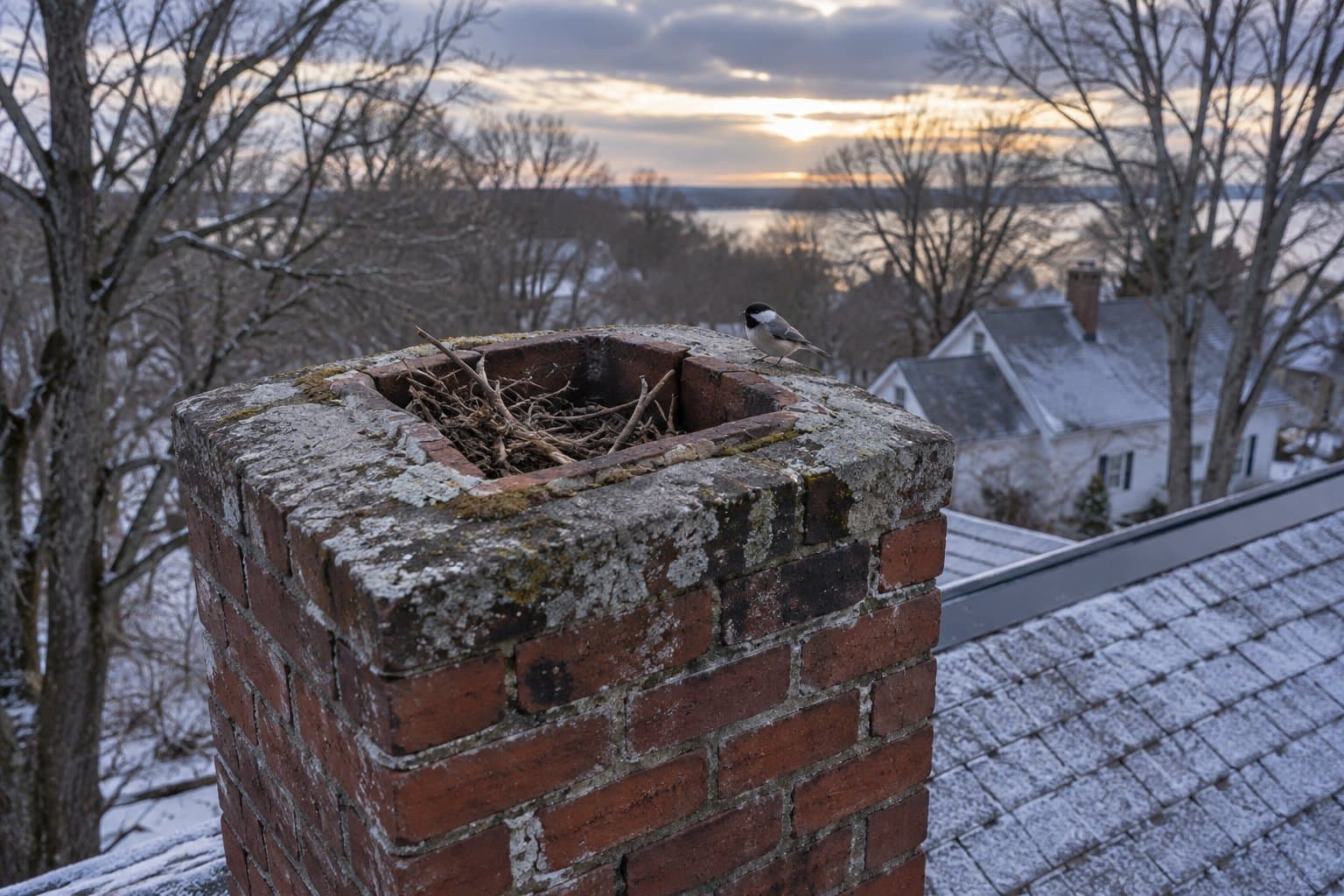
Most of the housing in Binghamton predates 1940 — Victorians, foursquares and two-family homes with full basements and original masonry chimneys. A lot of those chimneys were built for coal or oil and later lined for gas, which means the flue may still be venting an appliance even if nobody has used the fireplace in years. If a nest is blocking that flue, exhaust has nowhere to go. New York's heating season runs roughly October through April, so these chimneys are working hard for half the year.
While you wait — please don't
- Don't light a fire to drive it out. It is cruel, and burning nesting material is a common cause of chimney fires.
- Don't use the fireplace until it's been inspected. You don't know yet how much of the flue is packed with debris, and smoke will come back into the room.
- Get out and call 911 if a CO alarm sounds. A blocked flue on a gas or oil appliance can push carbon monoxide back into the house, and that is not something to investigate yourself.
- Don't reach in or handle droppings. Droppings carry disease, and in many places nesting birds are legally protected, so the species needs to be identified before anything is removed.
What the technician does
- The animal gets identified firstNothing is removed until the technician knows what is up there. Species matters for how it comes out and whether it's protected.
- Removal or humane evictionDepending on what's found, the animal is removed or humanely evicted, with a wildlife specialist brought in where the species requires it.
- Nesting material and debris clearedTwigs, grass, feathers and droppings are taken out of the smoke chamber and flue rather than pushed down into the firebox and left.
- The flue is swept and inspectedOnce it's empty, the chimney is swept and inspected top to bottom so you know whether the liner, crown or mortar took any damage.
- A cap with mesh is fittedAn uncapped flue is the whole cause. A properly sized cap with mesh keeps birds and animals out and keeps rain off the liner.
- You see the price before any work startsThe technician inspects the chimney, gives you the price, and you approve it first. The estimate is free.
Why this happens in Binghamton, NY
Spring nesting is the peak for this. Chimneys on the North and East Sides, the West Side and First Ward are often tall masonry stacks on older wood-frame houses, and an open flue on a quiet street looks like a hollow tree to a bird. If the cap went missing over the winter, you may not notice until you hear the scratching in April.
Binghamton gets repeated freeze-thaw cycles and some of the dampest, cloudiest weather in the country. That cracks crowns and opens mortar joints, and it loosens the hardware holding a cap on. Humid summers keep unused flues damp, which makes a flue full of old nesting material smell worse and rot faster. It's worth having the chimney capped and swept before the heating season, which is when demand across the Binghamton area climbs anyway.
Questions people ask
- Can you just knock the nest down from the top?
- Not before the animal is identified. Nesting birds are legally protected in many places, and a nest may still be occupied. The technician checks first, then decides whether a wildlife specialist is needed.
- I have a gas furnace venting into that chimney. Is this urgent?
- Treat it as serious. Many Binghamton chimneys were built for coal or oil and later lined for gas, so the flue is still an active vent. If a carbon monoxide alarm sounds, get everyone outside and call 911.
- Do I need a permit for this in Binghamton?
- Routine sweeping and inspection generally don't require one in New York. Permits are issued locally by the municipal or county building department, and are typically needed for things like relining a flue as part of an appliance installation or structural masonry work. Call the local building department before any larger work begins.
- How do I know the chimney is actually clear afterwards?
- Ask to see the camera footage from the inspection, and ask for the reasoning in writing if any repair is recommended. You should be able to see the condition of the liner and the smoke chamber for yourself.
- Who actually comes to the house?
- One Call Chimney is a referral and scheduling service. We arrange the work with independent sweeps and masons — we are not the contractor and we don't perform the work ourselves. Licensing for this trade in New York is handled locally, so you can verify current requirements with your city or county office.
One call
Call (866) 576-7943 and we'll arrange for someone to come out, find what's in your Binghamton chimney and clear it. The estimate is free, and you agree the price before any work starts.
More from One Call Chimney
Nearby
Answers
Free tool
Something else in this area
- Rebuild or new chimney
- Smoke comes back into the room
- Never been swept
- Water coming in
- Smells of smoke or damp
- Damper stuck or broken
- Cracked crown or crumbling brick
- Liner damaged or missing
One Call Chimney arranges the visit; the technician does the work and gives you the price.