
Smells of smoke or damp in Yonkers, NY
That sour, smoky, ashtray smell coming out of the fireplace is usually the creosote itself. Creosote is the tarry residue left on the flue walls by burning wood. It sits there quietly all winter, then gets damp and starts to give off odor. Sometimes there is a second source on top of it — rain getting into the flue, a nest or animal debris, or old soot that has never been cleaned out. The smell is a sign the chimney is telling you something, not a nuisance to be covered up.
Phones answered around the clock · free estimate
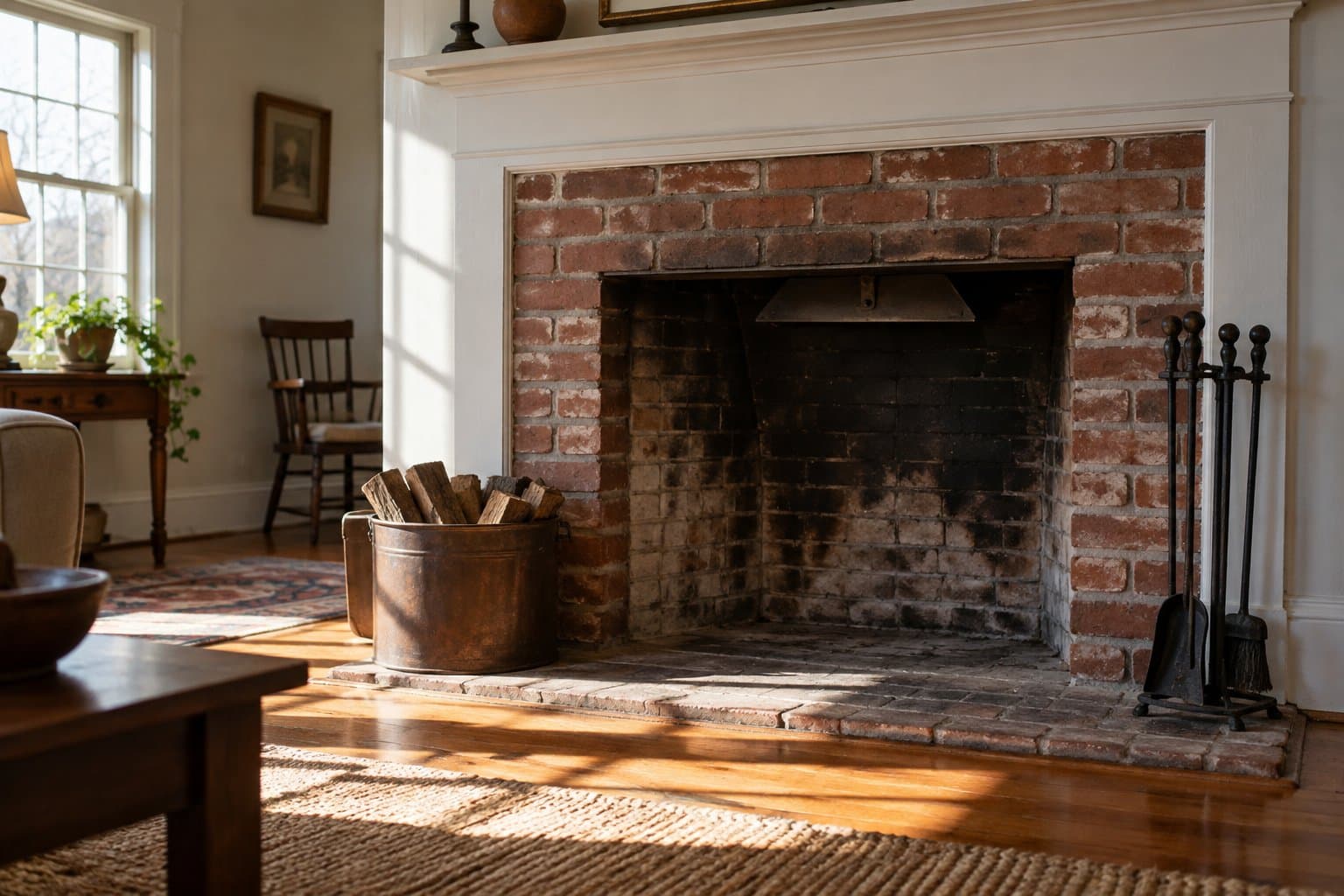
It is almost always worse in summer, and there is a simple reason. Warm, humid outside air meeting a cool flue reverses the airflow, so instead of drawing up and out, the chimney breathes into the house. Yonkers gives that setup everything it needs: hot, humid summers in the 80s and 90s, and humidity that stays high year-round. The housing stock adds to it. Much of Yonkers predates 1940 — brick and stucco rowhouses, wood-frame and brick two- and three-family homes, prewar brick apartment buildings and co-ops — and masonry chimneys are very common, many originally built for oil or coal heat and later converted. Aging liners, deteriorated crowns and open mortar joints all let moisture reach soot that has been there a long time.
While you wait — please don't
- Do not mask it. Closing the damper and adding an air freshener hides the smell but not the cause, and the flue may still be full of fuel that can burn.
- Treat headaches or nausea as carbon monoxide. If anyone in the house has headaches, nausea or dizziness along with the smell, get everyone outside into fresh air and call 911 — it is carbon monoxide until proven otherwise.
- Stop using the fireplace if smoke comes into the room. Smoke entering the living space means the flue is not clearing properly, so stop burning and have the chimney inspected before you light another fire.
- Do not seal the chimney off and forget it. Blocking the opening traps the moisture inside the masonry, and a wet flue full of creosote keeps deteriorating out of sight.
What the technician does
- The flue gets sweptSince the smell is usually the creosote itself, removing it removes the source. This is the first and biggest step on most odor calls.
- The moisture path gets found and closedThe technician checks the cap, the crown and the flashing, because rain and melt water reaching soot is what turns a faint smell into a strong one. Ask to see the camera footage and photos of anything called out.
- Nest and animal debris is clearedTwigs, leaves, droppings and remains in a flue smell on their own and hold damp against the walls. They come out with the sweeping.
- The damper is repaired or replacedA damper that will not close lets the chimney breathe straight into the room. A top-sealing damper fitted at the top of the flue closes it off at the crown instead, which also keeps rain and animals out.
- House pressure is consideredIf the house is pulling air down the chimney, sweeping alone may not settle it. The technician looks at what else in the home is moving air before recommending anything further.
- You get the price firstThe technician inspects the chimney and gives you the price before any work starts, and you approve it first. Ask for the reasoning in writing.
Why this happens in Yonkers, NY
Yonkers sits on steep Hudson River hills, and the weather works on masonry hard. Winters regularly drop into the teens and 20s with roughly 25 to 30 inches of snow, and repeated freeze-thaw cycles crack chimney crowns and open mortar joints. Every crack is another way for water to reach the inside of the flue. On top of that, remnants of tropical storms and hurricanes — Irene, Sandy, Ida — bring wind and intense rain that overwhelm flashing. A chimney that smells faintly in April can smell strongly by July after a wet spring.
The city's large stock of century-old brick and masonry buildings means aging liners, deteriorated crowns and repointing are routine work here, whether the house is a prewar two-family near Nodine Hill, a rowhouse close to Getty Square or a postwar single-family in Crestwood or Colonial Heights. Many Yonkers homes still run flues originally sized for older oil-fired systems, so the chimney may be doing more than serving a fireplace. Demand climbs in late fall as people get heating systems and chimneys ready before the first freeze, and again in spring when freeze-thaw damage becomes visible — a summer smell is a good reason to get it looked at before that rush.
Questions people ask
- Why does my chimney only smell in summer?
- Warm, humid air outside and a cool flue inside reverse the normal airflow, so the chimney draws downward into the house. Yonkers summers in the 80s and 90s with high humidity make that happen often. The creosote is there all year; summer is just when you smell it.
- Will sweeping alone fix the smell?
- Often it does, because the creosote is usually the source. But if rain is getting in at the cap, crown or flashing, or a damper will not close, that has to be dealt with too. The inspection is what tells you which of those apply.
- Is a chimney smell dangerous?
- The odor itself is a warning that there is fuel in the flue and likely moisture too. If the smell comes with headaches, nausea or dizziness, get outside and call 911, because that points to carbon monoxide. Do not burn anything until the chimney has been looked at.
- Do I need a permit in Yonkers for this?
- In New York, permits are issued locally by the municipal building department and code enforcement officer, not by a state agency. Routine sweeping and inspection generally do not require one, but installing a stove or insert, relining a flue as part of an appliance installation, or rebuilding masonry above the roofline usually does. Call your local building department before that kind of work begins.
- Does One Call Chimney do the work?
- No. One Call Chimney is a referral and scheduling service that arranges chimney work with independent sweeps and masons across all fifty states, including Yonkers. We are not the contractor and we do not perform the work. New York has no statewide chimney-sweep license, so verify current licensing or registration requirements with the city or county consumer affairs office where the work will be done.
One call
One call to (866) 576-7943 gets a sweep scheduled for your Yonkers chimney, and the estimate is free. The technician inspects the chimney and gives you the price before any work starts, and nothing happens until you approve it.
Something else in this area
- Water coming in
- Liner damaged or missing
- Never been swept
- Something living up there
- Smoke comes back into the room
- Damper stuck or broken
One Call Chimney arranges the visit; the technician does the work and gives you the price.