Something living up there in Syracuse, NY
You are hearing scratching, chirping or flapping from the chimney. Something has moved in. Birds are the usual answer, and a nest can sit on the smoke shelf or wedge in the flue within days. The sound often gets louder in the morning and evening, and it may come and go as the adults fly in and out.
Phones answered around the clock · free estimate
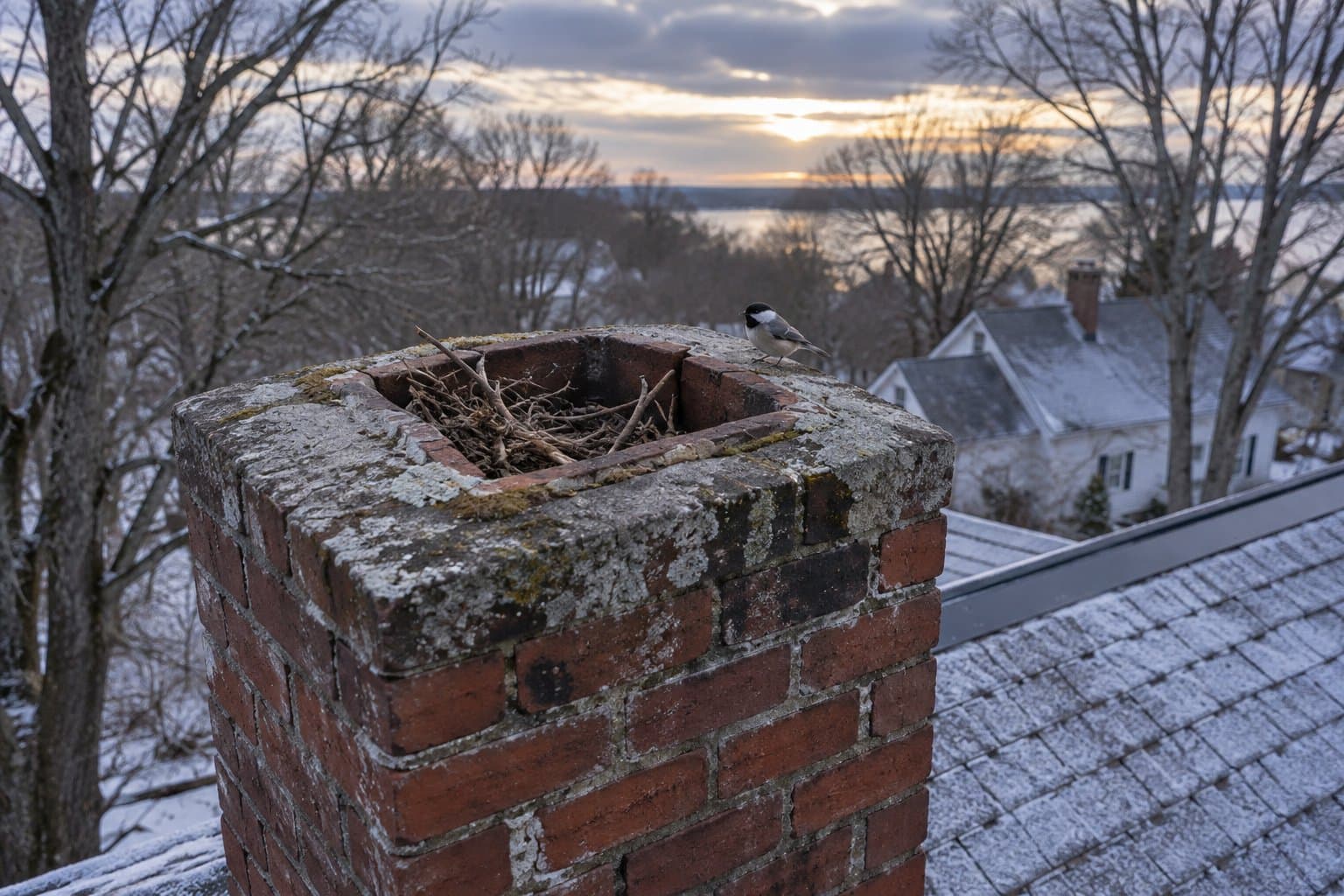
In Syracuse this almost always comes down to one thing: the flue is open at the top. Masonry chimneys and fireplaces are widespread in the city's older housing, and a large share of homes here were built before 1940. Many of those chimneys were never fitted with a cap, or the cap rusted out and nobody noticed. New York's long heating season, roughly October through April, means the flue sits unused through spring and summer — exactly when birds and animals are looking for a warm, sheltered shaft. Freeze-thaw cycling also chews at crowns and mortar joints on century-old Syracuse brick, and gaps at the top make the opening easier to get into.
While you wait — please don't
- Do not light a fire. Burning an animal out is cruel, and burning nesting material is a common cause of chimney fires.
- Do not use the fireplace until the flue is checked. A nest is a blockage, and a blocked flue can push smoke and combustion gases back into the room.
- Get out and call 911 if anyone feels ill. Headache, nausea, dizziness or drowsiness around a fuel-burning appliance can mean carbon monoxide — leave the house first, then call.
- Do not open the damper to look. You can drop nesting material, droppings and a frightened animal straight into the room, and droppings carry disease.
- Do not try to remove a bird nest yourself. In many places nesting birds are legally protected, and the species has to be identified before anything is done.
What the technician does
- The animal is identified firstNothing is removed until the technician knows what is up there. Birds, a nest with young, or another animal all get handled differently.
- Removal or humane evictionWhere the species requires it, the work is done with a wildlife specialist so the animal is dealt with properly and legally.
- Nesting material and debris clearedTwigs, droppings and packed material come out of the flue and off the smoke shelf. That is the part that would otherwise burn.
- Flue swept and inspectedOnce it is clear, the flue is swept and inspected so you know whether the liner and joints came through it undamaged.
- A properly sized cap with mesh fittedThe cap is the fix. Mesh keeps birds and animals out and the cap keeps rain off the flue, which matters on older Syracuse masonry.
- You get the price before any work startsThe technician inspects the chimney, gives the price, and you approve it first. The estimate is free.
Why this happens in Syracuse, NY
Spring nesting is the peak for this problem, and Syracuse homeowners tend to notice it just as the heating season winds down. The flue goes quiet, the house opens up, and suddenly you can hear everything happening in the chimney. Older wards and neighbourhoods around the city — Eastwood, Westcott, Tipperary Hill, Salt Springs — have plenty of brick and stone masonry chimneys on pre-1940 houses, and an uncapped one is an open invitation.
There is a second reason to get a cap on while you are at it. Syracuse is among the snowiest large cities in the country thanks to lake-effect snow off Lake Ontario, and repeated freeze-thaw cycles are hard on chimney crowns, mortar joints and brick faces, especially where a flue has absorbed moisture. Century-old brick chimneys here commonly show spalling and mortar loss and need periodic repointing and liner inspection. If the technician is already at the top fitting a cap, that is the moment to ask what the crown and the joints look like. Demand climbs in early fall as people prep for winter, so spring and summer are an easier time to get this booked.
Questions people ask
- Can I just wait for the birds to leave?
- You can, but the nest stays behind, and nesting material in a flue is a fire risk once you light up in the fall. Droppings also carry disease. The flue still needs to be cleared, swept and capped either way.
- Do I need a permit for this in Syracuse?
- In New York, permits are issued locally by the municipal or county building department, not by a state agency. Routine sweeping and inspection generally do not require one. Call your local building department before any structural masonry work begins.
- Is a chimney sweep licensed in New York?
- New York does not issue a statewide license for chimney sweeping, inspection or masonry repair — it is handled locally. Many upstate municipalities require only local registration or nothing at all. You can verify current requirements with the city or county consumer affairs or licensing office.
- Why do Syracuse chimneys keep getting animals in them?
- Masonry chimneys and fireplaces are widespread in the city's older housing stock, much of it built before 1940. Many of those flues have no cap, and freeze-thaw damage to crowns and mortar can open things up further. A properly sized cap with mesh solves it.
- How do I know the flue is actually clear afterwards?
- Ask the technician to show you the camera footage from the inspection, and ask for the reasoning in writing. That way you can see the liner and the smoke shelf for yourself before you use the fireplace again.
- Who does the work?
- One Call Chimney is a referral and scheduling service. We arrange the job with independent sweeps and masons and we are not the contractor — we do not perform the work ourselves. We cover all fifty states, including Syracuse and the surrounding towns.
One call
Call (866) 576-7943 and we will arrange for a technician to identify what is in the chimney, clear it, sweep the flue and fit a cap. The estimate is free, and you approve the price before any work starts.
Something else in this area
- Never been swept
- Smoke comes back into the room
- Water coming in
- Smells of smoke or damp
- Damper stuck or broken
- Cracked crown or crumbling brick
- Liner damaged or missing
One Call Chimney arranges the visit; the technician does the work and gives you the price.