Something living up there in Troy, NY
You hear scratching. Maybe chirping, early in the morning. Maybe a flutter when you open the damper. Almost always, that means an animal or a bird has gone down an open flue and is either nesting or stuck. A chimney looks like a hollow tree to a bird. It is dark, dry and sheltered, and nothing is stopping anything from dropping in.
Phones answered around the clock · free estimate
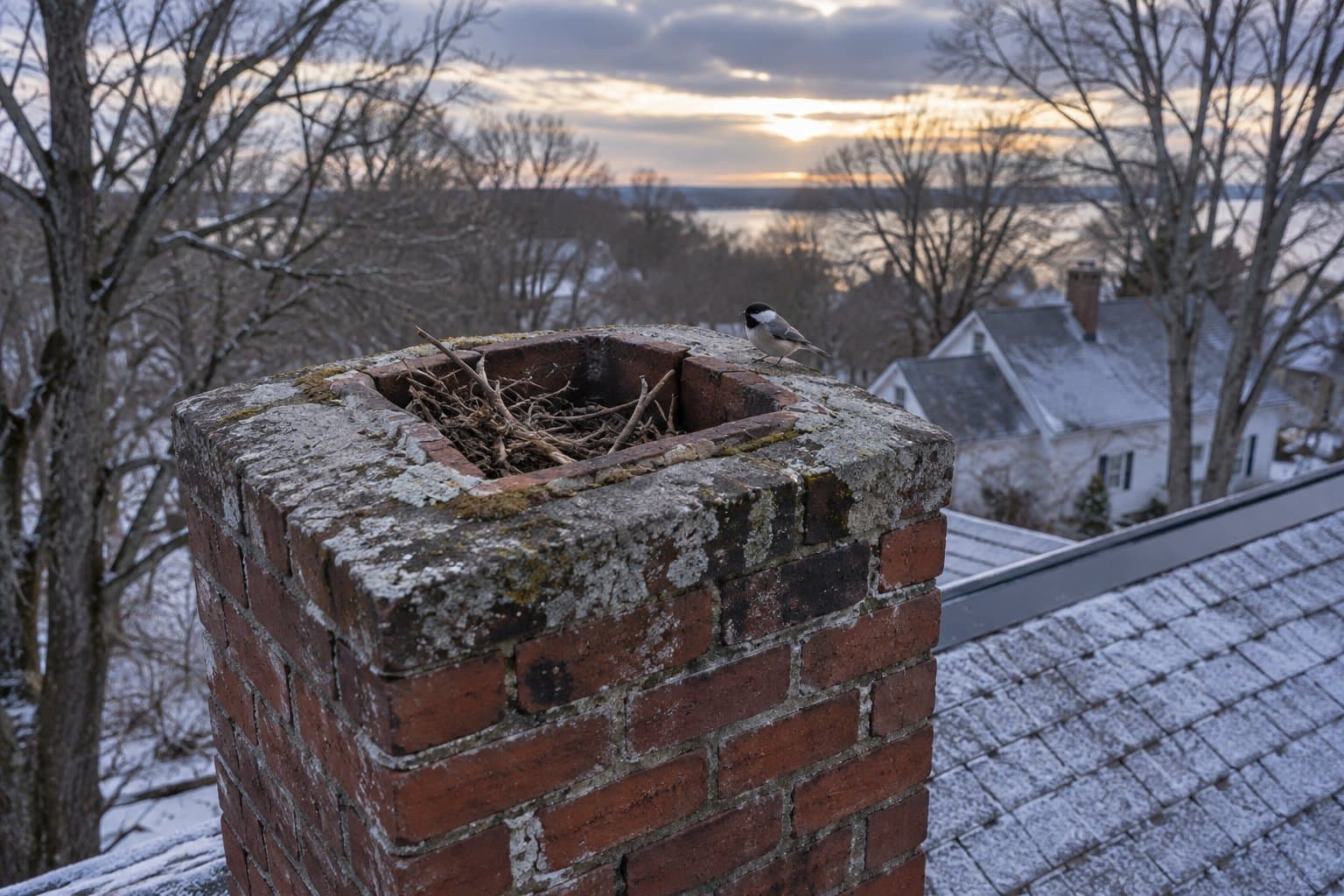
In Troy this happens because so many flues are open at the top. The housing here is old — 19th- and early-20th-century brick rowhouses, two- and three-family wood-frame homes, Victorian-era masonry. A lot of those chimneys were built before caps were standard, and plenty are decommissioned or barely used, which makes them quiet and attractive to wildlife. New York's freeze-thaw winters also chew at crowns and mortar joints, so a cap that was fitted years ago can work loose or the crown under it can crack open. Spring nesting is the peak season, and an uncapped flue is the whole cause.
While you wait — please don't
- Do not light a fire to drive it out. It is cruel, and burning nesting material is a common cause of chimney fires.
- Stop using the fireplace until the flue is checked. A nest is a blockage, and a blocked flue can push smoke and carbon monoxide back into the room instead of up and out.
- If anyone feels dizzy, sick or headachy, get outside and call 911. Those are carbon monoxide symptoms and you do not diagnose them indoors.
- Do not reach in or poke at it. Droppings and nesting debris carry disease, and a frightened animal in a tight space will not come out the way you want it to.
- Do not assume you can just remove a nest. In many places nesting birds are legally protected, and the species has to be identified before anything is touched.
What the technician does
- The animal is identified firstNothing gets done until the technician knows what is up there and whether it is nesting. That decides everything that follows.
- Removal or humane evictionDepending on the species, the animal is removed or humanely evicted. Where the species requires it, that is handled with a wildlife specialist.
- Nesting material and debris come outTwigs, leaves, droppings and whatever else has collected are cleared from the flue and the smoke chamber. That material is combustible, so it does not stay.
- The flue is sweptOnce it is clear, the chimney is swept properly so the passage is open top to bottom.
- The flue is inspectedThe technician checks the condition of the liner, the crown and the structure while the chimney is empty and accessible. Ask to see the camera footage if an internal inspection is done.
- A cap with mesh is fittedA properly sized cap with mesh keeps birds and animals out and stops this happening again next spring.
Why this happens in Troy, NY
Troy's rowhouses often share party walls and stacks, so one chimney stack can serve more than one home. That matters when something is nesting in it — the noise you hear may not be coming from your own flue. A technician identifies which flue is occupied before anything is removed. The Collar City has one of the best-preserved stocks of 19th-century brick and brownstone rowhouses in the Northeast, and a lot of those original flues are still in place, lined with clay tile or not lined at all.
Timing follows the weather here. Spring is nesting season, and it lands right when the thaw is showing up freeze damage to masonry — cracked crowns, loose mortar, gaps where a cap used to sit. Demand climbs again in early fall when people in Troy, Lansingburgh, South Troy and the surrounding towns start prepping chimneys before the heating season. If you hear something now, getting the cap sorted before fall means the flue is clear and closed off when you actually want to use it.
Questions people ask
- Can you just remove the birds?
- Not always. In many places nesting birds are legally protected, so the species has to be identified first. Where the species requires it, removal is handled with a wildlife specialist.
- Why did this happen to my Troy house?
- Almost certainly an uncapped or damaged flue. Troy's housing is unusually old for the region, with many original chimneys built before caps were common, and New York's freeze-thaw cycles crack crowns and open gaps around the top.
- I share a chimney stack with my neighbor. Does that complicate it?
- Shared stacks are common in Troy's rowhouses, and the technician works out which flue the animal is in before anything is removed. It is worth telling your neighbor what you are hearing. Access and the work needed depend on what the inspection finds.
- Do I need a permit for this in Troy?
- In New York, permits are issued locally by the municipal building department, not by a state agency, and routine sweeping and inspection generally do not require one. Structural masonry work above the roofline usually does. Call Troy's building department before that kind of work begins.
- Who actually comes out?
- One Call Chimney is a referral and scheduling service. We arrange the work with independent sweeps and masons — we are not the contractor and we do not perform the work ourselves. We cover all fifty states, including Troy and the rest of New York.
One call
One call to (866) 576-7943 and we'll arrange for a technician to come out and look at what's in your chimney. The estimate is free — the technician inspects the chimney and gives you the price before any work starts, and you approve it first.
More from One Call Chimney
Nearby
Answers
Free tool
Something else in this area
- Smoke comes back into the room
- Never been swept
- Water coming in
- Smells of smoke or damp
- Cracked crown or crumbling brick
- Liner damaged or missing
- Damper stuck or broken
- Rebuild or new chimney
One Call Chimney arranges the visit; the technician does the work and gives you the price.