
Something living up there in Rochester, NY
You are hearing scratching, flapping or chirping from behind the firebox or up inside the flue. Almost always that means an animal or a bird has come down an open chimney top and cannot climb back out, or has built a nest on a smoke shelf or a ledge partway down. Nests bring twigs, leaves and droppings with them, and that material sits right in the path your smoke needs. Until the flue is checked and cleared, treat the fireplace as out of service.
Phones answered around the clock · free estimate
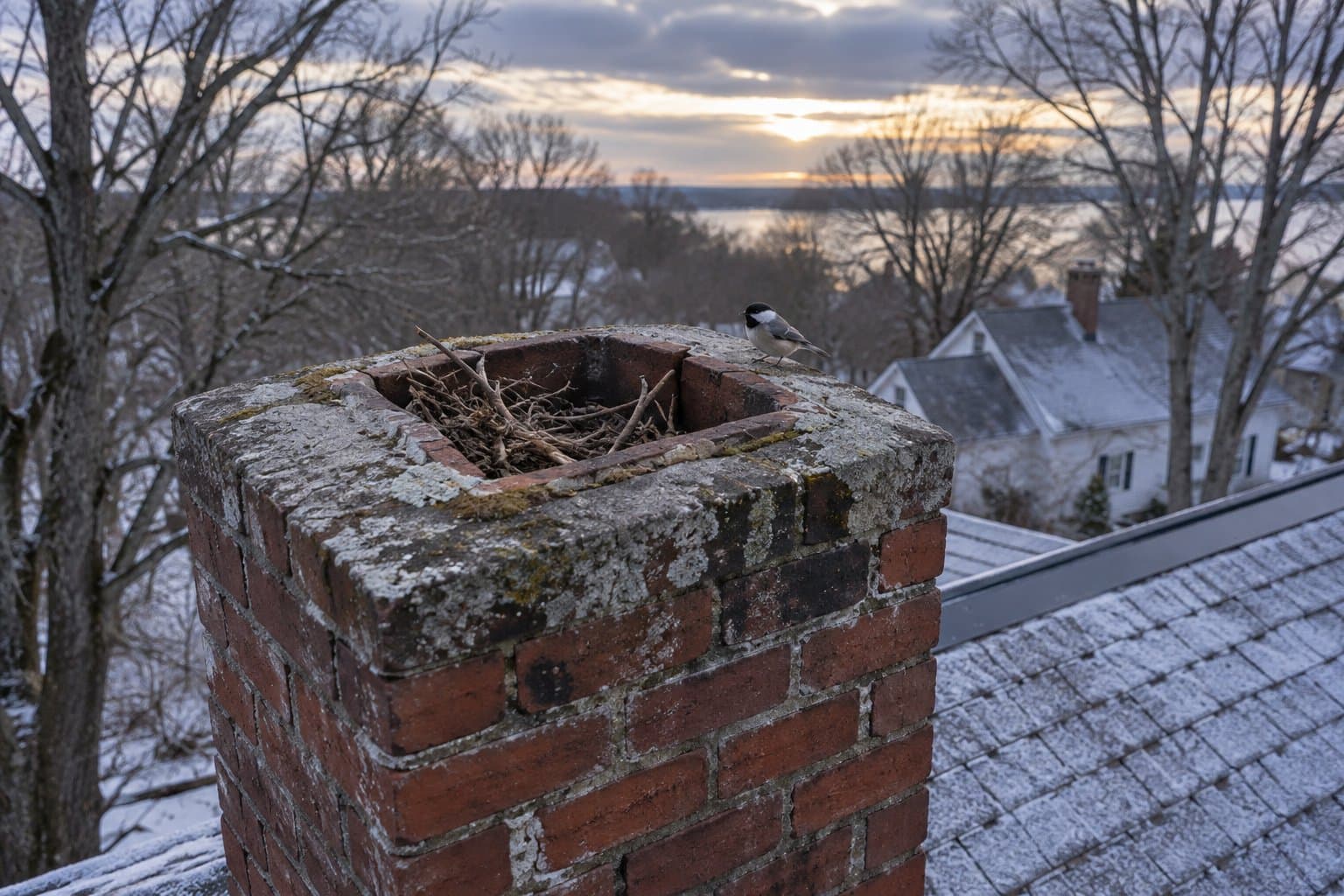
This is common in Rochester because so much of the housing stock here predates 1940 — Victorians, foursquares, colonials and bungalows that still have their original masonry chimneys. A lot of those flues are unlined or undersized, and plenty have never had a properly sized cap fitted at the top. An open flue is an open door. Rochester's freeze-thaw winters and lake-effect snow also work on crowns and mortar joints, and gaps that open up at the top give birds and animals even more ways in.
While you wait — please don't
- Do not light a fire. Burning an animal out is cruel, and burning dry nesting material is one of the most common causes of chimney fires.
- Do not use the fireplace or stove at all until it is inspected. A nest is a blockage, and a blocked flue can push smoke and combustion gases back into the room instead of up and out.
- Get out and call 911 if a CO alarm sounds or anyone feels sick. Headache, dizziness, nausea or confusion with a blocked flue can mean carbon monoxide — leave the house first, then call.
- Do not reach in or poke at the damper. Droppings and nesting debris carry disease, and a frightened animal in a confined flue is difficult and unpleasant to handle from below.
- Do not remove a nest yourself if there are birds in it. In many places nesting birds are legally protected, so the species needs to be identified before anything is touched.
What the technician does
- The animal is identified firstNothing is removed until the technician knows what is up there and whether it is nesting. That decides what is legal and what is practical.
- Removal or humane evictionThe animal is removed or humanely evicted, and where the species requires it, that is done with a wildlife specialist rather than by the sweep alone.
- Nesting material and debris come outTwigs, leaves, droppings and anything else caught on the smoke shelf or the ledges is cleared out of the flue.
- The flue is swept and inspectedOnce it is clear, the flue is swept and looked over, which also gives you a straight answer on the condition of the liner and the crown.
- A cap with mesh is fittedA properly sized cap with mesh closes the top so this does not repeat. An uncapped flue is the whole cause of the problem.
- You get the price before work startsThe technician inspects the chimney and gives you the price first. You approve it, then the work begins.
Why this happens in Rochester, NY
Spring is the peak for this in Rochester. That is nesting season, and an open masonry flue on a Park Avenue Victorian or a Corn Hill brick house is an easy site for a bird. Older homes around the South Wedge, Beechwood, Maplewood and the 19th Ward often still have original chimneys that were built before caps were standard, and many of those flues were never lined. If yours has never had liner and crown work looked at, an animal call is a sensible time to have both checked.
Rochester summers are humid, which keeps an unused flue damp and can bring creosote odors and staining into the room — nesting debris left sitting in there makes that worse. Then the heating season arrives, and demand climbs across Rochester and the surrounding towns like Brighton, Greece, Irondequoit and Penfield before the first hard freeze. Getting an animal problem cleared and a cap fitted in spring or summer means you are not chasing it in November.
Questions people ask
- Can I just wait for it to leave on its own?
- Usually it cannot get back out — a masonry flue is too narrow and too smooth to climb. Waiting also leaves nesting material and droppings sitting in the flue, which stay there after the animal is gone.
- Do I need a permit for this in Rochester?
- In New York, permits are issued locally by the municipal or county building department, not by a state agency. Routine sweeping and inspection generally do not require one, but structural masonry work above the roofline usually does, so call your local building department before that kind of work begins.
- Is there a state chimney sweep license in New York?
- New York does not issue a statewide license for chimney sweeping, inspection or masonry repair — it is handled locally. Some downstate counties run their own home improvement contractor programs, and many upstate municipalities require only local registration, so check with the city or county licensing office where the work will be done.
- Why does this keep happening to my chimney?
- Almost always because the top is open. A properly sized cap with mesh is what stops it, and on Rochester's older chimneys the crown and the top courses of brick are worth checking at the same time, since freeze-thaw cycles open gaps up there.
- How do I know the flue is actually clear afterwards?
- Ask the technician to show you the camera footage of the flue, and ask for the reasoning behind any recommended repair in writing. Both are reasonable requests on any chimney job.
One call
One Call Chimney is a referral and scheduling service that arranges chimney work with independent sweeps and masons across all fifty states — we are not the contractor and we do not perform the work. Call (866) 576-7943 and we will arrange a free estimate in Rochester, with the price given and approved by you before any work starts.
Something else in this area
- Water coming in
- Smoke comes back into the room
- Smells of smoke or damp
- Liner damaged or missing
- Never been swept
- Rebuild or new chimney
- Cracked crown or crumbling brick
- Damper stuck or broken
One Call Chimney arranges the visit; the technician does the work and gives you the price.