
Something living up there in Schenectady, NY
You hear scratching, flapping, chirping or a soft scuffling sound behind the damper. Something has gotten into the flue. In most cases it is a bird that dropped in and cannot climb back out, or an animal that has built a nest on the smoke shelf. The sound usually comes and goes through the day, and it often gets louder in the morning and early evening.
Phones answered around the clock · free estimate
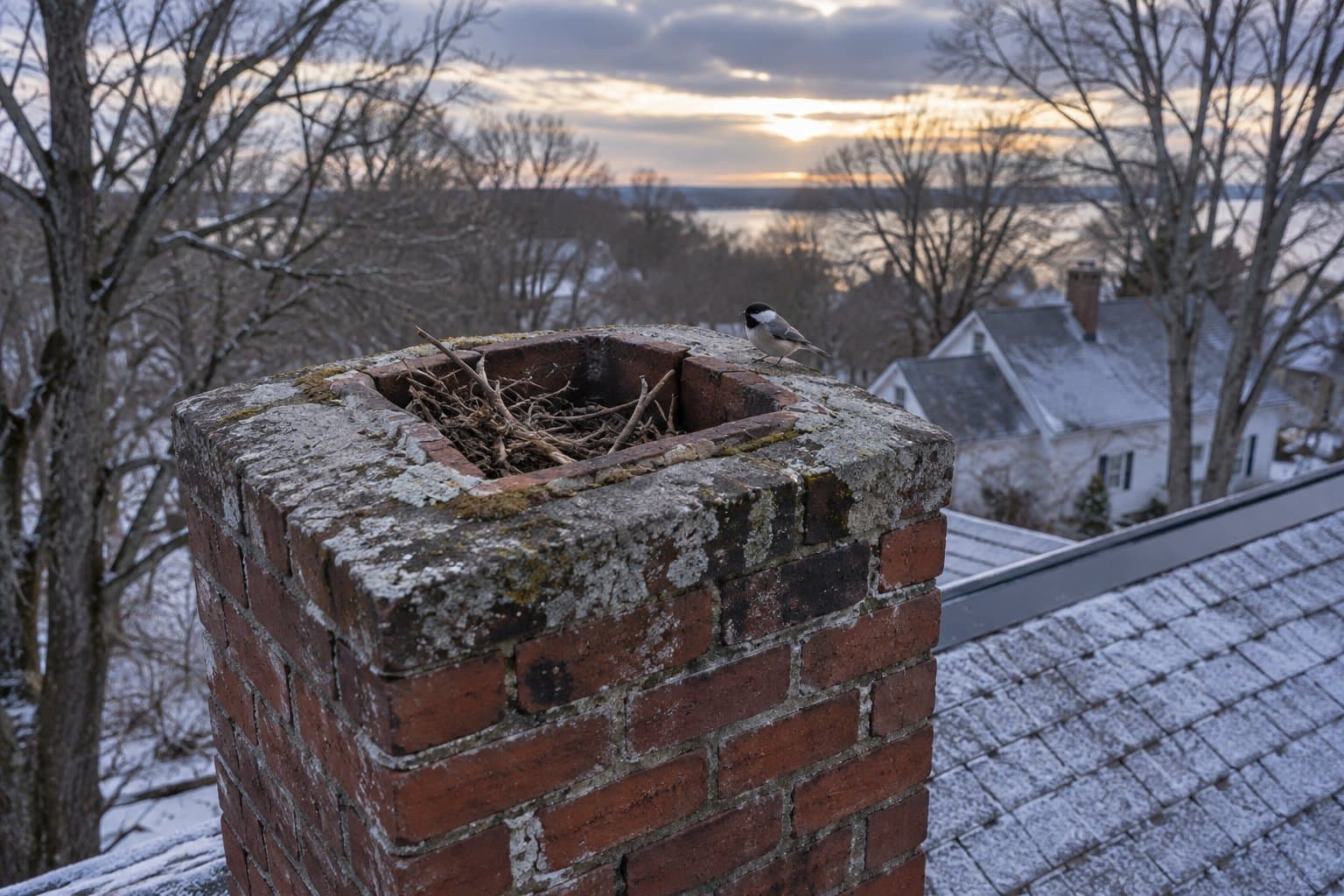
This happens because the top of the chimney is open. An uncapped flue is the whole cause. Schenectady has a lot of older housing — a large share of the city's homes were built before 1940, during the General Electric and American Locomotive years — and masonry chimneys with original fireplaces are widespread in that older stock. Many of those flues were built without a cap, or had one that gave out. New York's freeze-thaw winters are hard on crowns and mortar, and a cracked crown or a loose cap leaves an opening an animal can use. Spring is the peak season for nesting.
While you wait — please don't
- Do not light a fire. Burning an animal out is cruel, and burning dry nesting material is a common cause of chimney fires.
- Do not use the fireplace until the flue is clear. A nest is a blockage, and a blocked flue can push smoke and combustion gases back into the room instead of up the chimney.
- If anyone feels sick, get out and call 911. Headache, dizziness, nausea or confusion with a fire or a fuel-burning appliance running can mean carbon monoxide — go outside first, then call.
- Do not reach up past the damper. Droppings and nesting debris carry disease, and a frightened animal will bite or scratch.
- Do not open the damper to look. That can drop the animal, the nest and the droppings straight into your living room.
What the technician does
- The animal gets identified firstNothing is done until the technician knows what is up there and whether it is a nest with young. That decides the method.
- Removal or humane evictionSome species need a wildlife specialist, and in many places nesting birds are legally protected. Where that applies, the work is arranged with a specialist rather than done at the fireplace.
- Nesting material and debris come outSticks, leaves, feathers and droppings are cleared from the smoke shelf and the flue. That material is both a fire hazard and a health hazard, so it does not get left in place.
- The flue is sweptOnce the obstruction is out, the chimney is swept so the full length of the flue is clear from the firebox to the top.
- The chimney is inspectedThe technician checks the liner, the crown and the top of the chimney for damage, including anything an animal has disturbed or any opening it used to get in.
- A cap with mesh is fittedA properly sized cap with mesh keeps birds and animals out and keeps rain off the flue. Without it, the same thing happens again next spring.
Why this happens in Schenectady, NY
Schenectady's older neighborhoods are full of century-old masonry chimneys, and unlined ones are a common service call here. In the Stockade, the GE Realty Plot, Mont Pleasant, Woodlawn and along Upper Union Street, original fireplaces and tall brick stacks are normal. A tall uncapped flue reads as a hollow tree to a nesting bird. That is why these calls cluster in spring, when nesting is at its peak.
The weather works against an open flue too. Winters in Schenectady regularly drop into the teens with multi-day deep freezes, and repeated freeze-thaw cycles crack crowns and spall brick. Once the crown cracks or a cap works loose, the way in is open. New York's humid summers also keep unused flues damp, which is why a chimney with old nesting material in it can start to smell. Statewide, demand climbs in late summer and fall as people get ready for the heating season — if you heard something in spring, it is worth dealing with before the first cold snap, not after.
Questions people ask
- Can you just light a small fire to make it leave?
- No. It is cruel, and dry nesting material in a flue burns hot and fast, which is a common cause of chimney fires. Leave the fireplace cold until the flue has been cleared and inspected.
- I hear it but I have not used the fireplace in years. Does it still matter?
- Yes. Nesting material and droppings sit in the flue and stay there, and New York's humid summers keep an unused flue damp, which can bring odors into the room. It also tells you the top of the chimney is open to weather.
- Why does this keep happening to my Schenectady house?
- Almost always because the flue has no cap, or the cap is damaged. Schenectady's pre-1940 masonry chimneys were often built without one, and freeze-thaw damage to crowns opens up new gaps. A properly sized cap with mesh is what ends the cycle.
- Do I need a permit for this in Schenectady?
- In New York, permits are issued locally by the municipal or county building department, not by a state agency, and routine sweeping and inspection generally do not require one. Structural masonry work, such as rebuilding a chimney above the roofline, usually does. Call the local building department before that kind of work begins.
- Is the chimney sweep licensed?
- New York does not issue a statewide license for chimney sweeping, inspection or masonry repair — it is handled locally, and many upstate municipalities require only local registration. You can verify current requirements with the city or county consumer affairs or licensing office, and ask the technician directly about their own credentials and insurance.
- What should I ask the technician before agreeing to work?
- Ask what species was found and how it affects the method. If an inspection camera was used, ask to see the footage, and ask for the reasoning behind any recommended repair in writing.
One call
One call sets it up: One Call Chimney arranges the visit with an independent sweep, and the estimate is free on every job. The technician inspects the chimney and gives you the price before any work starts, and nothing happens until you approve it — call (866) 576-7943.
More from One Call Chimney
Nearby
Answers
Free tool
Something else in this area
- Never been swept
- Smoke comes back into the room
- Smells of smoke or damp
- Cracked crown or crumbling brick
- Water coming in
- Damper stuck or broken
- Liner damaged or missing
- Rebuild or new chimney
One Call Chimney arranges the visit; the technician does the work and gives you the price.