Something living up there in Utica, NY
If you can hear scratching, chirping or flapping behind the firebox, something has got into the flue. Usually it is a bird that has dropped in and cannot climb back out, or a nest built on the smoke shelf. Sometimes it is an animal that went in deliberately and is now raising young in there. Either way, the chimney is blocked or on its way to being blocked, and the fireplace should not be used until someone has looked.
Phones answered around the clock · free estimate
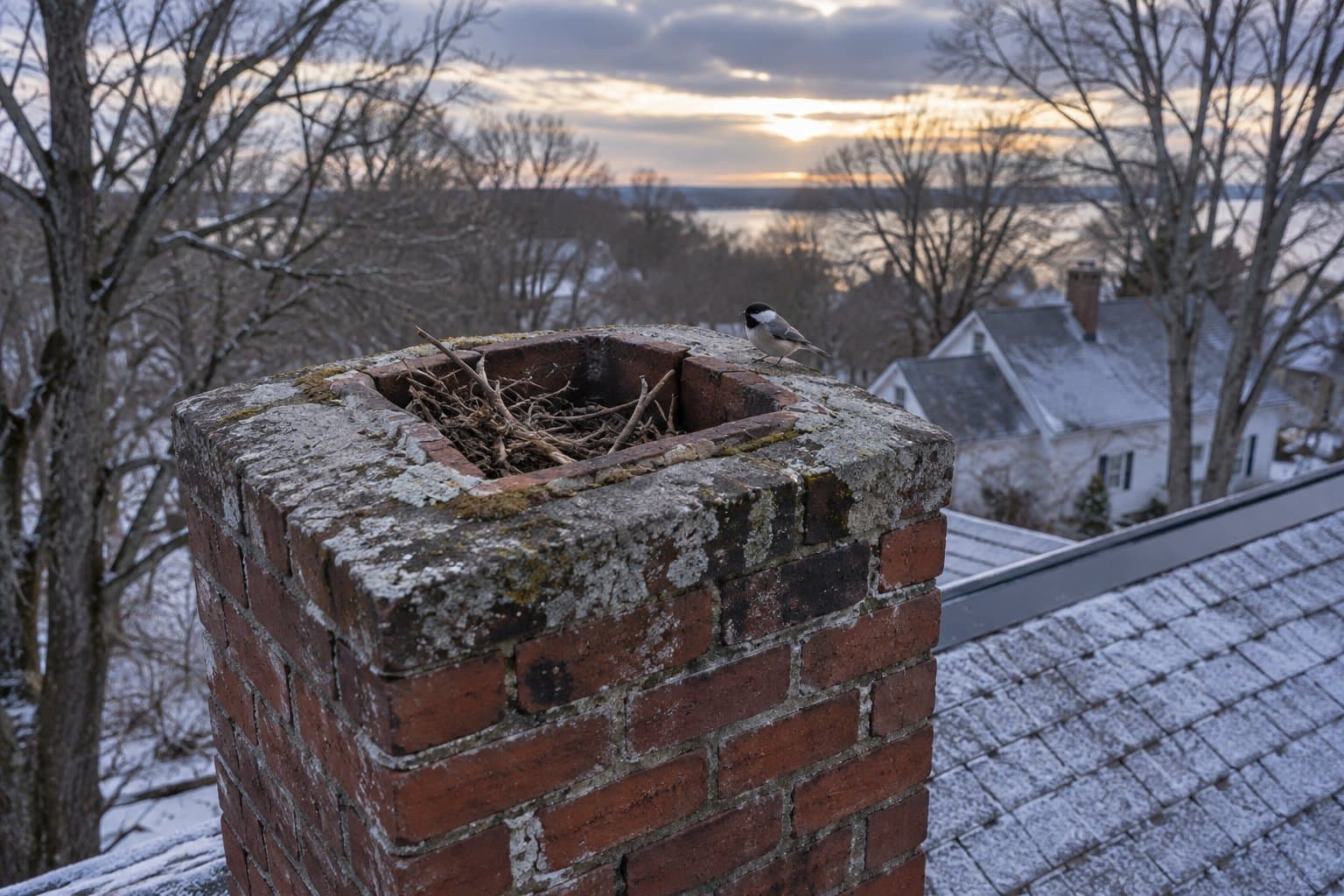
The cause is almost always the same: there is no cap on the flue, or the cap that is there has lost its mesh. Utica's housing stock is unusually old, with pre-1940 wood-frame and brick homes, Victorians, foursquares and two-family doubles, most carrying original masonry chimneys. Many of those chimneys were built for coal or early oil heat and are still in service behind a modern furnace. Years of freeze-thaw on the crown and the mortar give wildlife an open top and plenty of gaps to work with.
While you wait — please don't
- Do not light a fire to drive it out. It is cruel, and burning dry nesting material packed in a flue is a common cause of chimney fires.
- Do not use the fireplace at all until it is checked. Nesting material and debris can block the flue, so smoke and gases come back into the room instead of going up.
- Get outside and call 911 if anyone feels ill. If a furnace or water heater vents into that same chimney and you have headaches, dizziness, nausea or a carbon monoxide alarm sounding, leave the house first and call from outside.
- Do not reach in or poke at it. Droppings carry disease, a frightened animal will defend itself, and in many places nesting birds are legally protected.
- Keep the damper closed and the glass doors shut. That keeps the animal, the droppings and the debris out of your living room while you wait.
What the technician does
- The animal is identified firstNothing is done until the technician knows what is up there and whether there are young. That decides whether it is a simple removal or a job that has to wait or be handled differently.
- Removal or humane evictionSome species can be removed straight away. Where the species requires it, the work is done with a wildlife specialist and by humane eviction rather than trapping.
- Nesting material and debris come outTwigs, leaves, feathers and droppings are cleared from the smoke shelf and the flue. This is the part that would have burned if a fire had been lit.
- The flue is swept and inspectedOnce it is empty, the chimney is swept and inspected so you know the liner and the masonry were not damaged and nothing is left behind.
- A properly sized cap with mesh is fittedA cap sized to your flue with mesh keeps birds and animals out and keeps rain off the crown. Without it the same thing happens again next spring.
- You get the price before any work startsThe technician inspects the chimney and gives you the price first. You approve it before anything is done.
Why this happens in Utica, NY
Spring nesting is the peak season for this call in Utica. An uncapped flue sitting quiet through a long heating season looks like a hollow tree to a bird, and an old masonry chimney on an East Utica double or a Cornhill Victorian often has no cap at all. By the time you hear scratching, there is usually material in the flue as well as an animal.
The weather here makes it worse over time. Utica gets long winters, frequent sub-zero nights and heavy lake-effect snow off Lake Ontario, and repeated freeze-thaw cycles crack mortar joints and chimney crowns. A cracked crown and open joints give wildlife a way in and give water a way in behind them. That is also why so many older Utica chimneys end up needing relining or crown repair, and why a cap fitted now does two jobs at once. Local demand climbs in early fall when people prep chimneys before the snow, and again through the spring thaw when masonry and water problems surface.
Questions people ask
- Can I just wait for it to leave on its own?
- Sometimes a bird finds its way out, but a nest stays. The material left behind is dry fuel sitting in a flue, so the chimney still needs clearing and inspecting before you use the fireplace.
- Is it legal to remove a bird from my chimney?
- In many places nesting birds are legally protected, which is why the species is identified before anything is done. Where the rules require it, the work is handled with a wildlife specialist and done as a humane eviction.
- Why do so many Utica chimneys have this problem?
- Much of the city predates World War II and still has original masonry chimneys, many built for coal or early oil heat. A lot of them were never capped, and freeze-thaw damage to crowns and mortar opens up more ways in.
- Do I need a permit in Utica for this work?
- Permits in New York are issued locally by the municipal or county building department, not by a state agency. Routine sweeping and inspection generally do not require one, but relining or structural masonry work above the roofline usually does, so call the local building department before that work begins.
- Is One Call Chimney the company that comes out?
- No. We are a referral and scheduling service that arranges chimney work with independent sweeps and masons, and we work in all fifty states. We are not the contractor and we do not perform the work.
- How do I know the chimney is actually clear afterwards?
- Ask the technician to show you the camera footage of the flue once the nesting material is out. Ask for the reasoning behind any repair in writing, so you can read it over before you decide.
One call
One call to (866) 576-7943 gets the job scheduled with an independent sweep in the Utica area. Every job gets a free estimate: the technician inspects the chimney and gives you the price first, and you approve it before any work starts.
More from One Call Chimney
Nearby
Answers
Free tool
Something else in this area
- Smoke comes back into the room
- Never been swept
- Rebuild or new chimney
- Water coming in
- Smells of smoke or damp
- Cracked crown or crumbling brick
- Damper stuck or broken
- Liner damaged or missing
One Call Chimney arranges the visit; the technician does the work and gives you the price.