Something living up there in Albany, NY
You are hearing scratching, fluttering or chirping from inside the chimney. In almost every case, an animal or a bird has come down an uncapped or damaged flue and either cannot climb back out or has built a nest in there. The sound often gets louder in the early morning and again at dusk. Sometimes it goes quiet for a day, then starts again, which usually means young are up there too.
Phones answered around the clock · free estimate
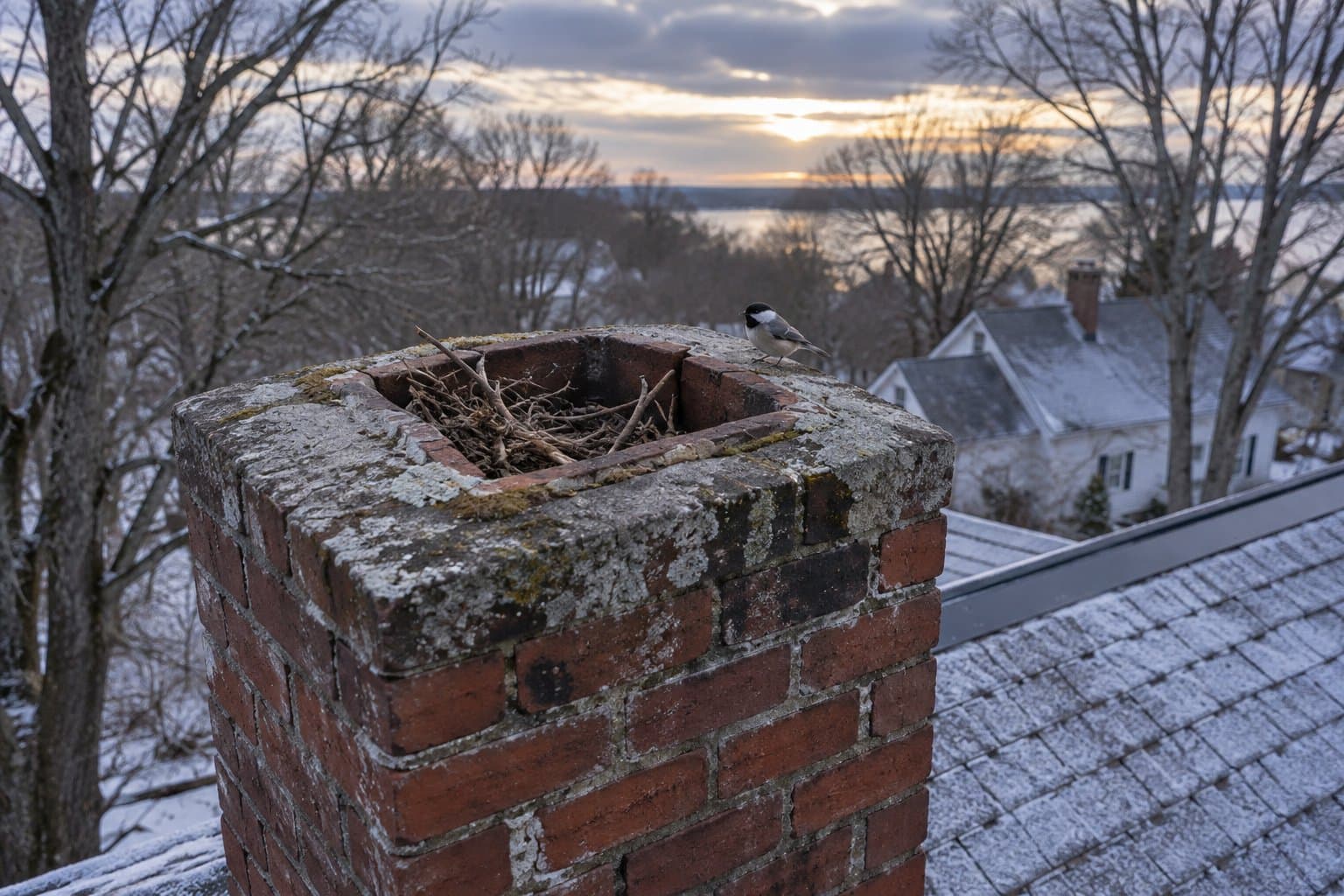
Albany has some of the oldest housing stock in the country, with large numbers of pre-1940 brick and wood-frame homes, and masonry chimneys are very common here — many of them originally built for coal or oil heat. A lot of those flues have lost their cap or never had a proper one. Add the repeated freeze-thaw cycles that crack crowns and open mortar joints in this climate, and you get gaps a bird or a squirrel can use. In New York generally, unlined or clay-tile masonry chimneys are widespread, and a rough, unlined flue gives an animal something to grip and nest on.
While you wait — please don't
- Do not light a fire to drive it out. It is cruel, and burning nesting material is a common cause of chimney fires.
- Stop using the fireplace until the flue is checked. A nest is a blockage, and a blocked flue can push smoke and combustion gases back into the room.
- If anyone feels dizzy, sick or drowsy, get outside and call 911. Those can be signs of carbon monoxide, and you need fresh air and help before anything else.
- Do not reach into the flue or handle droppings. Droppings carry disease, and an animal that feels cornered will defend itself.
- Do not open the damper to look. Opening it can drop a frightened animal, nesting material and debris straight into your living room.
What the technician does
- The animal is identified firstNothing is done until the technician knows what is up there and whether there are young. Birds, squirrels and other species each need a different approach.
- Removal or humane evictionThe animal is removed or humanely evicted, with a wildlife specialist brought in where the species requires it. In many places nesting birds are legally protected, which affects what can be done and when.
- Nesting material and debris clearedNests, twigs, droppings and anything else that has collected in the flue or on the smoke shelf are taken out. This is the part that matters most for fire safety.
- The flue is sweptOnce the obstruction is gone, the flue is swept clean so the passage is clear from the firebox to the top.
- The chimney is inspectedThe technician checks the flue, the crown and the liner for damage, including anything the animal or the nest caused. Ask to see the camera footage and ask for the reasoning in writing.
- A properly sized cap with mesh is fittedAn uncapped flue is the whole cause of this problem. A cap sized to your flue, with mesh, keeps animals, birds and rain out.
Why this happens in Albany, NY
Spring is the peak. That is when birds and squirrels are looking for a sheltered, enclosed place to nest, and an open masonry flue on an older Albany house is exactly that. You may not use the fireplace in April, so the first sign is often just noise — scratching behind the wall in Pine Hills, or a bird flapping somewhere above the damper in a Center Square rowhouse. Because the flue sits unused through the humid summer, nesting material stays damp up there and starts to smell before anyone looks at it.
In the dense rowhouse blocks of Center Square, the Mansion District and the South End, shared party walls, narrow alleys and unlined or long-abandoned masonry flues make chimney inspection and relining a recurring need — and an abandoned flue with no cap is an easy way in. Elsewhere in Albany, the two- and three-family frame houses and the 1920s–1950s bungalows and colonials in the western neighborhoods have their own aging masonry to deal with. Albany's freeze-thaw cycles crack chimney crowns and mortar, and once the crown opens up, a cap that was seated on it can loosen. The late-winter and spring thaw is when that damage shows, which is the same stretch when the nesting starts.
Questions people ask
- I can hear it but I cannot see anything. Is it definitely an animal?
- Scratching, fluttering and chirping from inside the chimney almost always mean something living is in the flue or on the smoke shelf. The technician identifies what it is before anything is done, rather than guessing from the sound. That identification shapes the whole job.
- Can I just wait for it to leave on its own?
- Sometimes an animal gets out, but the nesting material it leaves behind stays in the flue and is a common cause of chimney fires. Droppings also carry disease. The flue needs to be cleared and swept whether the animal leaves or not.
- Is it legal to remove birds from my chimney in New York?
- In many places nesting birds are legally protected, so the species matters. That is why a wildlife specialist is brought in where the species requires it, rather than the animal simply being pulled out.
- Do I need a permit for this in Albany?
- In New York, permits are issued locally by the municipal or county building department and code enforcement officer, not by a state agency. Routine sweeping and inspection generally do not require one, but structural masonry work above the roofline typically does. Call the local building department before that kind of work begins.
- Will a cap stop this happening again?
- An uncapped flue is the whole cause, so a properly sized cap with mesh is the fix. It also keeps rain off the flue, which matters in Albany where freeze-thaw cycles work on any moisture that gets into the masonry.
- Who actually does the work?
- One Call Chimney is a referral and scheduling service. We arrange the work with independent sweeps and masons across all fifty states — we are not the contractor and we do not perform the work ourselves.
One call
Call (866) 576-7943 and we will arrange for a technician to come out to your Albany home and look at the chimney. Every job gets a free estimate: the technician inspects the chimney and gives you the price before any work starts, and you approve it first.
Something else in this area
One Call Chimney arranges the visit; the technician does the work and gives you the price.