
Water coming in in Syracuse, NY
A damp patch on the ceiling beside the chimney means water is getting in somewhere above it and running down. Most of the time the entry point is not where the stain is. Water finds a gap at the flashing, the crown, an open flue with no cap, or an open mortar joint, then travels down through the brick and the framing before it shows up inside. The stain is the end of the trip, not the start of it.
Phones answered around the clock · free estimate
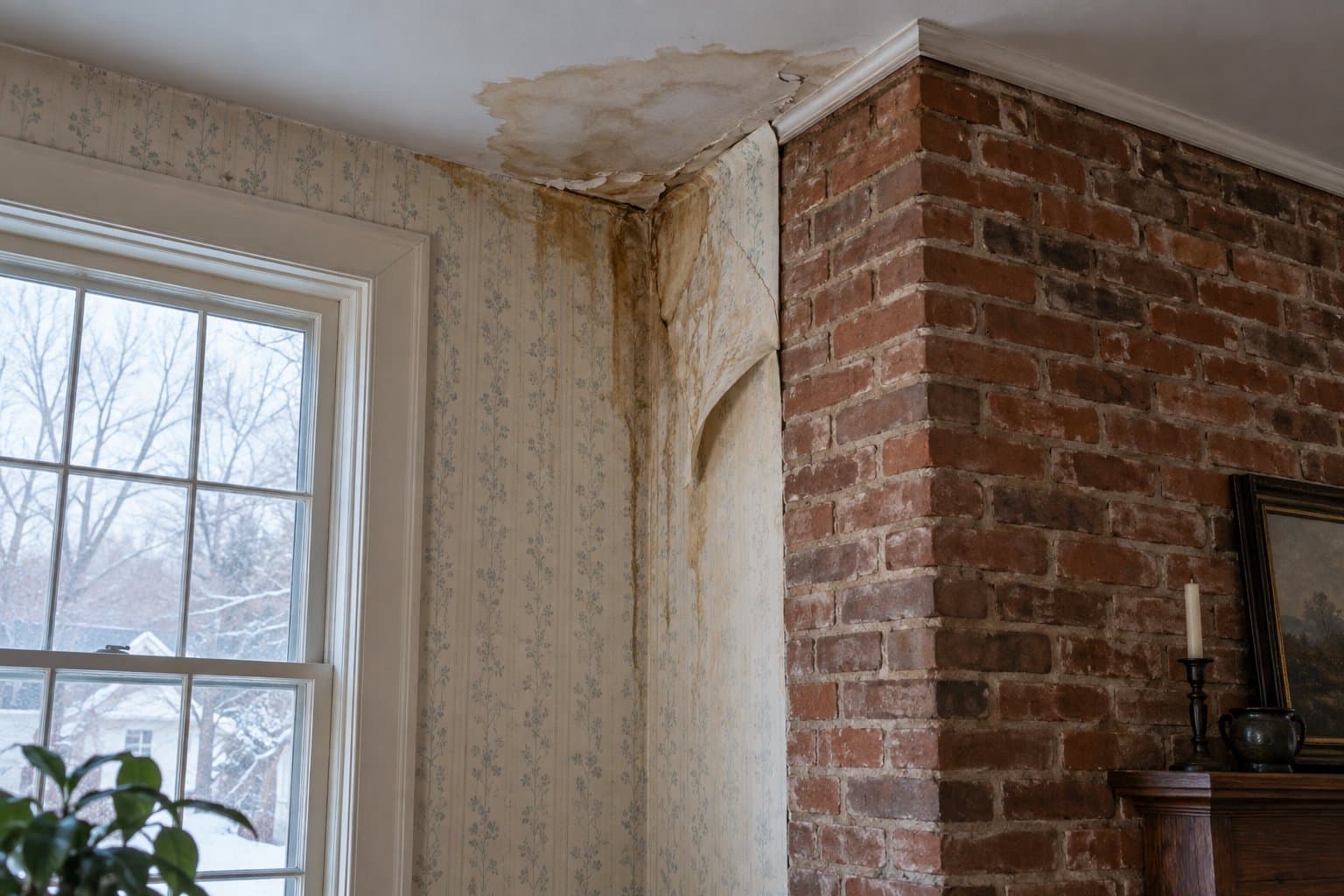
Syracuse is hard on chimneys. Winters here are cold and very snowy, with lake-effect snow off Lake Ontario, and the freeze-thaw cycling that comes with it widens every crack it finds. Wind-driven rain from summer thunderstorms gets in where ordinary rain would just run past. Much of the city's housing was built before 1940, and those century-old brick chimneys commonly show spalling and mortar loss, which is exactly the condition that lets water through.
While you wait — please don't
- Do not paint or tar over the stain. Sealing the inside hides the leak while the water keeps soaking the brick and framing above it.
- Do not assume the chimney is sound. A chimney that has been wet for years can become structurally unsound, and falling brick is a hazard at the base.
- Stop using the fireplace if the liner may be damaged. Long-term water damage can crack a clay tile liner, and a damaged liner can let heat and combustion gases reach places they should not.
- Get out and call 911 if you smell smoke in the house or feel sick. Headache, nausea or dizziness with the fire lit, or a CO alarm sounding, means everyone goes outside first and calls 911 from there.
- Do not get on the roof to look. Steep pitched roofs are common on older Syracuse homes, and snow, ice and wet slate or shingle are not worth the fall.
What the technician does
- The entry point gets tracedThe technician works out where the water is actually getting in rather than sealing over the stain. That usually means looking at the chimney from the roof, the attic or crawl space, and inside the firebox.
- Flashing checked and replacedWhere the chimney meets the roof is the most common leak point. New flashing is counter-flashed into the mortar joint so water cannot get behind it.
- Crown repaired or recastThe concrete crown on top sheds water away from the brick. If it is cracked or worn through it is repaired, or cut off and recast.
- Cap fittedAn open flue takes rain and snow straight down the inside of the chimney. A cap keeps that out and keeps animals out too.
- Repointing and brick replacementOpen mortar joints are raked out and repointed, and spalled brick — brick with the face flaked off — is cut out and replaced.
- Breathable water repellent where appropriateOn sound masonry, a breathable repellent slows absorption while still letting the chimney dry out. It is applied where it suits the brick, not as a substitute for repair.
Why this happens in in Syracuse, NY
Chimney leaks in Syracuse are mostly a freeze-thaw story. Brick and mortar soak up water in the fall, that water freezes, expands and pushes the masonry apart, and the next thaw lets more water into the wider crack. Repeat that through a long heating season and a small gap becomes a real one. The same cycling lifts flashing away from the roof and cracks crowns. It is why chimneys around Eastwood, Tipperary Hill, Westcott and the older wards need periodic repointing and a liner inspection, not just a sweep.
Timing matters here. Demand climbs in early fall as people prep chimneys before the snow, and again during the spring thaw when winter damage shows up. Exterior masonry work — repointing and rebuilding — concentrates in the warmer months, because mortar needs to cure without freezing. If you have found a stain now, getting the chimney looked at early gives you a better shot at the repair being done in good weather. That applies just as much in DeWitt, Liverpool, Camillus or Baldwinsville as it does in the city.
Questions people ask
- The stain only appears after heavy rain. Is that still a chimney leak?
- Often, yes. Wind-driven rain gets in at angles that normal rainfall does not reach, so a chimney can stay dry for weeks and then leak in one storm. That pattern is useful information — tell the technician when it happens and from which direction the weather came.
- Could it be an ice dam instead of the chimney?
- It can be. Ice dams along the eaves of older steep-roofed Syracuse homes are a recurring problem, and meltwater backing up under shingles can show as a ceiling stain. An inspection is how you tell the two apart, and sometimes both are happening.
- Do I need a permit for chimney repair in Syracuse?
- Permits in New York are issued locally, by the municipal or county building department, not by a state agency. Routine sweeping and inspection generally do not need one, but structural masonry work such as rebuilding a chimney above the roofline typically does. Call the local building department before work begins.
- Is there a state chimney sweep license in New York?
- New York does not issue a statewide licence for chimney sweeping, inspection or masonry repair — this work is regulated locally. Some downstate counties run home improvement contractor licensing programs, while many upstate municipalities require only local registration or nothing at all. Check current requirements with the city or county licensing office where the work will be done.
- How do I know the repair being recommended is the right one?
- Ask the technician to show you what they found — photos or camera footage of the flashing, crown or joints. Ask for the reasoning in writing alongside the estimate. You approve the price before any work starts.
One call
One call to (866) 576-7943 and we arrange the visit with an independent sweep or mason — we schedule the work, we are not the contractor. The estimate is free, the technician inspects the chimney and gives you the price first, and nothing starts until you approve it.
Something else in this area
One Call Chimney arranges the visit; the technician does the work and gives you the price.