Never been swept in Rochester, NY
You have burned wood for years and the chimney has never been cleaned. That means creosote. Every fire leaves a little behind on the flue walls, and it builds up season after season until the inside of the flue is coated with a layer that burns. Creosote is flammable. A lined flue full of it is fuel sitting inside your house.
Phones answered around the clock · free estimate
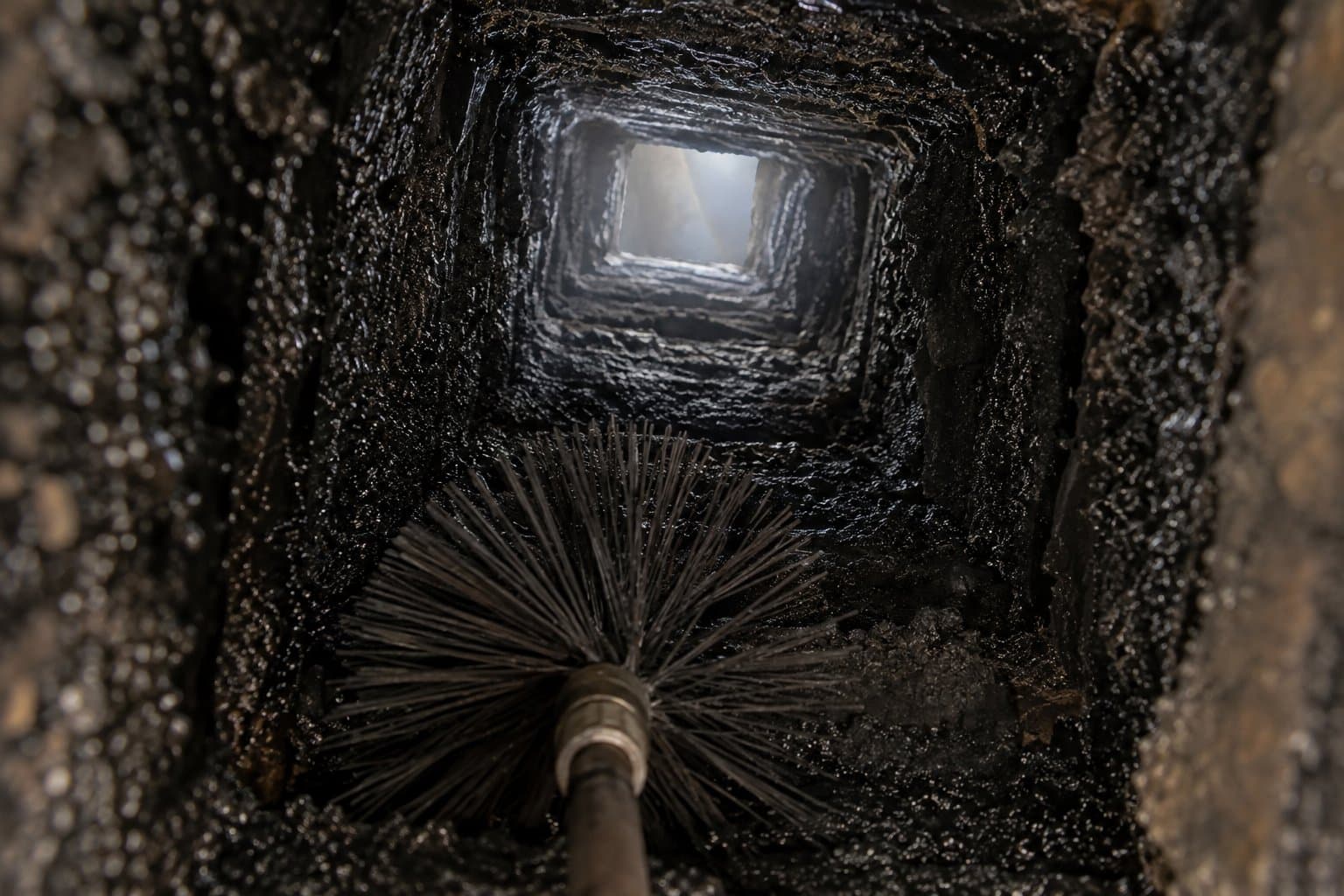
It builds faster than most people expect in Rochester. Unseasoned or wet wood and slow smouldering fires lay down creosote far quicker than hot, bright ones, and a long cold heating season means a lot of fires. New York's heating season runs roughly October through April, and much of Rochester's housing predates 1940 — wood-frame Victorians, foursquares, colonials and bungalows, many with their original masonry chimneys. Older flues are often undersized or unlined, which makes a thorough look inside worth doing before you light another fire.
While you wait — please don't
- Stop burning until it is inspected. You do not know what is in the flue or what condition the liner is in, so do not add more fires until someone has looked.
- Get out if the chimney roars. A roaring sound in the chimney or flames at the top is a chimney fire — get everyone out of the house and call 911.
- Do not burn wet or unseasoned wood. Wet wood and smouldering fires build creosote far faster than hot, bright ones.
- Do not try to burn the deposits off. A deliberately hot fire in a heavily lined flue is how a chimney fire starts, and it can crack tile and reach the framing around the chimney.
- Leave the room if anyone feels ill. Headache, nausea or dizziness around a burning fire means get outside into fresh air and call 911 — that can be carbon monoxide.
What the technician does
- A full sweep, top to bottomThe technician brushes the whole flue from the top down through to the firebox. The debris is removed and taken away, not left in the hearth.
- Camera inspection of the whole flueA camera goes up the flue so the inside can be seen rather than guessed at. Ask to see the footage yourself — it is your chimney and it is easier to understand a problem when you can look at it.
- The liner is checkedThe liner is looked over for cracks and gaps. A damaged liner matters because it is what keeps heat and combustion gases out of the surrounding structure.
- Damper, smoke shelf and firebox cleanedSoot and debris collect on the smoke shelf and behind the damper where you cannot see them. These get cleaned along with the firebox.
- Cap and crown inspectedThe cap and the crown at the top of the chimney are checked. These take the worst of the weather and are common places for water to start getting in.
- The price before any work startsThe technician inspects the chimney and gives you the price first. You approve it before anything is done.
Why this happens in Rochester, NY
Rochester sits just south of Lake Ontario and gets heavy lake-effect snow with long stretches below freezing. Repeated freeze-thaw cycles are hard on chimney crowns, mortar joints and brick faces, especially where a flue has absorbed moisture. Snow load and ice also put stress on flashing and caps. So a first inspection on a chimney that has never been swept often turns up more than creosote — it is also the point where the crown and the cap get a proper look.
The city's pre-war housing stock means a lot of original brick chimneys and undersized or unlined flues, whether the house is in Park Avenue, the South Wedge, Corn Hill, the 19th Ward or Browncroft. Summers here are humid, and humid summers keep unused flues damp, which encourages creosote odors and interior staining. Demand across Rochester spikes in late fall before the first hard freeze and again mid-winter during lake-effect events, so if the chimney has gone years without a sweep, booking outside those peaks is easier on everyone.
Questions people ask
- How bad is it if it has never been swept?
- That depends entirely on how much you burned and what you burned. Years of slow, smouldering fires with wet wood build a heavy layer; occasional hot fires build far less. The camera inspection is what tells you, rather than a guess from the hearth.
- My Rochester house is from the 1920s. Does that change anything?
- It often does. Many older Rochester homes still have their original masonry chimneys, and pre-war flues are commonly unlined or undersized. That is why the liner check and the crown and cap inspection are part of the visit, not an add-on.
- Do I need a permit for this?
- In New York, routine sweeping and inspection generally do not require a permit. Permits are typically needed for things like installing a wood stove or insert, relining a flue as part of an appliance installation, or structural masonry work above the roofline. Permits are issued locally, so call the Rochester building department before that kind of work begins.
- When is the best time to book in Rochester?
- Demand climbs in late fall before the first hard freeze and again during January and February lake-effect snow. If you can arrange it ahead of that rush, do. Exterior masonry repairs are usually done in warmer months anyway, since mortar needs to cure without freezing.
- Who actually comes out?
- One Call Chimney is a referral and scheduling service. We arrange the work with independent sweeps and masons across all fifty states; we are not the contractor and we do not perform the work ourselves. Ask the technician for their reasoning in writing along with the estimate.
One call
Call (866) 576-7943 and we will arrange a sweep and inspection for your Rochester chimney, with a free estimate on every job. The technician inspects the chimney and gives you the price before any work starts, and you approve it first.
Something else in this area
- Water coming in
- Something living up there
- Smoke comes back into the room
- Smells of smoke or damp
- Cracked crown or crumbling brick
- Damper stuck or broken
One Call Chimney arranges the visit; the technician does the work and gives you the price.