
Never been swept in Troy, NY
You have been burning wood for years and nobody has ever cleaned the chimney. That means creosote. It builds up on the flue walls a little at a time, every fire, and it does not go away on its own. After enough seasons it can be a thick, tarry or crusty layer coating the inside of the flue.
Phones answered around the clock · free estimate
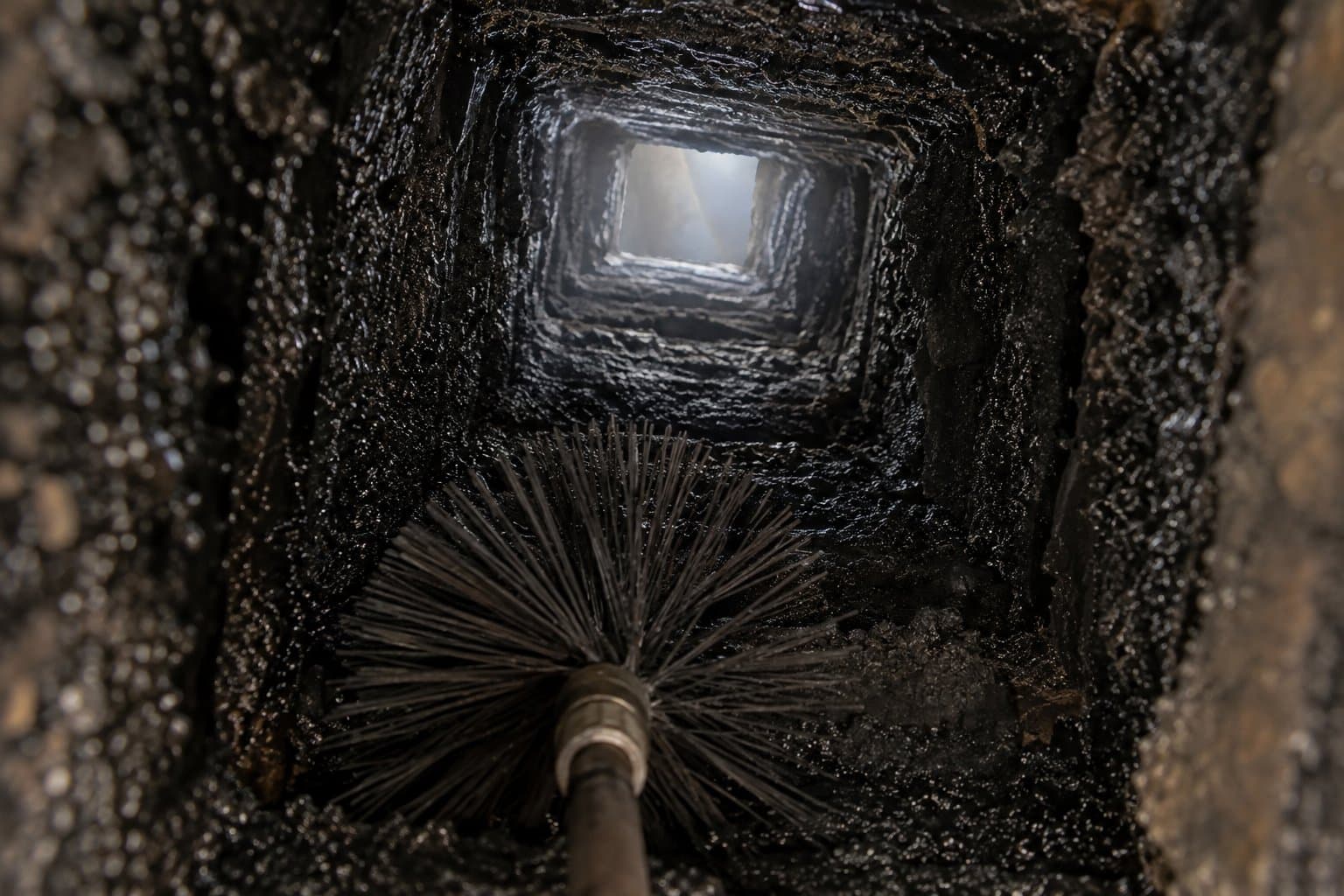
Creosote burns. A flue lined with it is fuel sitting inside your house, next to the walls and framing. That is the plain reason this matters more than a tidy firebox. In Troy the problem has had plenty of time to grow, because the housing stock here is unusually old — 19th- and early-20th-century brick rowhouses, two- and three-family wood-frame homes, Victorian masonry — and working or decommissioned flues are very common. New York also has a long heating season, roughly October through April, so a Troy fireplace that gets used gets used a lot.
While you wait — please don't
- Do not light another fire until it is looked at. You have no idea how much creosote is in there, and the only way to find out is to look.
- Know what a chimney fire sounds like. A roaring or rumbling chimney, or flames at the top, is a chimney fire — get everyone out of the house and call 911.
- Do not burn wet or unseasoned wood. Wet wood and slow smouldering fires build creosote far faster than hot, bright ones.
- Stop using the fireplace if smoke comes into the room. Smoke backing up means something is wrong with the draft or the flue is blocked, and if anyone feels dizzy, sick or confused, get outside and call 911.
What the technician does
- A full sweep, top to bottomThe technician brushes the whole flue, not just the easy part near the firebox. The debris comes out with them rather than being left in the base of the chimney.
- Camera inspection of the whole flueA camera goes up the flue so the inside can actually be seen end to end. Ask to see the footage yourself — it is your chimney and it is easier to decide anything when you have looked at it.
- The liner checked for cracks and gapsClay tile liners crack and joints open up, and a damaged liner lets heat and combustion gases reach places they should not. This is the part that decides whether the chimney is safe to keep using.
- Damper, smoke shelf and firebox cleanedSoot and debris collect on the smoke shelf and around the damper, which is also where a damper usually starts sticking. All of it gets cleaned out.
- Cap and crown inspectedThe crown and the cap are checked from above. These are what keep rain, snow and animals out of the flue.
- The price before any work startsThe technician inspects the chimney first, then gives you the price, and you approve it before anything is done. If repairs come up, ask for the reasoning in writing.
Why this happens in Troy, NY
Troy sits about 140 miles inland on the Hudson, with a humid continental climate — cold, snowy winters and frequent freeze-thaw cycles. That freeze-thaw is hard on chimney crowns, mortar joints and brick faces, particularly where a flue has absorbed moisture. In a chimney that has never been swept, a cracked crown or an open mortar joint lets water into a flue already coated with creosote, and damp creosote is where the smoke and soot smells come from in summer.
The Collar City has one of the best-preserved stocks of 19th-century brick and brownstone rowhouses in the Northeast. That means party walls, shared chimney stacks, and masonry that has taken decades of freeze-thaw. Whether you are in Downtown Troy, Lansingburgh, South Troy or up around Washington Park, an original flue is worth seeing on camera before another winter. Demand across Troy spikes in early fall when owners prep chimneys before the heating season, and again in spring when freeze damage to masonry shows up, so booking outside those windows is usually easier.
Questions people ask
- How bad can it be after years with no sweep?
- It depends almost entirely on what you have burned. Hot, bright fires with dry wood leave far less behind than slow smouldering fires or wet wood. The camera inspection tells you what is actually in your flue instead of guessing.
- My rowhouse shares a chimney stack with next door. Does that change anything?
- Shared stacks are common in Troy's 19th-century brick rowhouses, and each flue in the stack still needs to be swept and inspected on its own. The technician will look at your flue end to end with the camera. What the neighbour's flue needs is a separate conversation with them.
- Do I need a permit for a sweep and inspection in Troy?
- In New York, routine sweeping and inspection generally do not require a permit. Permits are usually needed for things like installing a wood stove or insert, relining a flue as part of an appliance installation, or structural masonry work above the roofline. Requirements vary between jurisdictions, so call the Troy building department before any of that kind of work begins.
- What standards is the work judged against in New York?
- New York enforces the Uniform Fire Prevention and Building Code, administered by the Department of State Division of Building Standards and Codes, based on the International Code family with state amendments. Solid-fuel appliances and chimneys are also commonly evaluated against NFPA 211 and the appliance manufacturer's listed instructions.
- Who actually comes to the house?
- One Call Chimney is a referral and scheduling service covering all fifty states. We arrange the work with independent sweeps and masons — we are not the contractor and we do not do the work ourselves. Licensing for this trade in New York is handled locally rather than by a state board, so you can verify current requirements with the city or county office where the work is done.
One call
One call gets a sweep and camera inspection arranged for your chimney in Troy. The estimate is free, and the technician gives you the price before any work starts — you approve it first. Call (866) 576-7943.
More from One Call Chimney
Nearby
Answers
Free tool
Something else in this area
- Smoke comes back into the room
- Water coming in
- Something living up there
- Smells of smoke or damp
- Cracked crown or crumbling brick
- Liner damaged or missing
- Damper stuck or broken
- Rebuild or new chimney
One Call Chimney arranges the visit; the technician does the work and gives you the price.