Never been swept in Yonkers, NY
You have burned wood in the fireplace for years and it has never been cleaned. Nothing has gone wrong yet, and that is the part that makes people put it off. But every fire leaves creosote behind on the inside of the flue, and it does not go away on its own. It builds in layers, year after year, until the lining of your chimney is coated in something flammable. That is fuel sitting inside your house, in a shaft that runs from the firebox to the roof.
Phones answered around the clock · free estimate
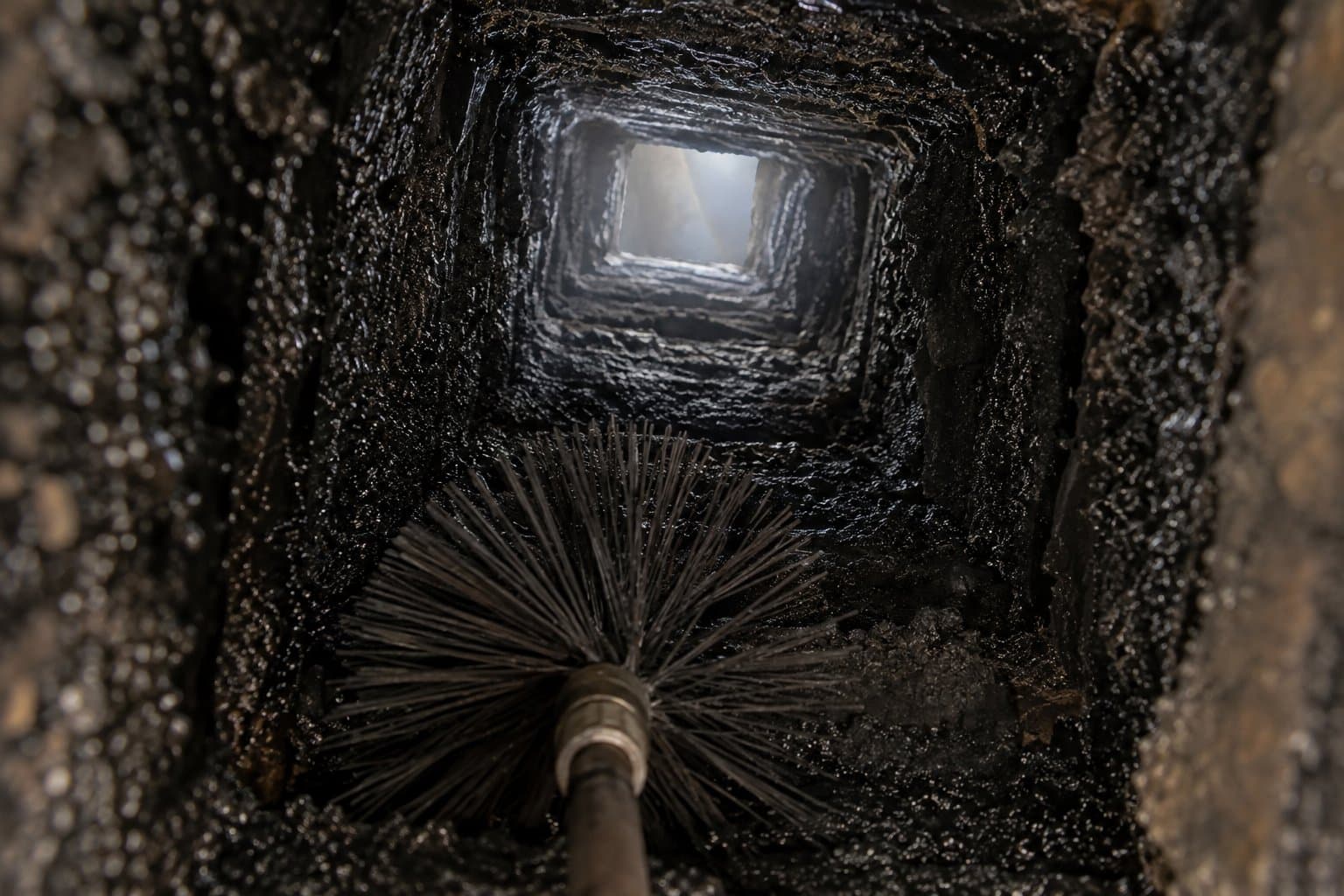
Yonkers makes it worse in two ways. Winters here drop into the teens and 20s, so you burn long and often, and a fire that smoulders low all evening lays down far more creosote than a hot, bright one. Damp or unseasoned wood does the same thing. On top of that, much of the housing stock predates 1940 — brick and stucco rowhouses, two- and three-family homes, prewar brick buildings — and a lot of those masonry chimneys were originally built for coal or oil and converted later. Add repeated freeze-thaw cycles that crack crowns and open mortar joints, and high humidity year round that keeps an unused flue damp, and an old flue can be both dirty and damaged at the same time.
While you wait — please don't
- Stop burning until it has been looked at. A flue lined with years of creosote can catch fire, so leave the fireplace cold until someone has been up it with a camera.
- If you hear a roar, get out. A loud roaring sound in the chimney, or flames or sparks at the top, is a chimney fire — get everyone out of the house and call 911.
- Do not burn wet or unseasoned wood. Wet wood burns cool and smoky, which is exactly how creosote builds fastest.
- Do not damp it down to make it last. Slow, starved, smouldering fires coat the flue far quicker than short hot ones, so choking the air down overnight works against you.
What the technician does
- A full sweep, top to bottomThe technician sweeps the whole length of the flue, not just the part you can see from the room. The debris comes out with them.
- Camera inspection of the whole flueA camera goes up the flue so the condition is seen rather than guessed at. Ask to look at the footage yourself — it is your chimney, and it is easier to understand a picture than a description.
- The liner checked for cracks and gapsClay tile liners in older masonry chimneys crack and open at the joints, and heat or hot gas getting past the liner is a serious problem. This is checked while the camera is in there.
- Damper, smoke shelf and firebox cleanedSoot and debris collect on the smoke shelf behind the damper, where you cannot see or reach them. The damper is cleaned off so it seats and moves properly.
- Cap and crown inspectedThe technician looks at the cap and the crown on top. Freeze-thaw in Yonkers is hard on crowns, and a cracked one lets water down into the masonry.
- The price before the workThe inspection and the estimate come first. You hear what was found and what it would cost, and you decide whether to go ahead.
Why this happens in Yonkers, NY
Yonkers sits on steep Hudson River hills, and a lot of its chimneys have been standing through a century of weather. Century-old brick, aging liners, deteriorated crowns and repointing are routine work in this city, whether the house is a prewar building near Getty Square, a two-family in Nodine Hill or Park Hill, or a single-family on the east side in Crestwood or Colonial Heights. Many of those flues were sized for older oil-fired systems and later put to different use, so a first inspection often turns up more than just soot.
Timing matters here too. Demand across Yonkers and neighbouring Westchester towns like Bronxville, Tuckahoe and Hastings-on-Hudson climbs in late fall as people get heating systems and chimneys ready before the first freeze, and again mid-winter once draft and odour problems show up. Spring is when freeze-thaw damage to masonry becomes visible. If your chimney has never been swept, any time you are not burning is a reasonable time to get it done.
Questions people ask
- Do I need a permit in Yonkers for a sweep and inspection?
- Routine sweeping and inspection generally do not require a permit. Permits in New York are issued locally, not by the state, so if the inspection leads to relining or masonry work above the roofline, the Yonkers building department is the office to call. The technician can tell you what the work would fall under.
- How do I check who is coming to my house?
- New York does not issue a statewide chimney sweep or masonry licence — this is handled locally. Westchester County runs its own home improvement contractor licensing programme, so you can verify current requirements with the county or city consumer affairs or licensing office. Ask the technician directly for their own licence and insurance details.
- What if the camera finds a cracked liner?
- Then you stop using the fireplace until it is repaired, because a damaged liner lets heat and combustion gas reach places they should not. Ask for the reasoning in writing and ask to see the footage of the crack. You are under no obligation to go ahead on the spot.
- The chimney has never been used much. Does it still need this?
- Yes. Humidity is high in Yonkers year round, and an unused flue stays damp, which brings creosote odours and staining, and older masonry keeps taking freeze-thaw damage whether you burn or not. An inspection also finds blockages and nesting material.
- Are you the ones doing the work?
- No. One Call Chimney is a referral and scheduling service that arranges chimney work with independent sweeps and masons across all fifty states. We are not the contractor and we do not perform the work.
One call
One call to (866) 576-7943 gets a sweep and inspection arranged for your Yonkers chimney, and the estimate is free on every job. The technician inspects first, gives you the price, and nothing starts until you approve it.
Something else in this area
- Water coming in
- Liner damaged or missing
- Something living up there
- Smells of smoke or damp
- Smoke comes back into the room
- Damper stuck or broken
One Call Chimney arranges the visit; the technician does the work and gives you the price.