
Smells of smoke or damp in Niagara Falls, NY
You walk past the fireplace and get a wave of old smoke, or something damp and sour. It is usually worse in summer, and worse again on a humid day. In most cases the smell is the creosote itself — the tar left on the flue walls by every fire you have burned. Add moisture to that, and the smell gets stronger. Sometimes there is a second source on top of it: a nest, droppings, or an animal that got in and did not get out.
Phones answered around the clock · free estimate
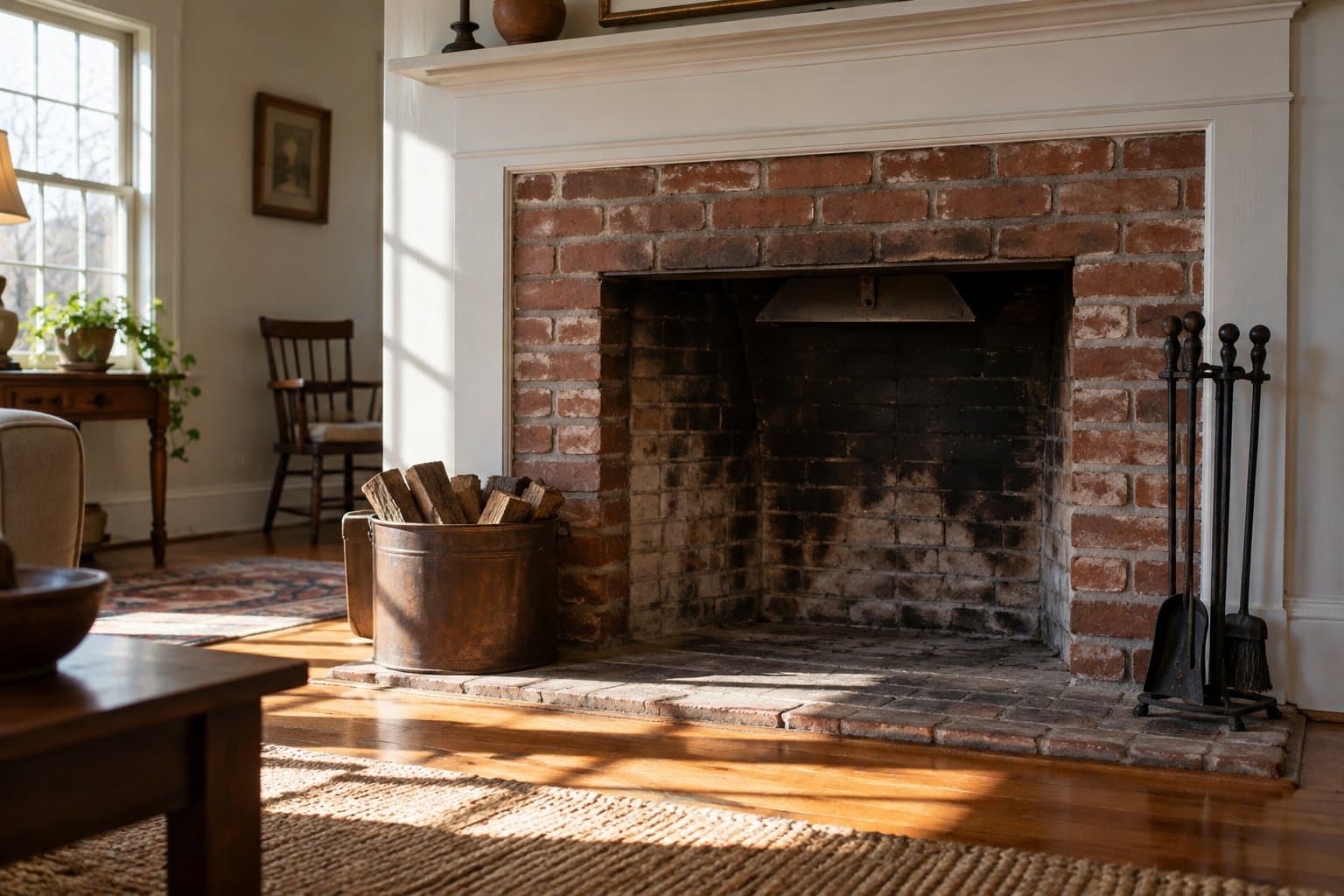
The airflow is the other half of it. A chimney draws because warm air inside it rises. In summer the flue is cool and the air outside is warm and humid, so the flow reverses and the chimney breathes down into the house instead. That is why a fireplace you have not touched since March starts smelling in July. In Niagara Falls the setup is common, because the housing stock here is older than the national average and a lot of homes still have masonry chimneys left over from coal and oil heating — often oversized for what they vent now, which means they stay cool and damp.
While you wait — please don't
- Get outside if anyone feels ill. If the smell comes with headaches, dizziness or nausea, treat it as carbon monoxide until proven otherwise — get everyone out of the house and call 911.
- Do not just shut the damper and spray air freshener. Closing the damper and covering the smell hides a flue that may still be lined with creosote, which is fuel for a chimney fire.
- Do not burn a fire to 'clear it out'. If the smell is coming from a build-up of creosote or a blocked flue, lighting a fire makes both problems worse, not better.
- Do not seal the fireplace up permanently. Boarding or sealing the opening traps moisture in the masonry and hides any water path that is feeding the smell in the first place.
What the technician does
- Sweeping the flueThe smell is usually the creosote itself, so the first and biggest step is cleaning the flue walls properly. Removing the fuel removes most of the odour and most of the fire risk at the same time.
- Clearing nests and debrisBirds, squirrels and their nesting material rot and smell, and they also trap moisture against the flue. The technician checks the smoke chamber and flue for nests, droppings and other debris and takes them out.
- Closing the moisture pathDamp makes creosote smell far stronger, so the cap, crown and flashing all get looked at. Any point where rain or snowmelt is getting into the chimney is identified and the repair explained.
- Checking the damperA damper that no longer seals lets the chimney breathe into the room all summer. It can be repaired, or a top-sealing damper can be fitted at the top of the flue to shut the whole chimney off when it is not in use.
- Looking at house pressureBath fans, range hoods, dryers and a tight house can all pull air down the chimney. The technician considers how the house is pulling before deciding what will actually fix the smell.
- Price before workThe technician inspects the chimney, explains what they found and gives you the price. Nothing starts until you approve it.
Why this happens in Niagara Falls, NY
Niagara Falls sits in a humid continental climate — cold snowy winters with lake-effect snow off Lake Erie and Lake Ontario, then warm humid summers. That combination is exactly what makes this smell show up. Repeated freeze-thaw cycles from November into March work on chimney crowns, mortar joints and brick faces, which lets water into the masonry. Then summer arrives, the humidity climbs, the flue stays cool, and the air flows backwards into the room carrying the smell of everything in it.
The housing here matters too. Many Niagara Falls homes were built between the early 1900s and the 1960s, wood-frame with full basements and masonry chimneys from the coal and oil days. Near the river and downtown, plenty of those chimneys are unlined or oversized, particularly where a high-efficiency gas furnace has replaced an older system and left the old flue sitting idle and damp. Across New York, humid summers keep unused flues damp statewide, which encourages creosote odours and interior staining. Whether you are in LaSalle, DeVeaux, the North End or out toward Wheatfield, the pattern is the same: cold wet winter, humid summer, and a chimney that starts talking in July.
Questions people ask
- Why is the smell worse in summer than in winter?
- In winter you are burning, so the flue is warm and the draft pulls upward and out. In summer the flue is cool and the outside air is warm and humid, so the flow reverses and the chimney breathes into the house. The creosote on the flue walls is there all year — summer just pushes it at you.
- Does sweeping actually get rid of the smell?
- Usually it is the main fix, because the creosote coating the flue is the source of the odour. If moisture is getting in through the cap, crown or flashing, or there is a nest in there, those need dealing with too. The technician will tell you which of those apply to your chimney before anything is done.
- Could the smell be carbon monoxide?
- Carbon monoxide has no smell of its own, but a chimney that is venting backwards can bring combustion gases in along with the odour. If anyone in the house has headaches, dizziness or nausea, get outside and call 911. Treat it as carbon monoxide until it is proven otherwise.
- My furnace is gas now and I never use the fireplace. Why does the old chimney still smell?
- That is common in older Niagara Falls homes, where chimneys built for coal or oil systems are left unlined or oversized after a switch to a high-efficiency gas furnace. An idle, oversized flue stays cool and damp, and damp masonry holds and releases odour. Capping and inspection is the usual starting point.
- Do I need a permit for this in Niagara Falls?
- In New York, permits for chimney work are issued locally by the municipal or county building department, not by a state agency. Routine sweeping and inspection generally do not require one, but relining a flue as part of an appliance installation or structural masonry work above the roofline typically does. Requirements vary between jurisdictions, so call your local building department before work begins.
One call
One Call Chimney is a referral and scheduling service — we arrange the work with independent sweeps and masons and we are not the contractor. Call (866) 576-7943 and we will set up a visit; the estimate is free, and the technician inspects the chimney and gives you the price before any work starts.
More from One Call Chimney
Nearby
Answers
Free tool
Something else in this area
- Cracked crown or crumbling brick
- Damper stuck or broken
- Liner damaged or missing
- Smoke comes back into the room
- Rebuild or new chimney
- Never been swept
- Water coming in
- Something living up there
One Call Chimney arranges the visit; the technician does the work and gives you the price.