
Damper stuck in Albany, NY
The handle will not move, or it moves and nothing happens. Either the damper is jammed shut and smoke has nowhere to go, or it is jammed open and the cold is pouring straight down the flue. In most cases the plate has rusted to its frame, or the pivot, handle or hardware has corroded and given up. It is a common repair and it is usually fixable without touching the brickwork, as long as nobody forces it.
Phones answered around the clock · free estimate
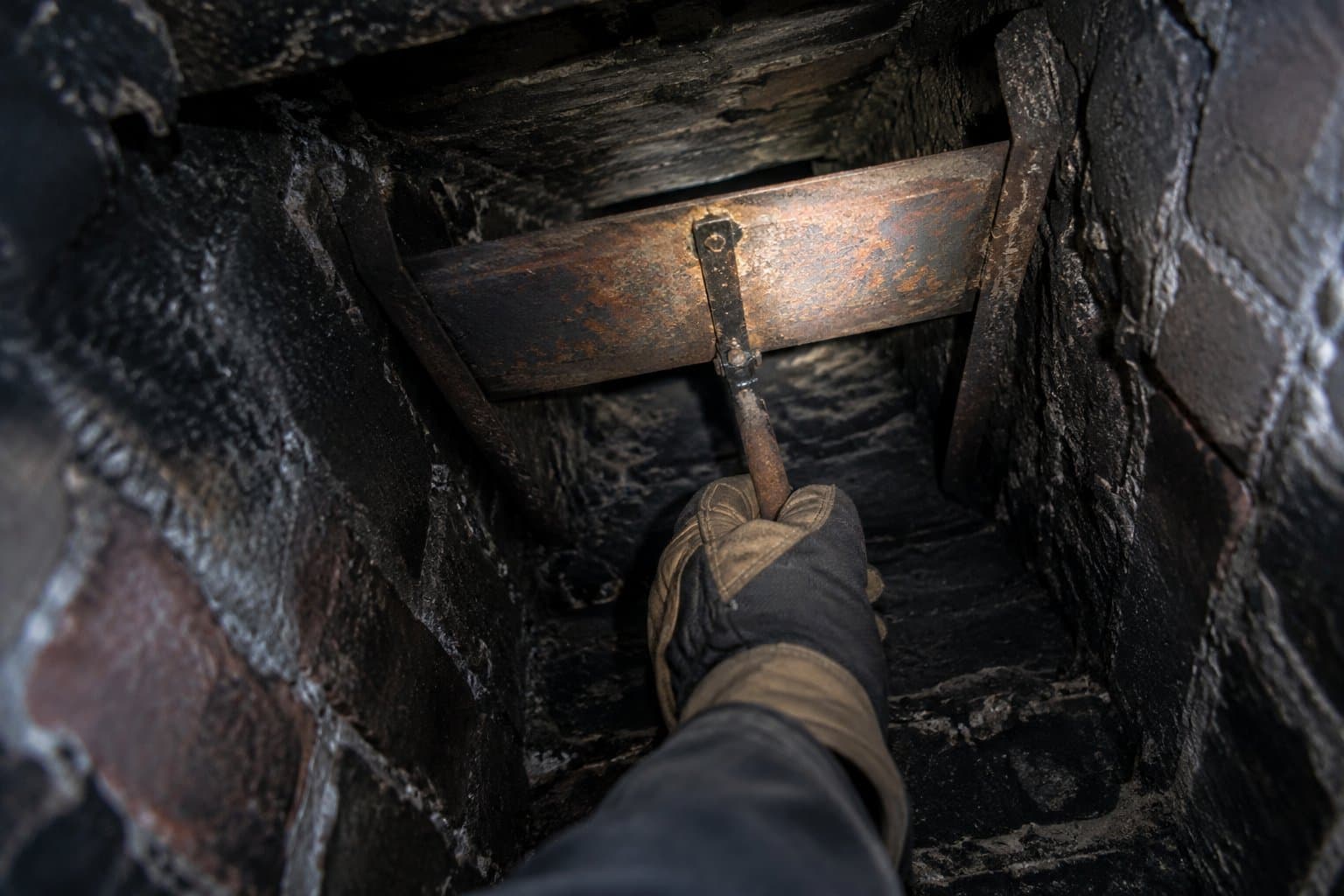
Albany sits about 140 miles inland on the Hudson, with cold, snowy winters and long stretches below freezing. Water is the real culprit. An uncapped flue takes rain and snowmelt straight down onto the damper plate, then repeated freeze-thaw cycles work on the metal and on the mortar around it. Albany also has some of the oldest housing stock in the country, with large numbers of pre-1940 brick homes and masonry chimneys, many built originally for coal or oil heat. Those throat dampers have had decades of weather on them.
While you wait — please don't
- Do not light a fire until you know the damper is open. If the plate is shut or partly shut, smoke comes back into the room instead of going up the flue.
- Do not force the handle. A rusted damper can break its frame when levered hard, which turns a hardware repair into masonry work.
- If smoke has come into the room, stop using the fireplace. Smoke in the living space means the flue is not drawing properly and it needs to be looked at before the next fire.
- If anyone feels dizzy, sick or has a headache, get outside and call 911. Those can be signs of carbon monoxide, which you cannot see or smell, and it kills people.
- Do not seal the fireplace up as a fix. If a heating appliance still vents through that chimney, blocking it off creates a far bigger problem than a stuck damper.
What the technician does
- The damper gets freed, cleaned and re-seatedThe technician works the rust and debris off the plate and frame and gets it moving again. Then it is re-seated so it actually closes flat.
- Handles, pivots and hardware get replacedMost stuck dampers are a hardware problem rather than a plate problem. Worn pivots and broken handles are swapped out.
- A top-sealing damper where the throat damper is beyond repairIf the original frame is too far gone, a top-sealing damper can be fitted at the top of the flue instead. It seals at the crown and keeps weather out of the chimney.
- The flue is swept while access is openWith the damper out of the way, the technician can sweep the flue properly. Soot and debris sitting on and around the damper comes out at the same time.
- A cap is fitted to stop the waterThe rain and snow that rusted the damper keeps coming unless the top is covered. A cap stops the water that caused the problem in the first place.
- You see the findings and approve the price firstThe technician inspects the chimney and gives you a price before any work starts. Ask to see the camera footage and ask for the reasoning in writing.
Why this happens in Albany, NY
In the dense rowhouse blocks of Center Square, the Mansion District and the South End, shared party walls and narrow alleys make access tight, and unlined or long-abandoned masonry flues are a recurring issue. A damper in one of those chimneys may not have been operated in years. The same is true in Pine Hills, Delaware Avenue and the older two-family frame houses across the western neighborhoods, where many chimneys are still active venting flues for oil-fired or older atmospheric gas heat rather than decorative.
Timing matters here. Demand across Albany peaks in early fall as people get heating systems and chimneys ready before the first freeze, and again in the late-winter and spring thaw when masonry and freeze damage shows up. A damper stuck open costs you heat all winter long in a city with a heating season that runs roughly October through April. If you find the problem in spring, that is a good time to deal with it, since exterior masonry and repointing work concentrates in the warmer months when mortar can cure without freezing.
Questions people ask
- How do I tell if my damper is open or closed?
- Look up into the throat with a flashlight before any fire is lit. If you can see daylight or open space above the smoke shelf, it is open. If you see a flat plate across the opening, it is shut.
- Why do Albany dampers rust shut so often?
- Most of the time it is an uncapped flue letting rain and snowmelt land directly on the damper plate. With the long stretches below freezing here, freeze-thaw cycles work on that rusted metal season after season until the plate welds itself to the frame.
- Do I need a permit for this in Albany?
- In New York, permits are issued locally by the municipal building department and code enforcement officer, not by a state agency. Routine sweeping and inspection generally do not require one, but structural masonry work usually does. Call the Albany building department before work begins.
- Is there a state chimney sweep license in New York?
- No. New York does not issue a statewide license for chimney sweeping, inspection or masonry repair — it is handled locally, and many upstate municipalities require only local registration. Check current requirements with the city or county licensing office covering the work.
- What does One Call Chimney actually do?
- We are a referral and scheduling service that arranges chimney work with independent sweeps and masons across all fifty states. We are not the contractor and we do not perform the work ourselves. We set up the visit and the technician handles the inspection and the repair.
One call
One call to (866) 576-7943 and we will arrange for a technician to look at your damper here in Albany. The estimate is free, and you see the price and approve it before any work starts.
More from One Call Chimney
Something else in this area
- Something living up there
- Smoke comes back into the room
- Never been swept
- Water coming in
- Smells of smoke or damp
- Cracked crown or crumbling brick
- Liner damaged or missing
- Rebuild or new chimney
One Call Chimney arranges the visit; the technician does the work and gives you the price.