Stop using the door
Smoke in the room in Albany, NY
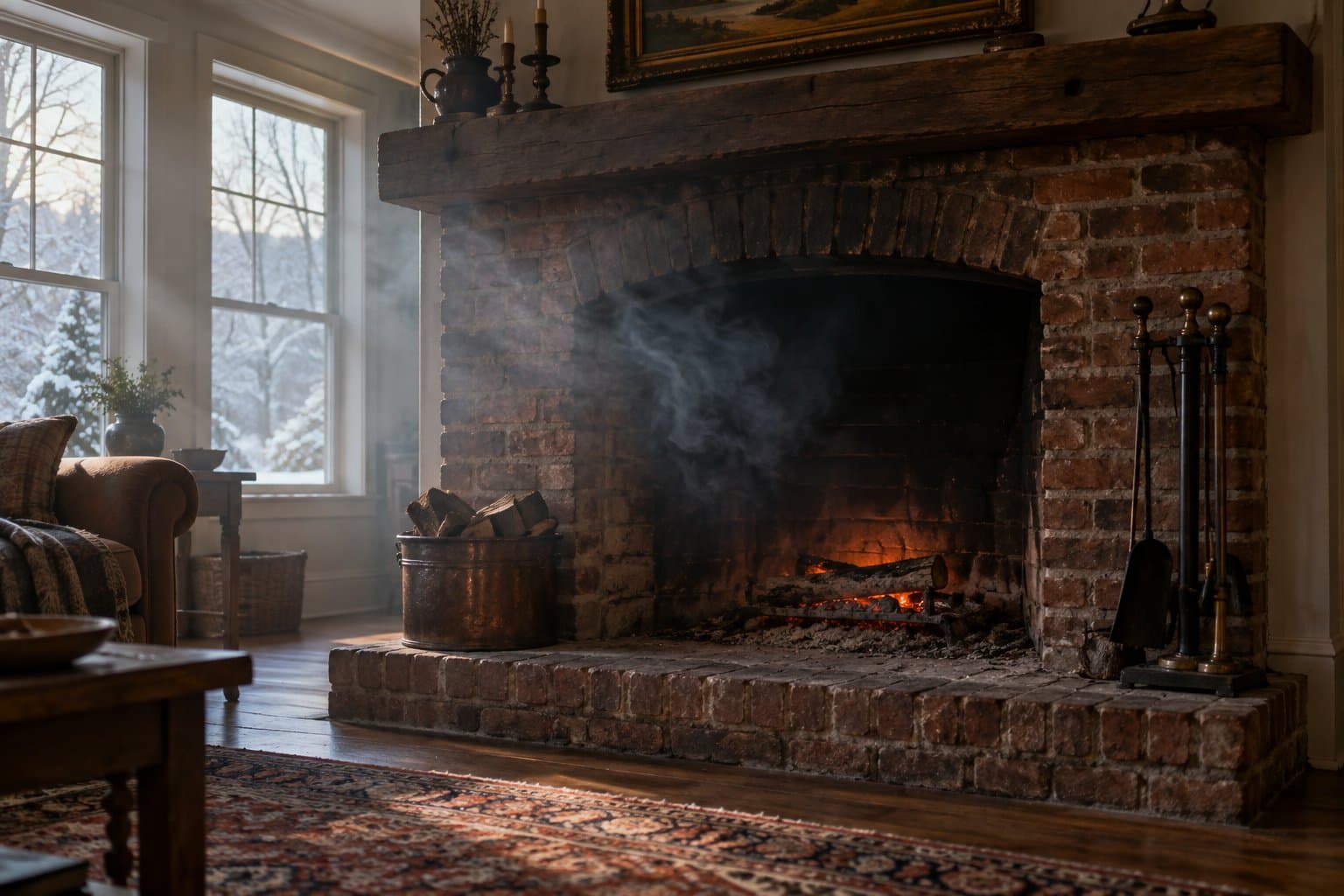
You lit a fire and the smoke came at you instead of going up. That means the chimney is not pulling air the way it should. Something is either blocking the flue, the damper is not opening fully, or the house is winning the fight for air. Put the fire out, open a window, and stop using the fireplace until someone has looked up the flue.
Phones answered around the clock · free estimate
Take this seriously. Smoke in the room means combustion gases in the room, and carbon monoxide comes with them. If anyone in the house feels headachy, dizzy or sick, get everybody outside and call 911. In Albany, plenty of homes were built before 1940 and many masonry chimneys here were originally built for coal or oil heat, so the flue you are burning wood in may not be lined, or may be lined with clay tile that has aged. Cold, snowy winters and repeated freeze-thaw cycles are hard on crowns and mortar joints, and a chimney that has taken on moisture draws badly.
While you wait — please don't
- Do not light another fire. Until the flue has been inspected, every fire pushes more smoke and carbon monoxide into the room.
- Get out if anyone feels unwell. Headache, dizziness or nausea after a smoky fire can mean carbon monoxide, so leave the house and call 911 from outside.
- Do not force a stuck damper. A damper that will not move can be rusted, warped or jammed by debris, and levering it can break the plate or drop material down the flue.
- Do not seal the room up. Closing windows and doors to keep the smoke smell out makes the draft problem worse and keeps the gases in with you.
- Do not assume it was just a bad log. Damp wood makes more smoke, but a healthy chimney still carries it up, so a room full of smoke points at the flue.
What the technician does
- The flue gets swept and camera-inspectedThe technician sweeps the flue and runs a camera up it to see what is actually there. Nests, fallen brick, heavy creosote and broken tile all show up on the footage.
- The blockage is identifiedThe point of the camera is to find the restriction rather than guess at it. Ask to see the footage and to have the reasoning written down.
- The damper is freed, repaired or replacedA damper that only opens part way chokes the draft. It gets cleaned and freed if it can be, repaired or replaced if it cannot.
- Draft is tested and the cause pinned downThe technician tests how the chimney is pulling and checks whether the house itself is starving it of air. A tightly sealed home or a powerful kitchen extractor fan can out-pull a chimney.
- Cap and crown are checkedThe cap keeps rain and animals out, and the crown sheds water off the top of the masonry. Both take a beating from Albany winters and both affect how the chimney breathes.
- The smoke chamber is cleaned and pargedThe smoke chamber sits just above the firebox and funnels smoke into the flue. If it is rough, sooted or stepped, cleaning and parging it smooths the path so smoke goes up instead of out.
Why this happens in Albany, NY
Albany's housing stock is among the oldest in the country. Downtown, in Center Square, the Mansion District and the South End, rowhouses share party walls and sit on narrow alleys, and unlined or long-abandoned masonry flues are a recurring find. If a flue has been out of service for years and someone starts burning in it again, smoke coming back into the room is often the first sign that the flue is not clear or not sound. Pine Hills two-families and the 1920s to 1950s bungalows and colonials on the west side have their own version of the same problem: original masonry chimneys built for a different fuel.
Weather drives a lot of it too. Long stretches below freezing mean a cold flue, and a cold flue draws badly until it warms up. Freeze-thaw cycles crack crowns and open mortar joints, and humid summers keep an unused flue damp, which is why smoke and creosote odors turn up before you even light a fire. Demand across Albany peaks in early fall when people prep their heating before the first freeze, and again in the late-winter and spring thaw when masonry damage shows itself. Booking outside those windows is usually easier, but do not wait on a smoking fireplace.
Questions people ask
- Could this just be a cold chimney?
- It can be. A cold flue draws badly until it warms, and that is common during an Albany winter. But a chimney that keeps spilling smoke after the fire is established has something else going on, and that needs a camera inspection.
- Can my kitchen fan really cause this?
- Yes. A tightly sealed house or a powerful extractor fan can beat the chimney for air and pull smoke back down the flue. The technician tests draft with that in mind and can tell you whether the house or the chimney is the problem.
- Do I need a permit in Albany?
- Permits for chimney work in New York are issued locally by the municipal or county building department, not by a state agency. Routine sweeping and inspection generally do not require one, while relining as part of an appliance installation or rebuilding masonry above the roofline usually does. Call the local building department before work begins.
- Is there a state chimney sweep license in New York?
- New York does not issue a statewide license for chimney sweeping, inspection or masonry repair. It is handled locally, and many upstate municipalities require only local registration or nothing at all. You can check current requirements with the city or county consumer affairs or licensing office.
- Do you do the work yourselves?
- No. One Call Chimney is a referral and scheduling service that arranges chimney work with independent sweeps and masons. We are not the contractor and we do not perform the work.
- What does an inspection cost?
- Every job starts with a free estimate. The technician inspects the chimney and gives you the price before any work starts, and you approve it first.
One call
Call (866) 576-7943 and we will arrange a sweep and inspection for your chimney in Albany. The estimate is free, and you see and approve the price before any work begins.
Something else in this area
One Call Chimney arranges the visit; the technician does the work and gives you the price.