Chimney Rebuild in Yonkers, NY
You have looked up and the chimney does not look right. Brick faces are flaking off. Mortar joints have gone soft or empty. Maybe the stack above the roof has a lean to it, or you found pieces of brick in the gutter or on the driveway. That is masonry failure, and once it starts it does not stop on its own.
Phones answered around the clock · free estimate
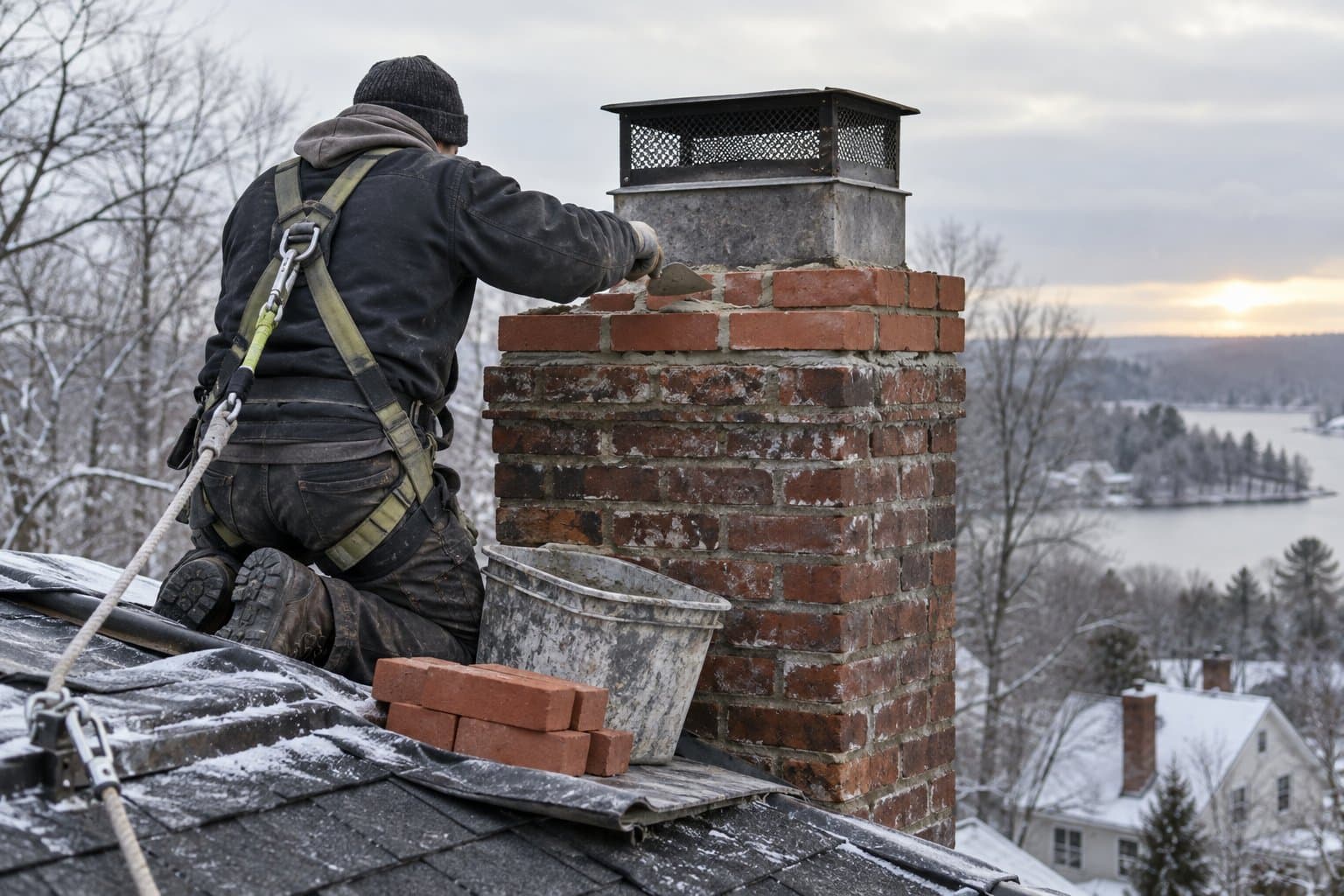
Yonkers is hard on brick. Winters drop into the teens and 20s, and the freeze-thaw cycles repeat all season. Water soaks into a crown crack or an open joint, freezes, expands and pushes the masonry apart a little more each time. Add 25 to 30 inches of snow a year, plus the wind and heavy rain that come with storm remnants like Irene, Sandy and Ida, and a chimney takes a beating. Much of the housing here predates 1940, and a lot of those chimneys were originally built for coal or oil heat and converted later. A century of weather on original brick is the usual story behind a rebuild.
While you wait — please don't
- Stop using the fireplace. A stack that is leaning or shedding brick should not have a fire under it until someone has looked at the structure and the flue inside it.
- Do not use the appliance that vents into it. If a furnace, boiler or water heater vents through that chimney, a failing flue can push combustion gases back into the house instead of out the top.
- Get out and call 911 if anyone feels sick. Headache, nausea, dizziness or drowsiness in more than one person, or a carbon monoxide alarm sounding, means everyone goes outside first and calls from there.
- Keep people away from the base of the stack. Loose brick falls, so stay off the section of yard, steps or driveway directly below until it has been assessed.
- Do not patch over it yourself. Smearing mortar across a failing joint hides what is happening underneath and can trap water inside the masonry.
What the technician does
- Inspection with photographsThe technician looks at the chimney from the ground, the roof and inside, and takes photos of what is actually failing. You should see those pictures before anything is decided.
- Rebuild above the rooflineThis is the usual answer. The stack is taken down to sound masonry below the roofline and rebuilt from there, which handles most weather-driven failure.
- Full rebuild where the structure has goneIf the damage runs deeper than the roofline, the chimney is rebuilt with a proper footing and new flashing where it meets the roof.
- New crown, cap and linerA rebuild includes a new crown and cap to keep water out, and a liner sized for what the chimney vents. There is no point rebuilding the shell around a failed flue.
- Brick and mortar matchedBrick and mortar are matched as closely as the house allows, which matters on the older brick and stucco homes common across Yonkers.
- Price before work startsThe technician gives you the price after the inspection and before any work begins. You approve it first.
Why this happens in Yonkers, NY
Timing matters here. Mortar needs temperatures above freezing to cure properly, so in a climate like Yonkers' a rebuild is warm-month work. If your chimney fails in January, the practical path is usually a temporary cover over the stack to keep snow and rain out, with the rebuild scheduled once the weather turns. Spring is when most of this gets found, because that is when a winter's worth of freeze-thaw damage becomes visible from the ground.
The older sections of the city — prewar brick two- and three-families, rowhouses, and the brick apartment buildings and co-ops — tend to have masonry chimneys that are still active venting flues, not decoration. Many still carry ductwork and flues sized for older oil-fired systems. Deteriorated crowns, repointing and relining are routine work on buildings of that age. New York does not issue a statewide chimney or masonry license; Westchester County runs its own home improvement contractor licensing program, so check current requirements with the county licensing office. Permits for structural masonry work such as rebuilding above the roofline are issued locally, so call the Yonkers building department before work begins.
Questions people ask
- Does the whole chimney have to come down?
- Usually not. Rebuilding above the roofline is the common answer, because that is the section taking the weather. A full rebuild with a new footing is for cases where the structure itself has gone, and the inspection photos should show you which one you are looking at.
- Can the work be done in a Yonkers winter?
- Masonry needs temperatures above freezing to cure, and Yonkers winters regularly sit in the teens and 20s. That makes a rebuild warm-month work in most cases, with a temporary cover protecting the open stack until conditions allow.
- Why does this keep happening to older Yonkers chimneys?
- Much of the housing stock here predates 1940, and repeated freeze-thaw cycles crack crowns and open mortar joints year after year. Once water gets into the masonry it works from the inside out, so aging liners, failing crowns and repointing are routine on century-old brick.
- Do I need a permit?
- In New York, permits are issued locally rather than by a state agency. Structural masonry work such as rebuilding a chimney above the roofline typically requires one, while routine sweeping and inspection generally do not. Requirements vary by jurisdiction, so call the local building department first.
- Are you the ones doing the work?
- No. One Call Chimney is a referral and scheduling service that arranges chimney work with independent sweeps and masons across all fifty states. We are not the contractor and we do not perform the work.
- How do I know the rebuild is the right call?
- Ask to see the photographs of the failing masonry, and ask for the reasoning in writing. A rebuild is a significant job, and you should be able to look at what the technician looked at before you approve anything.
One call
One call sets up an inspection of your chimney in Yonkers, with a free estimate on every job. The technician looks at the chimney, gives you the price, and nothing starts until you approve it — call (866) 576-7943.
Something else in this area
- Water coming in
- Liner damaged or missing
- Never been swept
- Something living up there
- Smells of smoke or damp
- Smoke comes back into the room
- Cracked crown or crumbling brick
- Damper stuck or broken
One Call Chimney arranges the visit; the technician does the work and gives you the price.