
Something living up there in Chicago, IL
Much of Chicago's housing is older masonry: brick bungalows, two- and three-flats, greystones. Most of those have a chimney, and a chimney with an open top is an easy way in for birds and other animals. If you can hear scratching or chirping in the flue, something has almost certainly moved in. Most often it is a nest, and usually the flue has no cap.
Phones answered around the clock · free estimate
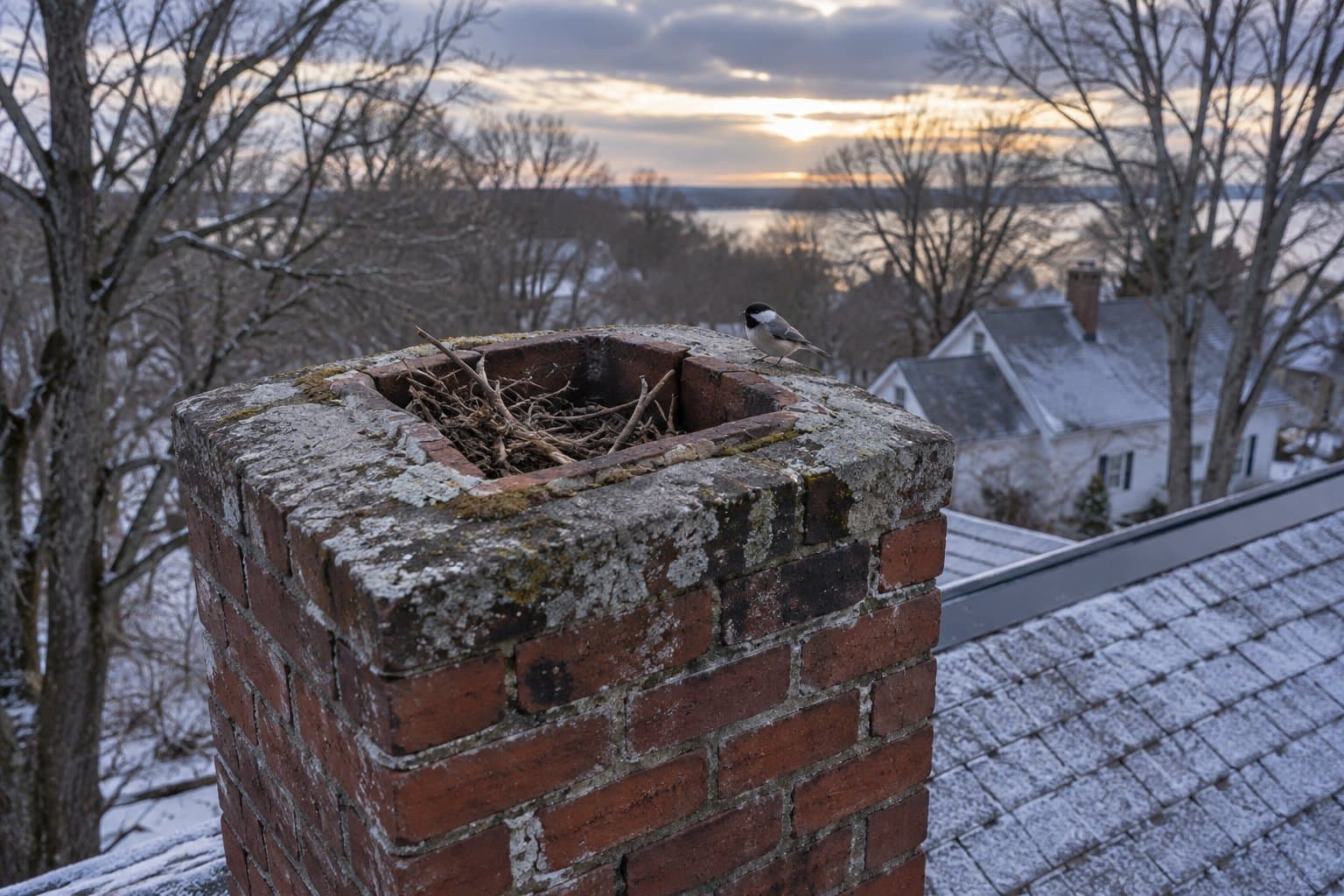
It happens a lot here because spring nesting is the peak, and an uncapped flue is the whole cause. Many older Chicago chimneys no longer serve a working fireplace. They still vent a furnace or water heater, and they still have an open top. Illinois winters also break down brick, crowns and mortar joints, which can give animals more ways in. The chimney may be quiet most of the year. Then one spring you hear it.
While you wait — please don't
- Do not light a fire to drive it out. It is cruel to the animal, and burning nesting material is a common cause of chimney fires.
- Do not use the fireplace or the vented appliance if smoke comes back into the room. A nest can block the flue, and a blocked flue can push smoke and exhaust back into the house.
- Do not reach in or handle droppings and nesting material bare-handed. Droppings carry disease, and the material is best removed by a technician with the right gear.
- Do not remove a bird nest on your own. In many places nesting birds are legally protected, so the species should be identified first.
What the technician does
- You call, we arrange the visitOne Call Chimney is a referral and scheduling service. We arrange an independent chimney technician for this exact problem. We are not the contractor and we do not do the work.
- The animal is identified firstThe technician works out what is up there before anything is done. The species decides what comes next.
- Removal or humane evictionWhere the species requires it, a wildlife specialist handles removal or humane eviction. Nothing is smoked out or burned.
- Nesting material and debris come outThe flue is cleared of nests, droppings and debris so air can move through it again.
- The flue is swept and inspectedOnce it is clear, the flue is swept and inspected. You see what condition it is in before you decide anything.
- A properly sized cap with mesh is fittedThe cap closes the opening that let the animal in. Without it, the problem tends to return.
Why this happens in Chicago, IL
Chicago's older brick homes often have full masonry chimneys, and many were built for coal or earlier appliances. Today many of them vent a furnace or water heater instead of a fireplace. That makes a nest more serious than a noise problem. If the flue vents a gas appliance, a blockage matters even when nobody has lit a fire in years. Illinois summers are humid too, and moisture in rarely used flues can cause odors and speed up liner corrosion. The technician can check the liner while the flue is open.
Spring is the busy time for this, as birds look for a sheltered place to nest. It also overlaps with the spring thaw, when freeze-thaw damage to masonry tends to show up. A cracked crown or worn mortar joint can give animals another way in, so a good inspection looks at more than the flue. If the work could involve a permit, the City of Chicago Department of Buildings handles permits, and Chicago has its own building code. Outside the city, ask the local building department. Basic sweeping and inspection generally do not need one.
Questions people ask
- How do I know it is an animal and not just wind?
- Scratching, chirping, rustling or thumping that changes through the day usually means something is living in the flue. A technician can confirm this with an inspection. If you smell something or see debris in the firebox, mention that when you call.
- My Chicago chimney only vents a furnace. Can animals still get in?
- Yes. If the top of the flue is open, an animal can get in whether or not you ever light a fire. Many older Chicago masonry chimneys now serve furnaces and water heaters, and a nest in one of those flues can block exhaust.
- Is it legal to remove a bird nest?
- In many places nesting birds are legally protected. That is why the animal is identified first and a wildlife specialist is brought in where the species requires it.
- Do I need a permit in Chicago for a chimney cap?
- Permits in Chicago go through the Department of Buildings, and rules vary between jurisdictions. Routine sweeping and basic inspection generally are not permitted work. For anything beyond that, confirm with the building department before work begins.
- Why does this keep happening every spring?
- Spring nesting is the peak, and an uncapped flue is the whole cause. A properly sized cap with mesh closes the opening, so the same animals cannot return.
One call
Call (866) 576-7943 and One Call Chimney will arrange a technician for the animal in your Chicago chimney. The estimate is free. The technician inspects the chimney and gives you the price before any work starts, and you approve it first.
More from One Call Chimney
Nearby
Answers
Free tool
Something else in this area
- Never been swept
- Water coming in
- Smoke comes back into the room
- Smells of smoke or damp
- Cracked crown or crumbling brick
- Damper stuck or broken
- Liner damaged or missing
- Rebuild or new chimney
One Call Chimney arranges the visit; the technician does the work and gives you the price.