
Damper stuck in Utica, NY
The handle will not move, or it moves and nothing happens. The damper is the metal plate sitting in the throat of the fireplace, just above the firebox. It swings open to let smoke out and closes to seal the flue when the fire is cold. When it seizes, it usually seizes because of rust, because the pivot has corroded in place, or because the handle or linkage has snapped off the plate it is supposed to turn.
Phones answered around the clock · free estimate
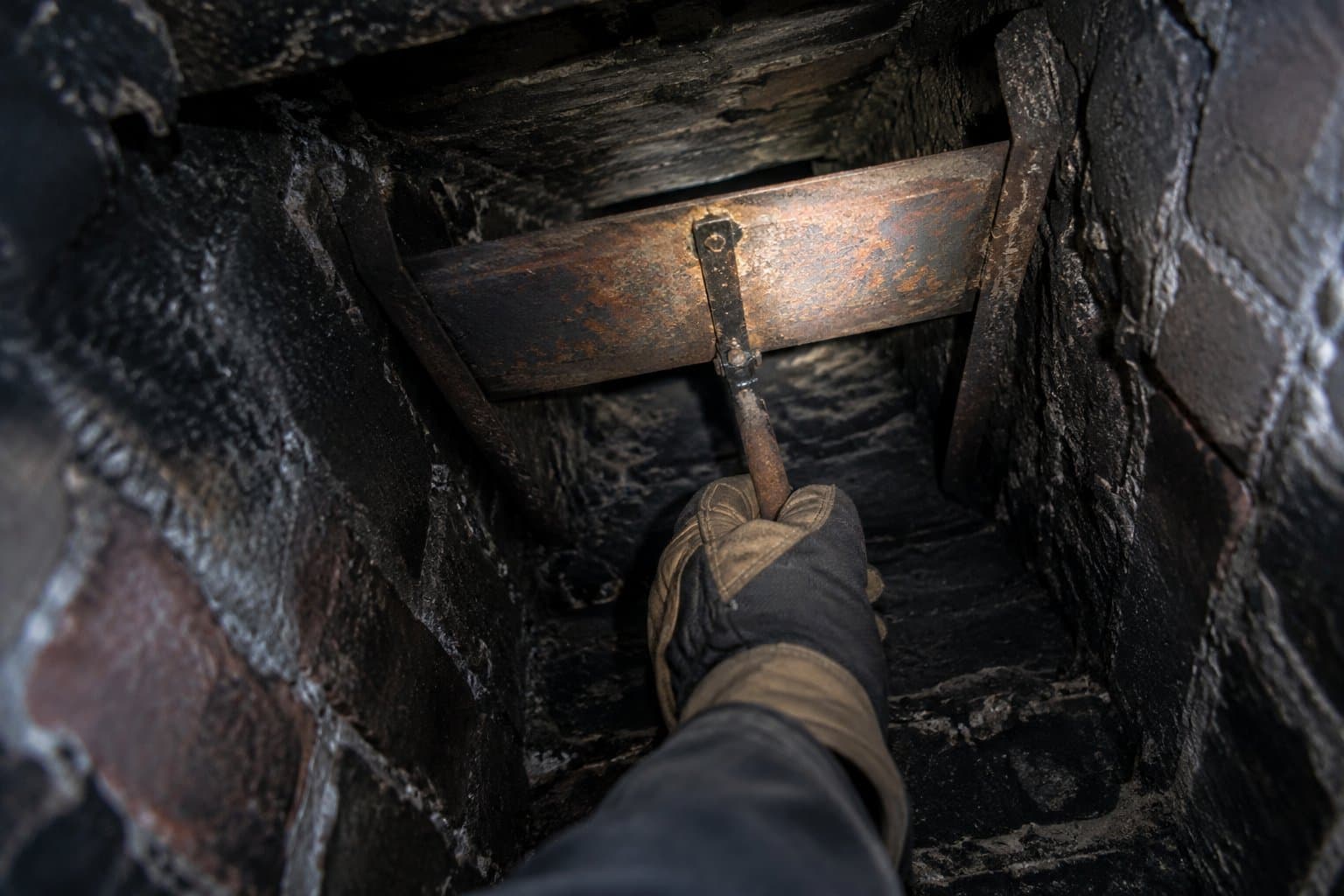
Water is almost always behind it. An open flue takes in rain and snow, and that moisture sits on the damper plate and frame until it rusts. Utica gets long winters and heavy seasonal snowfall, including lake-effect bands off Lake Ontario, so there is a lot of water going down an uncapped chimney over a season. Then the freeze-thaw cycles work on the mortar joints and crown above, which lets in more water still. Most of Utica's housing stock predates 1940, so a lot of these are original masonry chimneys with original hardware that has had decades of that treatment.
While you wait — please don't
- Do not light a fire until you know the damper is open. A closed or partly closed damper sends smoke and carbon monoxide straight back into the room instead of up the flue.
- Do not force the handle. A rusted damper frame can crack or break free of the masonry, and that turns a hardware repair into a masonry repair.
- If smoke has come into the room, stop using the fireplace. Let the fire go out, open windows, and leave it alone until someone has looked up the flue.
- If anyone feels dizzy, sick or has a headache, get outside and call 911. Those are carbon monoxide symptoms, and carbon monoxide is not something to sit and think about indoors.
What the technician does
- The damper gets looked at firstThe technician opens up the firebox, gets a light and a mirror on the throat, and works out whether the plate is seized, the pivot is gone, or the handle has simply failed.
- Freeing, cleaning and re-seatingIn many cases the plate can be freed, the rust cleaned off the frame and pivot points, and the damper re-seated so it swings and seals properly again.
- Hardware replacedHandles, pivots, rods and the small bits of hardware that actually carry the load get replaced when the plate itself is still sound.
- A top-sealing damper where the throat damper is finishedIf the throat damper is beyond repair, a top-sealing damper can be fitted at the top of the flue instead. It seals with a gasket at the crown and is operated by a cable down into the firebox.
- The flue swept while it is accessibleWith the damper out of the way and the throat open, it makes sense to sweep the flue at the same time rather than coming back to it later.
- A cap fitted to stop the causeA cap keeps the rain and snow out of the flue, which is what rusted the damper in the first place. Without it, the new hardware is on the same path as the old.
Why this happens in Utica, NY
A damper stuck open is a quieter problem than one stuck shut, but it costs you all winter. Utica winters are long, with frequent sub-zero nights, and an open throat is a hole in the house pulling heated air up the chimney every hour the fire is not lit. Across a heating season that runs roughly October through April in this part of New York, that adds up. Many of Utica's homes are pre-1940 wood-frame and brick — Victorians, foursquares, two-family doubles — and a lot of them are still heated through chimneys originally built for coal and early oil heat.
Timing matters here. Demand in Utica peaks in early fall as people prep chimneys and furnaces before the snow, and again in late winter and through the spring thaw when masonry and water damage show up. If your damper is stuck now, getting it looked at before the cold settles in is simpler than working around it in January. Exterior masonry work, if the frame has broken loose and brickwork is involved, generally wants warmer months when mortar can cure without freezing.
Questions people ask
- How do I tell if my damper is open?
- Reach up into the throat with a flashlight and look. You should see daylight or an open plate swung clear of the opening, not a flat metal sheet closing it off. If you cannot tell for certain, do not light a fire.
- Why do dampers rust out so often in Utica?
- Utica gets heavy seasonal snow, including lake-effect snow off Lake Ontario, and repeated freeze-thaw cycles crack chimney crowns and mortar joints. Water goes down an uncapped flue and sits on the damper. A cap is usually fitted as part of the repair for that reason.
- Can a stuck damper be fixed without rebuilding anything?
- Often yes — it is freed, cleaned, re-seated, and the handle or pivot hardware is replaced. If the plate or frame is too far gone, a top-sealing damper at the crown is the usual alternative to masonry work.
- Do I need a permit for this in Utica?
- Routine sweeping and inspection generally do not require a permit in New York. Structural masonry work, such as rebuilding a chimney above the roofline, typically does. Permits are issued locally by the municipal or county building department, so call them before that sort of work begins.
- Is One Call Chimney doing the work?
- No. We are a referral and scheduling service that arranges chimney work with independent sweeps and masons, across all fifty states. The technician who comes out is the contractor.
- How do I know what I am paying before it starts?
- Every job gets a free estimate. The technician inspects the chimney and gives you the price before any work begins, and you approve it first. Ask for the reasoning in writing, and ask to see any camera footage they took.
One call
Call (866) 576-7943 and we will arrange for an independent sweep or mason to come out and look at your damper. The estimate is free, and you agree the price before any work starts.
More from One Call Chimney
Something else in this area
- Smoke comes back into the room
- Never been swept
- Rebuild or new chimney
- Water coming in
- Something living up there
- Smells of smoke or damp
- Cracked crown or crumbling brick
- Liner damaged or missing
One Call Chimney arranges the visit; the technician does the work and gives you the price.