
Cracked crown or crumbling brick in Yonkers, NY
You have looked up and seen it: the top of the chimney is cracked and brick is coming off. The crown is the slab that caps the masonry and sheds rain away from the flue. Once it splits, water runs straight into the brickwork instead of off it. From there the damage moves downward — mortar joints wash out, brick faces pop off in flakes, and pieces start landing in the gutter, on the roof or in the yard.
Phones answered around the clock · free estimate
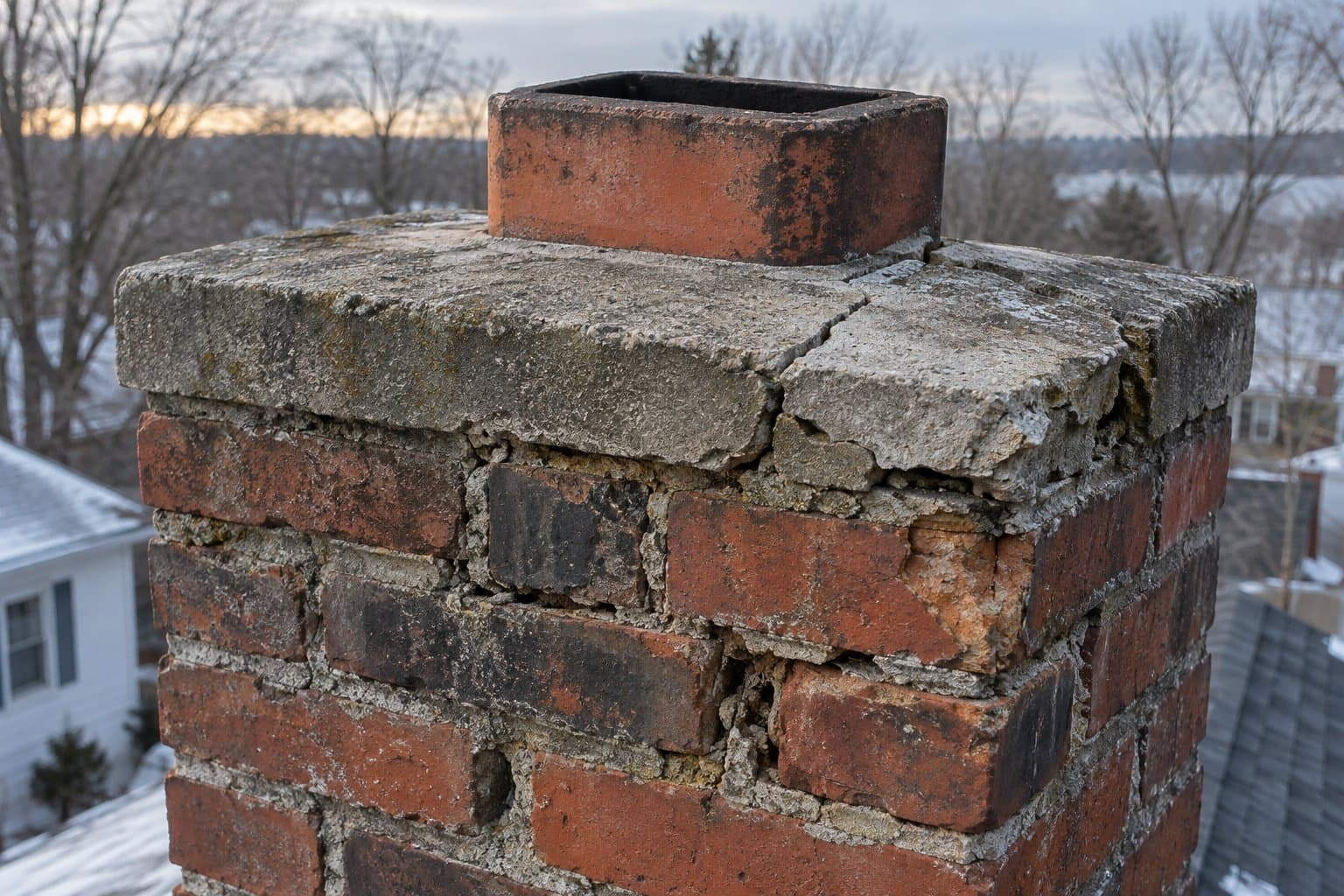
Yonkers is hard on masonry. Winters here drop into the teens and 20s with roughly 25 to 30 inches of snow, and the repeated freeze-thaw cycles are what turn a hairline crack into a rebuild. Water soaks into the crown and the joints, freezes, expands, and widens the gap a little more each time. Much of the housing stock predates 1940 — brick and stucco rowhouses, two- and three-family homes, prewar brick apartment buildings and co-ops — so aging crowns, deteriorated mortar and repointing work are routine on these stacks. Remnants of tropical storms like Irene, Sandy and Ida add wind and intense rain that overwhelms flashing and drives more water into brick that has already opened up.
While you wait — please don't
- Keep people away from below the chimney. Falling brick is a real hazard at ground level, so move cars, bins and anything you walk past daily out from under the stack.
- Do not go up on the roof yourself. A stack that is losing brick may have lost structure too, and leaning on it or climbing near it can bring more of it down.
- Stop using the fireplace if the flue itself looks damaged. Water getting past a broken crown can crack the liner, and a damaged liner can let smoke and carbon monoxide into the house — if smoke comes into the room, stop using it until someone has inspected it, and if a CO alarm sounds or anyone feels dizzy or sick, get everyone outside and call 911.
- Do not smear sealant over a leaning stack and call it done. A stack that leans or has open gaps is structural rather than cosmetic, and a surface patch hides the movement instead of fixing it.
What the technician does
- The whole stack gets looked at, not just the crackThe technician checks the crown, the joints, the brick faces and the section above the roofline to see how far the water has travelled. Crown damage usually shows up further down the chimney too.
- The crown is repaired or recastA new crown is formed with an overhang and a drip edge so rain is thrown clear of the brick instead of running down the face of it.
- Repointing matched to the existing workOpen and washed-out joints are cut out and refilled, matched to the mortar and brickwork already there. On older Yonkers masonry that match matters as much as the repair.
- Spalled brick cut out and replacedBrick that has flaked or crumbled is removed and new units set in place. Spalled brick will not hold mortar, so patching over it does not last.
- A cap is fittedA cap keeps rain and snow off the flue opening, which is the other main way water gets into the top of the chimney.
- Rebuild above the roofline where the stack has lost structureIf the top section is leaning or the brick no longer holds together, that part is taken down and rebuilt rather than patched.
Why this happens in Yonkers, NY
Yonkers sits on steep Hudson River hills, and the same weather that cracks crowns keeps working on them all winter. Snow sits on a flat, damaged crown, melts, soaks in and refreezes. Humidity is high year-round here, so masonry rarely gets a long dry spell to shed the moisture it has already absorbed. That is why crown and repointing work comes up so often on the older brick in neighborhoods like Getty Square, Nodine Hill, Park Hill, Ludlow Park and Colonial Heights, and on the prewar buildings scattered across the city.
Many chimneys in Yonkers were originally built for coal or oil heat and later converted, so they are old stacks still doing an active job. Spring is when people notice the damage — the freeze-thaw cracking from the winter becomes visible once the weather breaks. That also lines up with when exterior masonry work gets done across New York, since rebuilding and repointing need mortar that can cure without freezing. Demand climbs again in late fall as people service heating systems before the first freeze, so if you have seen brick come off, it is worth getting eyes on it before the cold sets in again.
Questions people ask
- Do I need a permit for chimney masonry work in Yonkers?
- In New York, permits are issued locally by the municipal building department and code enforcement officer, not by a state agency. Structural masonry work such as rebuilding a chimney above the roofline typically needs one, while routine sweeping and inspection generally do not. Requirements vary between jurisdictions, so call the Yonkers building department before work begins.
- Is there a state license for chimney and masonry contractors in New York?
- New York does not issue a statewide license for chimney sweeping, inspection or masonry repair — it is handled locally. Westchester County runs its own home improvement contractor licensing program, so verify current requirements with the county consumer affairs or licensing office covering Yonkers.
- Can a cracked crown wait until spring?
- The crack is what lets water in, and every freeze-thaw cycle through a Yonkers winter opens it a little further. An inspection can be arranged any time of year; rebuilding and repointing concentrate in warmer months because mortar needs to cure without freezing. Getting it looked at early tells you which category you are in.
- Is a crumbling crown just cosmetic?
- Not usually. Falling brick is a hazard at ground level, and a leaning stack or one with open gaps is structural rather than cosmetic. Water getting past a failed crown can also reach the liner inside.
- Who actually does the work?
- One Call Chimney is a referral and scheduling service that arranges chimney work with independent sweeps and masons across all fifty states. We are not the contractor and we do not perform the work. Ask the technician to walk you through the reasoning for the repair and to put it in writing.
One call
One call to (866) 576-7943 and we will arrange for an independent mason to come out and look at the chimney. The estimate is free, the technician inspects the chimney and gives you the price before any work starts, and nothing happens until you approve it.
Something else in this area
- Water coming in
- Liner damaged or missing
- Never been swept
- Rebuild or new chimney
- Something living up there
- Smells of smoke or damp
- Smoke comes back into the room
- Damper stuck or broken
One Call Chimney arranges the visit; the technician does the work and gives you the price.