Stop using the door
Liner damaged in Yonkers, NY
Someone has looked up your chimney and told you the liner is cracked. The liner is the inner surface of the flue — usually clay tiles in an older masonry chimney, sometimes a metal pipe. Its job is to keep heat and combustion gases inside the flue and away from the wood framing and brickwork around it. When it cracks, gaps open up. Heat can reach the structure of the house, and carbon monoxide can find a path into rooms instead of going out the top.
Phones answered around the clock · free estimate
In Yonkers this is common, and there are reasons for it. Much of the housing stock predates 1940 — brick and stucco rowhouses, wood-frame and brick two- and three-family homes, prewar brick apartment buildings and co-ops. A lot of those chimneys were built for coal or oil heat and later converted to something else. New York winters drive repeated freeze-thaw cycles that crack crowns and open mortar joints, and once a flue has absorbed moisture the damage accelerates. Clay tiles also crack from the sudden heat of a chimney fire. And when a chimney is switched to gas without being relined, the acidic condensate that gas produces attacks the masonry from the inside.
While you wait — please don't
- Stop using the fireplace or appliance. A damaged liner should be treated as unsafe until it has been inspected and verified, so don't light another fire in it.
- If anyone feels sick or a CO alarm sounds, get out. Headache, dizziness, nausea or a sounding carbon monoxide alarm means everyone leaves the building and you call 911 from outside.
- Don't relight after a chimney fire. Even a short chimney fire can crack clay tiles, and the flue must be inspected before it is used again.
- Don't assume a gas conversion is fine as-is. An old flue sized for oil or coal and never relined can be the wrong size and the wrong material for a modern gas appliance.
What the technician does
- Camera inspection firstThe technician runs a camera up the full length of the flue to see the cracks, gaps and condition of the tiles. Ask to see the footage yourself — it's your chimney, and the pictures should make the reasoning obvious.
- The appliance and the flue are matchedThe size, material and termination of the liner have to suit what it is venting, whether that is a wood stove, an insert, a fireplace or a gas or oil appliance. An oversized flue left over from an older heating system is a common finding in older homes.
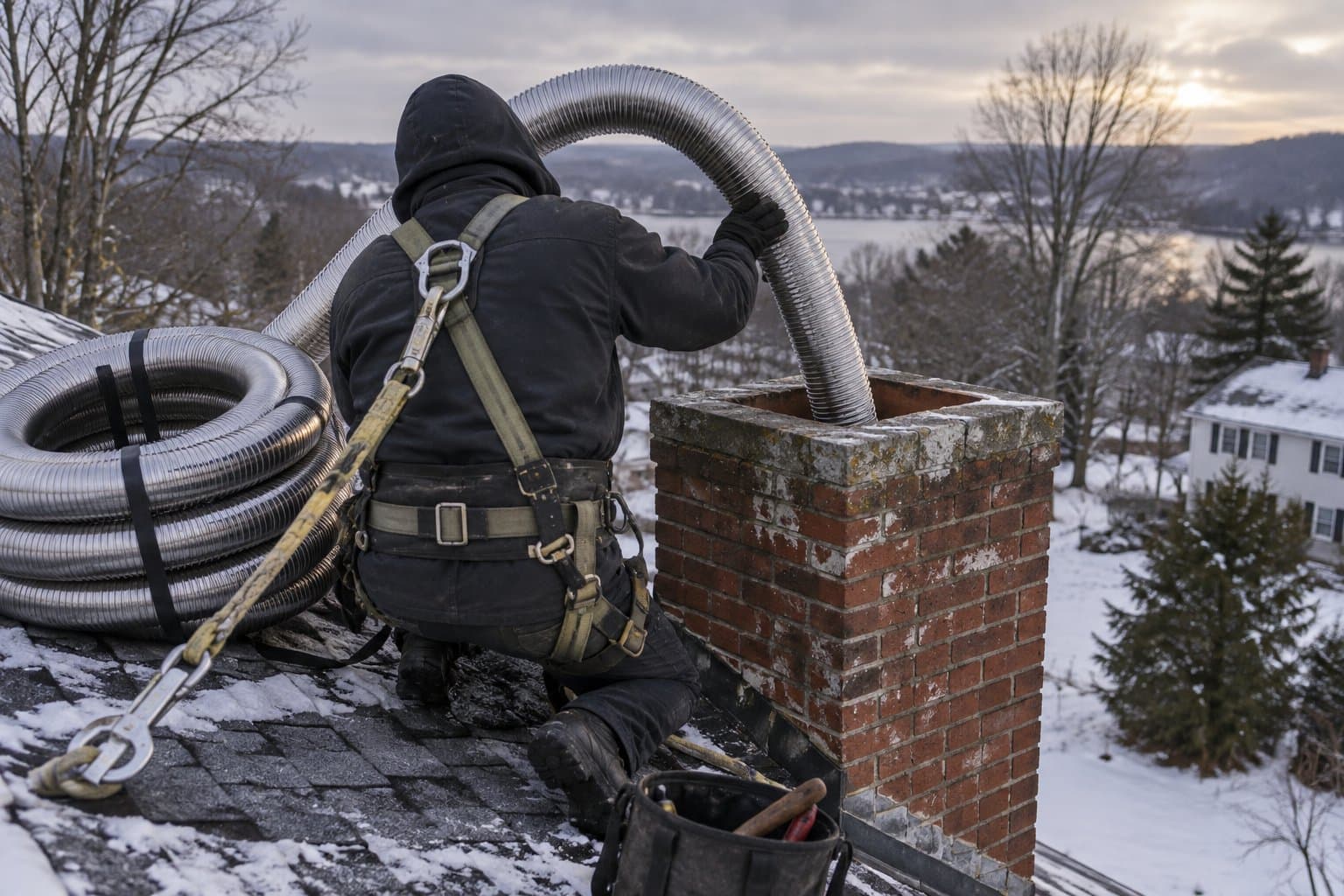
- A stainless steel liner is sized and fittedIn most cases the fix is a stainless liner run down the flue, sized to the appliance and insulated where that is required. Insulation helps the flue stay warm, which affects draft and condensation.
- Cast-in-place lining where it suits the chimneySome chimneys are better served by a cast-in-place lining rather than a steel liner. The inspection decides which approach fits the structure you have.
- Cap and crown handled at the same timeThere is little point relining a flue and leaving rain pouring into the top of it, so the cap and the crown get addressed as part of the same job.
- You get the price before anything startsThe technician inspects, explains what is needed and gives you the price. Nothing begins until you approve it.
Why this happens in Yonkers, NY
Yonkers sits on steep Hudson River hills with a large stock of century-old brick and masonry buildings, so aging liners, deteriorated crowns and repointing are routine work here. Many of those chimneys still carry ductwork and flues originally sized for older oil-fired systems. That matters for relining, because a flue that is too large for the appliance now attached to it will run cool, and a cool flue collects moisture and condensate. Humidity is high in Yonkers year-round, which keeps unused flues damp and encourages creosote odours and staining inside the house.
Timing is worth thinking about. Demand across New York peaks in late summer and fall as people get ready for the heating season, spikes again mid-winter after chimney fires and draft problems, and rises in spring when freeze-thaw damage to masonry becomes visible. Exterior masonry work concentrates in warmer months when mortar can cure without freezing, so if crown or brickwork repairs go with your relining, the season affects the plan. On permits: New York has no statewide chimney-sweep licence, and permits are issued locally by the Yonkers building department rather than by a state agency. Relining as part of an appliance installation, and structural masonry above the roofline, typically need a permit. Westchester County also runs its own home improvement contractor licensing programme, so you can verify current requirements with the county licensing office and confirm code questions with your local building department or the NYS Department of State Division of Building Standards and Codes.
Questions people ask
- Can I use the fireplace until the liner is replaced?
- No. A damaged liner lets heat and carbon monoxide reach the structure of the house, and the appliance should not be used until the flue has been verified. Wait for the inspection.
- My Yonkers house was converted from oil to gas. Does the chimney still need a liner?
- Often yes. Converting to gas without relining leaves acidic condensate attacking the masonry, and a flue sized for an older oil system is usually too large for a modern gas appliance. A camera inspection will show what condition the flue is in.
- We had a small chimney fire. Is relining really necessary?
- Clay tiles crack in a chimney fire, sometimes in ways you cannot see from below. After any chimney fire the flue must be inspected before it is used again, and the camera footage will show whether the tiles held up.
- Do I need a permit in Yonkers?
- In New York, permits are issued locally, not by the state. Relining done as part of installing a stove, insert or fireplace generally needs one, as does structural masonry work above the roofline. Call the Yonkers building department before work begins.
- Who actually turns up?
- One Call Chimney is a referral and scheduling service. We arrange the work with independent sweeps and masons across all fifty states — we are not the contractor and we do not perform the work ourselves.
One call
One call to (866) 576-7943 gets a chimney technician out to inspect the flue in Yonkers, and the estimate is free. You see the price before any work starts, and nothing happens until you approve it.
Something else in this area
- Water coming in
- Never been swept
- Rebuild or new chimney
- Something living up there
- Smells of smoke or damp
- Smoke comes back into the room
- Cracked crown or crumbling brick
- Damper stuck or broken
One Call Chimney arranges the visit; the technician does the work and gives you the price.