
Chimney Rebuild in White Plains, NY
You are looking at a chimney that no longer looks right. Maybe the stack above the roof is leaning. Maybe bricks have dropped into the gutter or onto the lawn. Maybe the mortar between the bricks has gone soft and you can dig it out with a finger. That usually means the masonry has taken on water, frozen, and come apart from the inside out.
Phones answered around the clock · free estimate
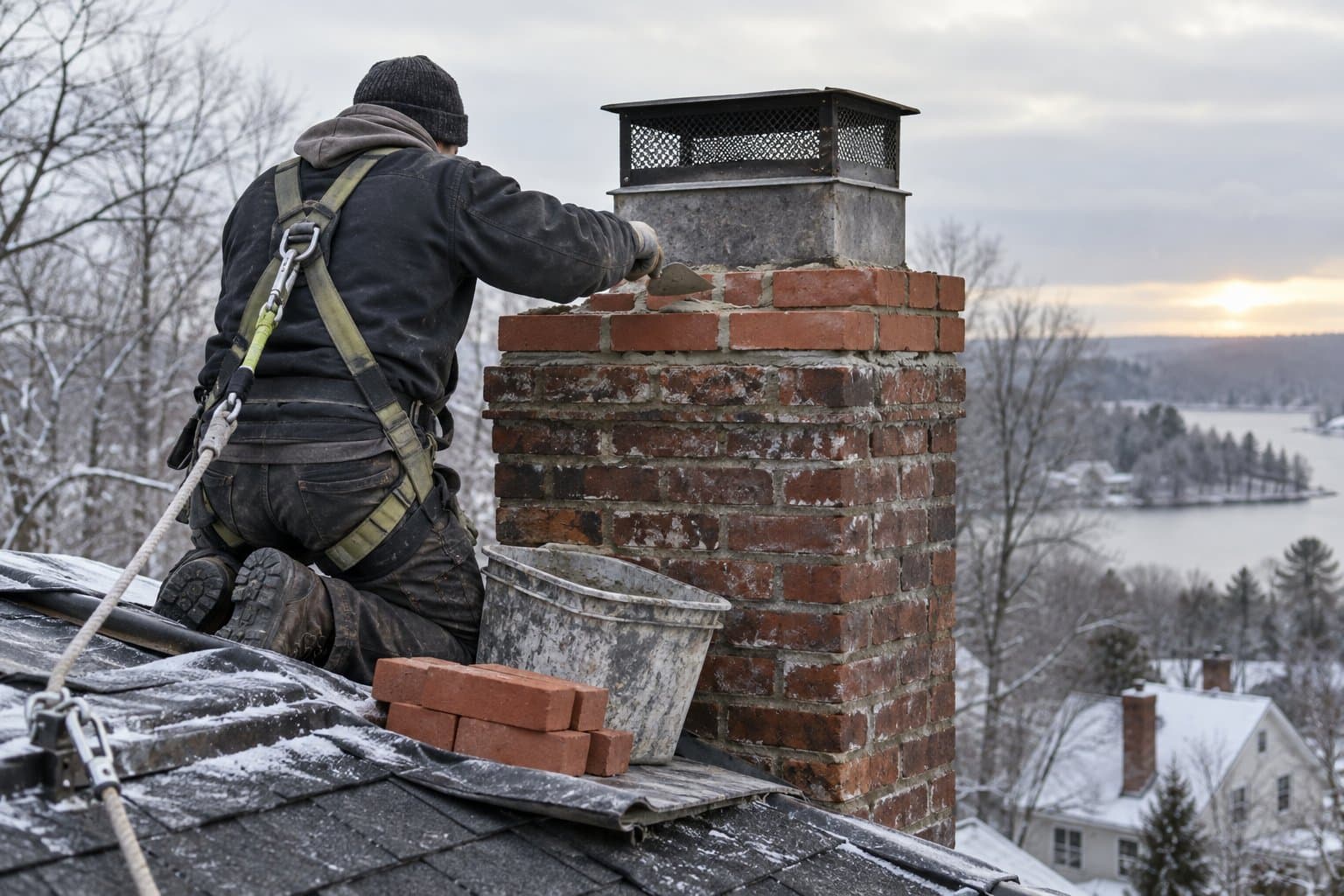
This is common in White Plains. The climate here is humid continental, with cold winters and repeated freeze-thaw cycles that are hard on chimney crowns and mortar joints. Water soaks into brick and mortar, freezes, expands, and pushes the masonry apart a little more each winter. The housing stock makes it worse. Many homes in the older neighborhoods are pre-WWII colonials, Tudors and capes with original brick or stone chimneys, and those stacks often need repointing and a liner evaluation before the heating season. Nor'easters and the remnants of tropical storms add high wind and heavy rain to an already weakened stack.
While you wait — please don't
- Stop using the fireplace. A fireplace should not be used under a stack that is leaning or shedding brick, because the flue inside may be open to the house framing or to the outside.
- Keep people away from the base of the chimney. Loose brick falls without warning, so move cars, trash cans and anything you care about out from under the stack until it has been looked at.
- If you smell smoke indoors or an alarm sounds, get out. A damaged chimney can leak smoke and carbon monoxide into the house — go outside first, then call 911.
- Do not climb onto the roof to check it yourself. A failing stack is unstable, and leaning on it to get a closer look is how people get hurt.
What the technician does
- Inspection with photographsThe technician looks over the whole chimney, inside and out, and takes photographs of what is actually failing. You get to see the pictures rather than take the problem on trust.
- A price before anything startsThe estimate is free. The technician inspects first, gives you the price, and you approve it before any work begins.
- Rebuild above the rooflineThis is the usual answer. The section above the roof takes the worst of the weather, so it comes down to sound masonry and goes back up new.
- Full rebuild where the structure has goneIf the damage runs deeper than the roofline, the rebuild goes all the way down with a proper footing and new flashing where the chimney meets the roof.
- New crown, cap and linerA rebuild includes a new crown and cap to keep water out, and a new liner so the flue is sound for whatever you are burning or venting.
- Brick and mortar matchedThe brick and mortar are matched as closely as the house allows, so a rebuilt Tudor or colonial chimney does not end up looking bolted on.
Why this happens in White Plains, NY
Timing matters here. Masonry needs temperatures above freezing to cure, so in a cold region like White Plains, rebuilds are warm-month work. If your stack fails in January, the usual approach is a temporary cover to protect it from rain and snow until the weather turns, then the rebuild. That is also why demand in New York spikes in late summer and fall, and why exterior masonry rebuilding and repointing concentrate in the warmer months when mortar can cure without freezing.
The heavy mature oak and maple canopy across the older White Plains neighborhoods adds its own wear — leaf litter builds up in gutters and chimney caps every autumn, and wind-driven limbs come down during nor'easters. Permits are also part of the picture. Structural masonry work such as rebuilding a chimney above the roofline typically requires a permit in New York, and permits are issued locally, so chimney rebuilds in White Plains generally go through City of White Plains permitting. If you are in a downtown condo or a townhouse development, there may be HOA or condo-board rules on top of that. Routine sweeping and inspection generally do not require a permit.
Questions people ask
- Does the whole chimney have to come down?
- Usually not. Rebuilding the section above the roofline is the common answer, because that is where freeze-thaw damage concentrates. A full rebuild with new footing and flashing is for cases where the structure itself has gone.
- Can the work be done in winter in White Plains?
- Masonry needs temperatures above freezing to cure properly, and White Plains winters bring repeated freeze-thaw cycles. A temporary cover can protect the stack through the cold months so the rebuild happens when the mortar can set.
- Will the new brick match my Tudor or colonial?
- Brick and mortar are matched as closely as the house allows. Many White Plains homes are older, with original brick or stone chimneys, so matching is part of the conversation before work starts.
- Do I need a permit?
- In New York, permits are issued by the local building department, not a state agency, and structural masonry work like rebuilding above the roofline usually needs one. Work in White Plains typically requires City of White Plains permits. Call the local building department to confirm before work begins.
- Who actually does the work?
- One Call Chimney is a referral and scheduling service. We arrange the work with independent sweeps and masons — we are not the contractor and we do not perform the work ourselves.
- How do I know the rebuild is really needed?
- Ask to see the inspection photographs of what is failing, and ask for the reasoning in writing. You approve the price before anything starts.
One call
One call sets up an inspection of your White Plains chimney, with photographs of what is actually wrong and a free estimate. Call (866) 576-7943 — the price is agreed with you before any work starts.
More from One Call Chimney
Nearby
Answers
Free tool
Something else in this area
- Never been swept
- Smoke comes back into the room
- Water coming in
- Something living up there
- Smells of smoke or damp
- Cracked crown or crumbling brick
- Damper stuck or broken
- Liner damaged or missing
One Call Chimney arranges the visit; the technician does the work and gives you the price.