
Cracked crown or crumbling brick in White Plains, NY
You have probably seen pieces of brick or mortar on the roof, in the gutter, or on the ground by the foundation. Look up and the top of the stack has a split running through the concrete cap, or the brick faces are flaking off in thin layers. That is a crown and masonry problem. The crown is the slab at the very top that sheds water away from the brick. Once it cracks, water gets in behind everything below it.
Phones answered around the clock · free estimate
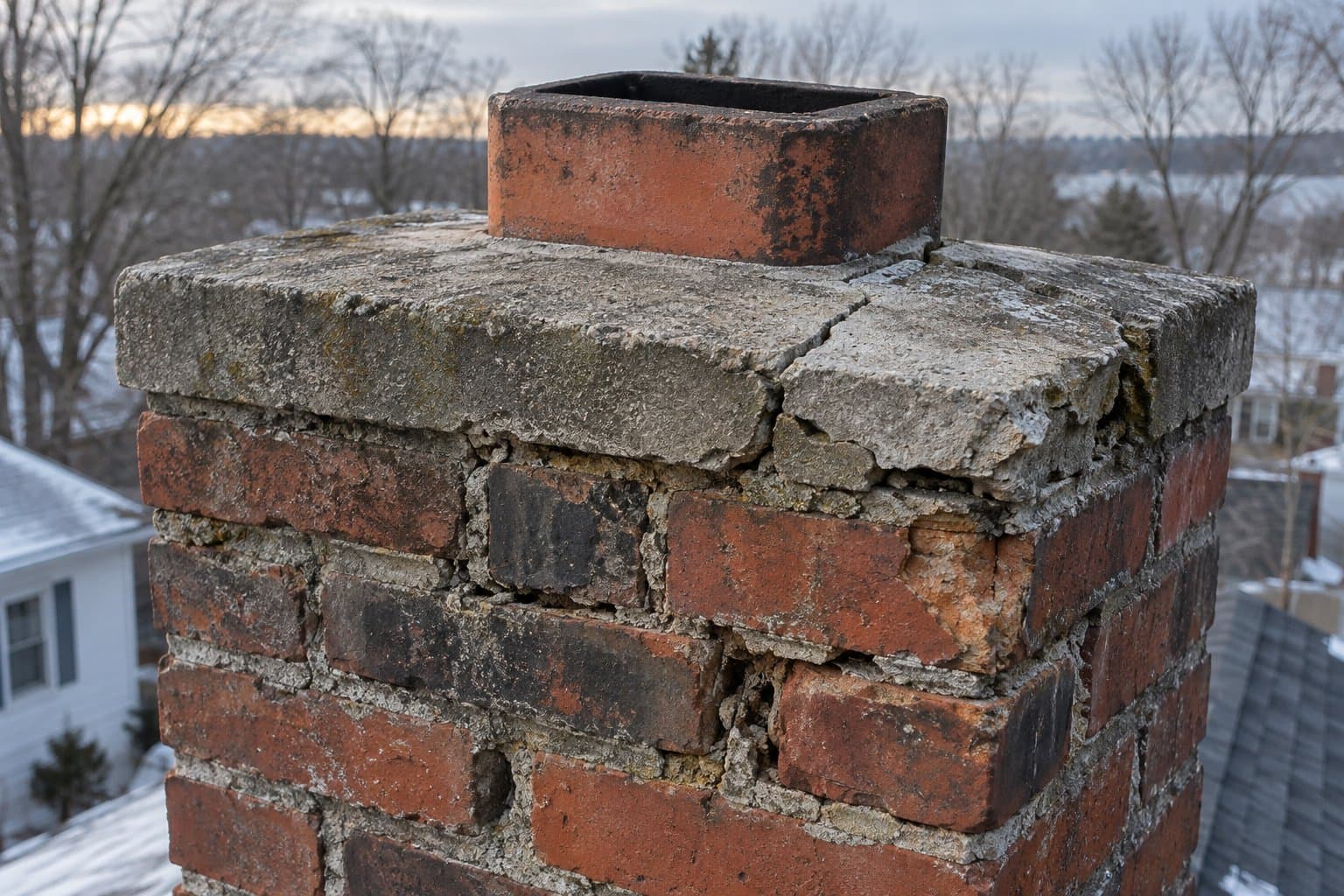
Water is only half of it. White Plains winters bring repeated freeze-thaw cycles, and that is what turns a hairline crack into a rebuild. Water soaks into the crown and the mortar joints, freezes, expands, and pushes the masonry apart a little more each time. Cold regions lose stacks faster for exactly this reason. The older colonials, Tudors and capes around White Plains often still have their original brick or stone chimneys, and those joints have been taking that cycle for a long time.
While you wait — please don't
- Keep people away from the base of the chimney. Falling brick is a real hazard at ground level, so move cars, bins and anything your kids use away from that side of the house.
- Do not climb up to look. A stack that is shedding brick may have lost structure, and leaning on it or standing near it on a roof is how people get hurt.
- Stop using the fireplace if the stack is leaning or has open gaps. That is structural, not cosmetic, and a chimney with open gaps can let smoke and combustion gases into the house instead of outside.
- Get out and call 911 if anyone feels sick when a fire is burning. Headache, nausea, dizziness or drowsiness in more than one person can mean carbon monoxide, so get everyone outside first and call from there.
- Do not smear sealant over the crack as a fix. Patching the surface hides the crack but leaves water moving through the masonry below, and the damage keeps going.
What the technician does
- The technician looks at the whole stack, not just the crackThey check the crown, the mortar joints, the brick faces and how the stack sits above the roofline. The question is whether this is a repair or a rebuild.
- The crown gets repaired or recastA proper crown is cast with an overhang past the brick and a drip edge, so water falls clear of the chimney instead of running down the face.
- Repointing where the joints have goneOpen or crumbling mortar joints are cut out and repacked, matched to the existing work so the repair sits in with the rest of the chimney.
- Spalled brick cut out and replacedBrick that has flaked or split through is removed and new brick set in its place. Face damage left in place keeps soaking up water.
- A cap fitted at the topA cap keeps rain, snow and leaf litter out of the flue, which matters a lot under the oak and maple canopy over the older White Plains neighborhoods.
- Rebuild above the roofline where the stack has lost structureIf the top courses are loose, leaning or no longer holding together, the stack is taken down to sound masonry and rebuilt.
Why this happens in White Plains, NY
White Plains sits inland in Westchester County, so salt air is not what is eating your brick — it is water and cold. Nor'easters and the remnants of tropical systems have pushed heavy wind-driven rain at these chimneys for years, and then winter freezes whatever soaked in. Humid summers keep unused flues damp on top of that. In the older neighborhoods like Gedney Farms, Battle Hill, North Broadway and Fisher Hill, the brick and stone stacks on pre-WWII homes often need repointing and a liner evaluation before the heating season rather than after it.
Timing matters here. Demand jumps in early spring, once the freeze-thaw damage from winter is visible, and again in fall when everyone is getting ready for the first cold snap. Masonry rebuilding and repointing concentrate in the warmer months, because mortar needs to cure without freezing. If you have found a cracked crown now, getting it looked at sooner gives you a better shot at a working window. Structural masonry work such as rebuilding a chimney above the roofline typically requires a City of White Plains permit, and the technician should tell you whether your job needs one.
Questions people ask
- Is a cracked crown urgent or can it wait?
- It depends on what else is going on. A hairline crack with sound brick below is different from a stack dropping pieces or leaning. Falling brick is a hazard at ground level, and a leaning stack is structural, so those need looking at now.
- Do I need a permit in White Plains?
- In New York, chimney permits are issued locally by the municipal building department, not by a state agency. Structural masonry work such as rebuilding above the roofline typically requires a City of White Plains permit, while routine sweeping and inspection generally do not. Call the local building department to confirm before work begins.
- Is the chimney sweep or mason licensed?
- New York does not issue a statewide license for chimney sweeping, inspection or masonry repair — it is handled locally. Westchester County runs its own home improvement contractor licensing program, so you can verify a contractor's current standing with the county licensing office. We are a referral and scheduling service, so that credential is the contractor's to hold and show you.
- Can the crown just be patched?
- Sometimes a crown can be repaired, and sometimes it needs recasting with an overhang and a drip edge. The technician inspects it and tells you which, with the reasoning, before anything starts. Ask for that reasoning in writing so you have it.
- What does the estimate cost?
- The estimate is free. The technician inspects the chimney and gives you the price before any work starts, and you approve it first. Nothing goes ahead until you say so.
One call
One call to (866) 576-7943 and we arrange a visit from an independent sweep or mason working in White Plains. The estimate is free, and you see and agree the price before any work starts.
More from One Call Chimney
Nearby
Answers
Free tool
Something else in this area
- Never been swept
- Smoke comes back into the room
- Water coming in
- Something living up there
- Smells of smoke or damp
- Damper stuck or broken
- Liner damaged or missing
- Rebuild or new chimney
One Call Chimney arranges the visit; the technician does the work and gives you the price.