
Damper stuck in Troy, NY
You pulled the handle and nothing moved. Or it moved, but the plate did not. A damper that will not open means smoke has nowhere to go, and a damper that will not close means your heat is going straight up the flue. Either way, the fire you planned tonight is off until someone looks at it.
Phones answered around the clock · free estimate
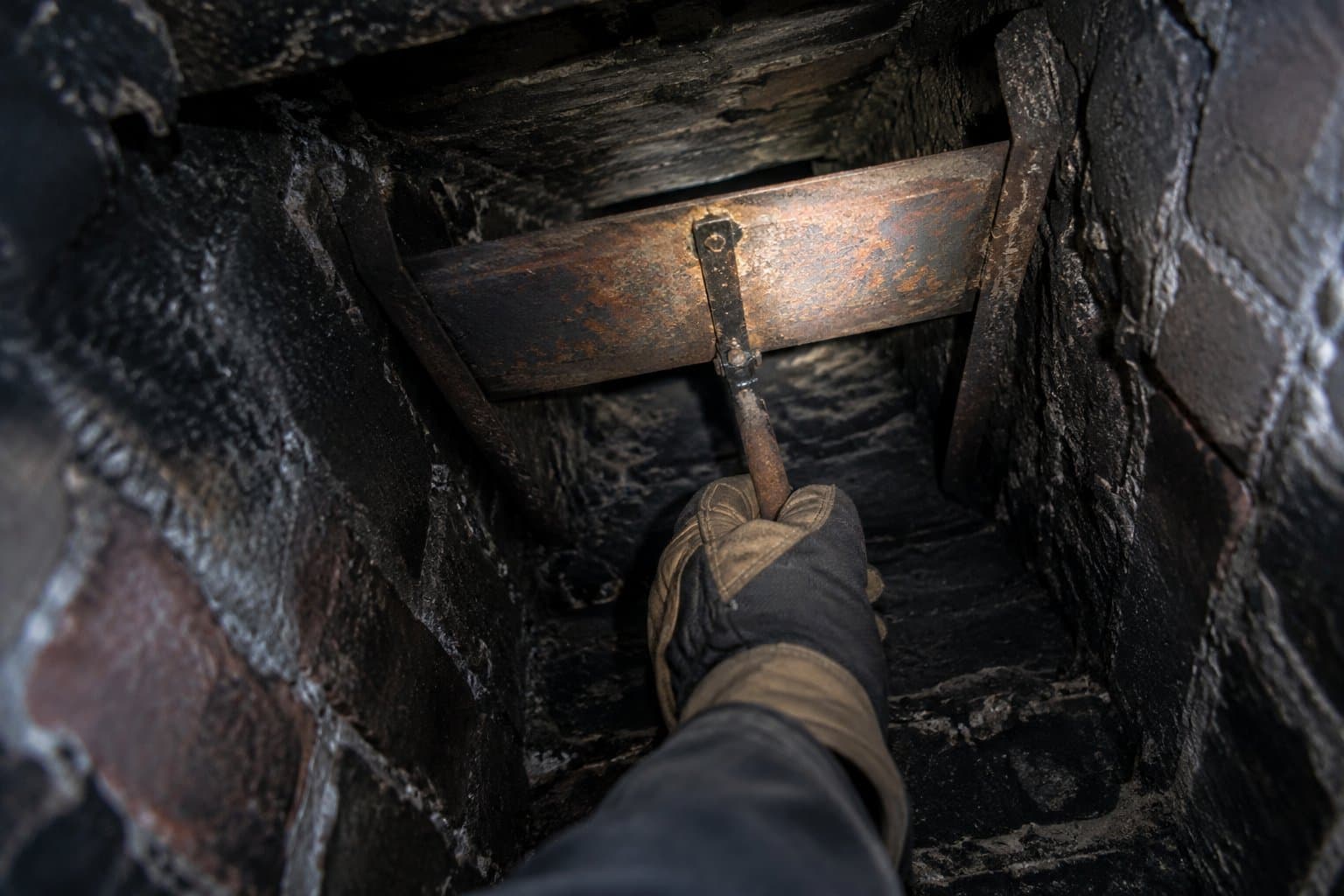
Rust is the usual reason. An uncapped flue lets rain fall straight down onto the damper plate and its hinge, and once that steel starts to scale, the pivot seizes. Troy makes it worse. Winters here are cold and snowy with frequent freeze-thaw cycles, so water that soaks into the chimney freezes, expands and loosens mortar and metal alike. Summers are damp and humid, which keeps an unused flue wet long after the heating season ends. Add a long New York heating season running roughly October through April, and a damper gets worked hard and left wet for the rest of the year.
While you wait — please don't
- Do not light a fire to test it. If you cannot confirm with your own eyes that the damper is open, a fire will push smoke back into the room.
- Do not force the handle. Forcing a rusted damper can crack the frame it sits in, and then the fix stops being hardware and becomes masonry work.
- Stop using the fireplace if smoke came into the room. Smoke in the living space means the flue is not clearing, and you should leave the fireplace cold until it has been inspected.
- Get out and call 911 if anyone feels ill. Headache, dizziness, nausea or a carbon monoxide alarm means everyone goes outside first and calls 911 from there — do not stay inside to investigate.
- Do not wedge it open or shut. Propping a damper with a brick or a stick leaves it in a position nobody can check later, and it can fall closed over a live fire.
What the technician does
- The damper is looked at, not guessed atThe technician opens up the firebox and inspects the damper plate, frame and pivot to see whether it is seized, bent or broken. You get the price before any work begins, and you approve it first.
- Freed, cleaned and re-seatedWhere the plate is sound, the rust and debris are cleaned off the hinge and seat so the plate swings and closes flat again. A damper that seats properly is what stops warm air leaving all winter.
- Handles, pivots and hardware replacedBroken handles, worn pivots and missing rotary hardware get swapped out so the damper can be operated from the firebox without wrestling it.
- A top-sealing damper where the throat damper is finishedIf the throat damper is beyond repair, a top-sealing damper can be fitted at the top of the flue instead. It seals at the crown and is usually a better seal than the original.
- The flue is swept while it is accessibleWith the damper out of the way there is clear access, so the flue can be swept at the same visit rather than as a second trip.
- A cap fitted to stop the waterA cap keeps rain out of the flue, which is what rusted the damper in the first place. Without it, the new hardware starts the same cycle over again.
Why this happens in Troy, NY
Troy's housing stock is unusually old for the region — 19th- and early-20th-century brick rowhouses, two- and three-family wood-frame homes and Victorian-era masonry. Working and decommissioned chimneys with original flues are very common here, and in the Collar City's rowhouse blocks you also get party walls and shared chimney stacks, where one stack serves more than one home. That matters with a damper. Access, flue identification and what sits above the roofline all need checking before anyone starts pulling hardware, whether the house is in Downtown Troy, Lansingburgh, South Troy or up the hill in Sycaway.
Timing follows the weather. Demand in Troy spikes in early fall as owners prep chimneys and furnaces before winter, and again at the spring thaw when freeze damage to masonry shows up. Across New York, exterior masonry and repointing work concentrates in the warmer months when mortar can cure without freezing, so if a seized damper turns out to have taken the frame or surrounding brick with it, the season you call in can shape the plan. A damper stuck open is the quiet one — no smoke, no alarm, just heat leaving the house through a long upstate heating season.
Questions people ask
- How do I know if my damper is stuck open?
- Reach up into the firebox with a flashlight when the fireplace is cold and look for the plate. If you can see daylight or feel a steady draft coming down the flue on a cold Troy day, it is likely open and not sealing. A plate that will not move from either position is the same problem to fix.
- Can a stuck damper be repaired, or does it have to be replaced?
- Often it can be freed, cleaned and re-seated, with new handles or pivots if the old hardware is worn. If the plate or frame is too far gone, a top-sealing damper fitted at the top of the flue is the usual alternative. The technician tells you which applies and what it costs before anything is done.
- Why do dampers rust out so often in Troy?
- Troy sits about 140 miles inland on the Hudson, so there is no salt air, but there is plenty of water. Rain and snow dropping into an uncapped flue, repeated freeze-thaw cycles through the winter, and damp humid summers that keep an unused flue wet are enough on their own to seize steel hardware.
- Do I need a permit for damper work in New York?
- Permits for chimney work in New York are issued locally by the municipal or county building department and code enforcement officer, not by a state agency. Routine sweeping and inspection generally do not require one, while structural masonry work such as rebuilding a chimney above the roofline typically does. Call your local building department before work begins.
- Is there a state chimney sweep license in New York?
- New York does not issue a statewide license for chimney sweeping, inspection or masonry repair — it is handled locally, and many upstate municipalities require only local registration or nothing at all. You can confirm current requirements with the city or county consumer affairs or licensing office, and code questions with your local building department or the NYS Department of State Division of Building Standards and Codes.
- What should I ask the technician?
- Ask to see the camera footage from inside the flue, and ask for the reasoning behind the recommendation in writing. Both are reasonable requests on a damper job, especially in an older Troy chimney where the condition above the firebox matters as much as the hardware itself.
One call
One call to (866) 576-7943 and we arrange the visit with an independent sweep in the Troy area — we schedule the work, we are not the contractor. The estimate is free, the technician inspects the chimney and gives you the price first, and nothing starts until you approve it.
More from One Call Chimney
Something else in this area
- Smoke comes back into the room
- Never been swept
- Water coming in
- Something living up there
- Smells of smoke or damp
- Cracked crown or crumbling brick
- Liner damaged or missing
- Rebuild or new chimney
One Call Chimney arranges the visit; the technician does the work and gives you the price.