
Stop using the fireplace
Smoke in the room in Niagara Falls, NY
You lit a fire and the smoke came toward you instead of going up. That means the chimney is not pulling. Either something is blocking the flue, the damper is not opening the way it should, or the air the fire needs is not getting into the room. Smoke in the room also means combustion gases in the room, and carbon monoxide comes with them. Put the fire out, open a window, and stop using the fireplace until someone has looked at it. If anyone feels headachy, dizzy or sick, get everyone outside and call 911.
Phones answered around the clock · free estimate
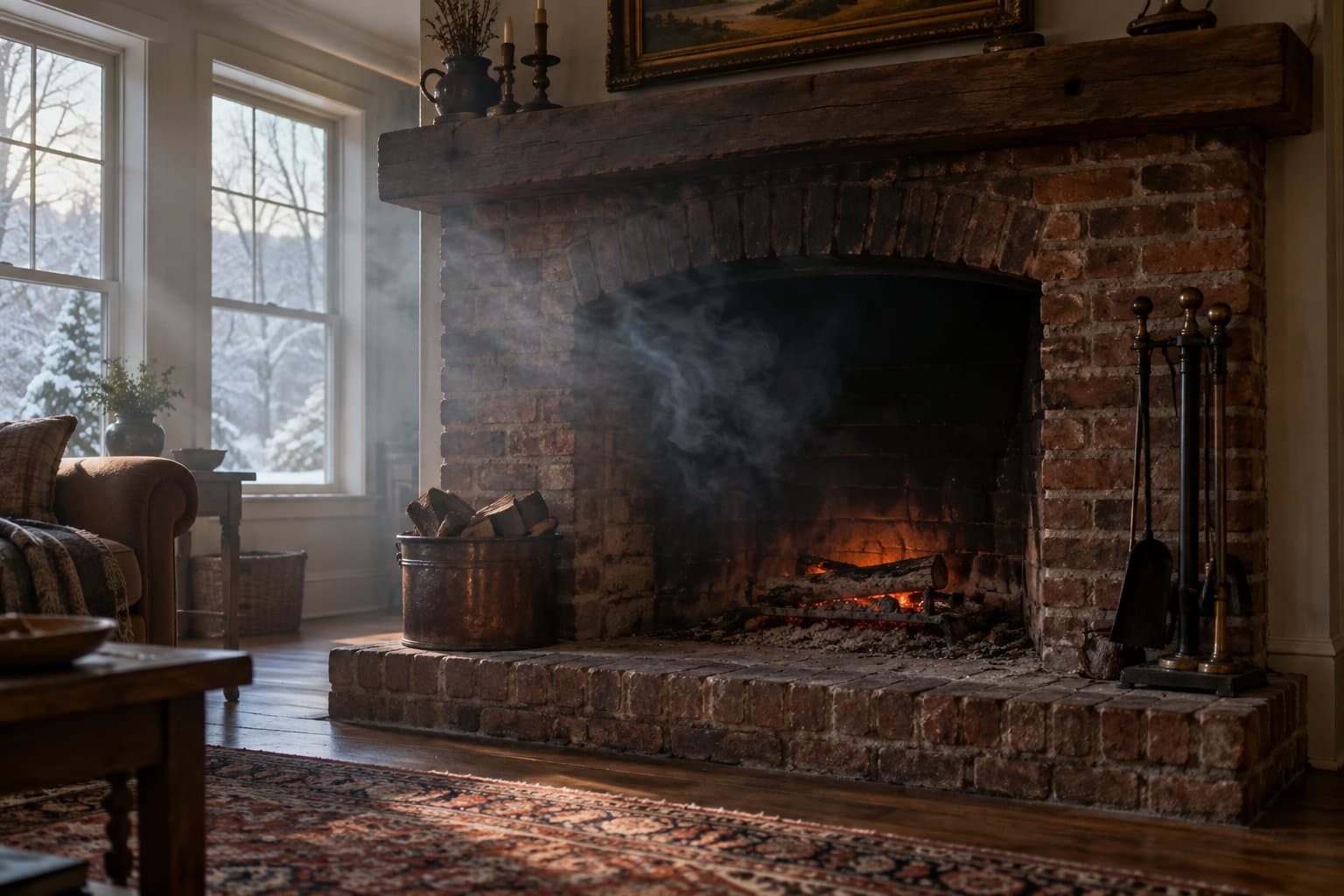
This happens a lot in Niagara Falls, and the reasons are usually local ones. Winters here are long and cold, with heavy lake-effect snow off Lake Erie and Lake Ontario, so a flue sits cold for days and draws badly until it warms up. Snow, ice and drifting can pack a cap. And the housing stock here is older than the national average, with plenty of homes built from the early 1900s through the 1960s carrying masonry chimneys left over from coal and oil heating. Those flues are often oversized or unlined for what they vent now, and an oversized flue is slow to warm and slow to draw.
While you wait — please don't
- Put the fire out and stop using it. Until the cause is found, every fire you light is pushing smoke and carbon monoxide back into the room.
- Open a window and air the room. Fresh air clears the smoke and dilutes the gases that came in with it.
- Get out and call 911 if anyone feels ill. Headache, dizziness or nausea after a smoke event can be carbon monoxide, and that needs emergency help, not a wait-and-see.
- Don't just open the damper wider and try again. If a blockage, a broken damper or an air supply problem caused it, the same thing will happen on the next fire.
- Don't poke at a suspected blockage from below. Loosening debris blind can drop it into the smoke chamber and make the draft worse instead of better.
What the technician does
- The flue gets sweptSoot and creosote are cleaned out of the full length of the flue. That alone restores a lot of lost draft.
- A camera goes upThe flue is camera-inspected to find a blockage, a break or a build-up the sweep could not reach. Ask to see the footage yourself.
- The damper is checkedA damper that only partly opens strangles the draft. It gets freed, repaired or replaced depending on what it is.
- The draft is testedThe technician tests how the chimney is actually pulling and identifies the cause, rather than guessing from the smoke alone.
- Cap and crown get looked atA packed or damaged cap and a cracked crown both show up at the top of the chimney, where you cannot see them from the ground.
- The smoke chamber is cleaned and pargedThe smoke chamber is the funnel above the firebox. Cleaned and parged smooth, it moves smoke up instead of tumbling it back.
Why this happens in Niagara Falls, NY
Freeze-thaw cycles are the norm in Niagara Falls from November into March, and they work on chimney crowns, mortar joints and brick faces year after year. A flue that has absorbed moisture suffers worse. Heavy snowfall and wind-driven drifting put stress on flashing and caps, and a blocked chimney cap during a long cold spell is one of the common winter problems in this area. Any of that can show up at your hearth as smoke in the room.
The older homes near the river and around Downtown often still have unlined or oversized masonry chimneys from converted coal and oil systems. LaSalle, DeVeaux, Hyde Park, the North End, Little Italy on Pine Avenue — the pattern repeats across the city. When a house moves to a high-efficiency gas furnace, those old flues need capping and inspection, and a flue sized for a different appliance rarely drafts well for a fireplace. Add a tightly sealed modern house or a strong kitchen extractor fan pulling against the chimney, and the chimney loses. Demand climbs here in late fall as people get ready for the heating season, so it is worth getting looked at before the cold settles in.
Questions people ask
- Why does it only smoke when I first light the fire?
- A cold flue draws badly until it warms up, and that is most noticeable on the first few minutes of a fire. In a Niagara Falls winter the flue can be very cold indeed. If it still smokes once the fire is going, that points at a blockage, a damper or an air supply problem instead.
- Could my kitchen fan be causing this?
- It can. A powerful extractor fan in a tightly sealed house can pull more air out than the chimney can draw up, and the easiest air for the house to grab is the air in your flue. The draft test during the visit is how that gets confirmed.
- My chimney is from the old coal days. Does that matter?
- It does. Many Niagara Falls homes built in the early 1900s through the 1960s have masonry chimneys left from coal and oil heating, and those are often unlined or oversized for what they vent now. The camera inspection shows what you actually have up there.
- Do I need a permit for this?
- In New York, permits are issued locally by the municipal or county building department, not by a state agency. Routine sweeping and inspection generally do not need one, but relining a flue as part of an appliance installation or rebuilding masonry above the roofline usually does. Call your local building department before that kind of work starts.
- What does it cost?
- The estimate is free. The technician inspects the chimney first, then gives you the price before any work starts, and you approve it before anything is done. Ask for the reasoning in writing so you know what you are agreeing to.
One call
One Call Chimney is a referral and scheduling service that arranges chimney work with independent sweeps and masons across all fifty states — we are not the contractor and we do not perform the work. Call (866) 576-7943 to get a Niagara Falls chimney looked at; the estimate is free and the price is agreed with you before any work begins.
More from One Call Chimney
Something else in this area
- Smells of smoke or damp
- Cracked crown or crumbling brick
- Damper stuck or broken
- Liner damaged or missing
- Rebuild or new chimney
- Never been swept
- Water coming in
- Something living up there
One Call Chimney arranges the visit; the technician does the work and gives you the price.