Stop using the fireplace
Smoke in the room in New Rochelle, NY
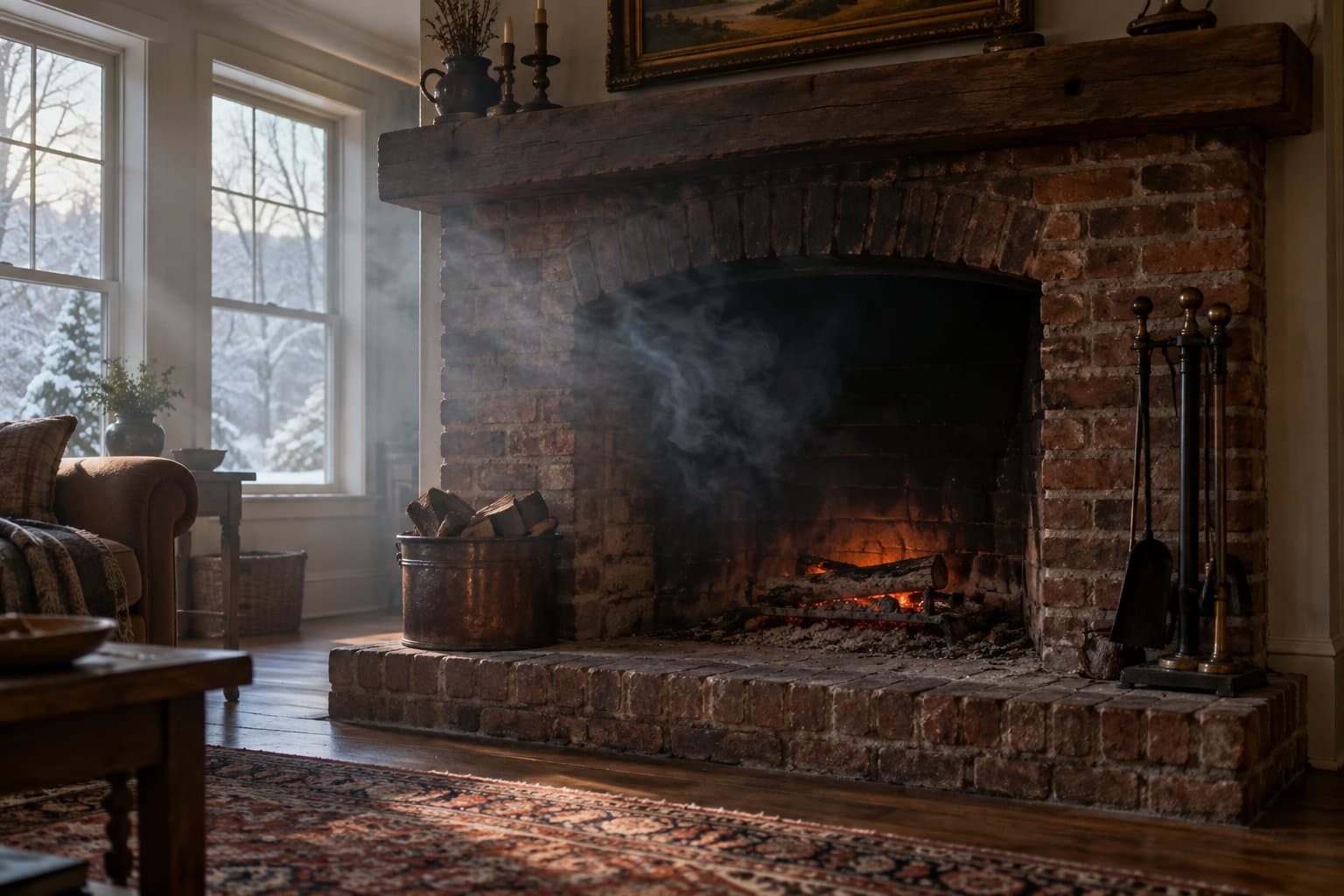
You lit a fire and the smoke came at you instead of going up. That means the chimney is not pulling air the way it should. Something is slowing or stopping the draft — a blocked flue, a damper that is not opening fully, a dirty smoke chamber, a damaged cap or crown, or simply not enough replacement air in the house. Smoke in the room also means combustion gases in the room, and carbon monoxide comes with them. Put the fire out, open a window, and stop using the fireplace until someone has looked up the flue.
Phones answered around the clock · free estimate
Two things make this common in New Rochelle. First, a cold flue draws badly until it warms up, and winters here bring repeated freeze-thaw cycles, snow and ice, so a chimney on an outside wall can sit cold for months. Second, a tightly sealed house or a strong kitchen or bath extractor fan can beat the chimney for air and pull the smoke back down. On top of that, a lot of the housing here predates 1960 — 1920s–1950s colonials, Tudors, brick and stucco homes — and those older masonry chimneys and clay flue liners are exactly where soot build-up, cracked crowns and failed caps show up.
While you wait — please don't
- Put the fire out and open a window. Smoke in the room means combustion gases in the room, so clear the air before you do anything else.
- Get outside and call 911 if anyone feels ill. Headache, dizziness or nausea around a smoking fire can mean carbon monoxide, and that needs emergency help, not a wait and see.
- Do not light another fire to test it. If the flue is blocked or the damper is stuck, a second fire sends the same smoke and the same gases back into the room.
- Do not poke at the damper from below with the fire lit. Working over hot coals risks burns and can dislodge debris straight onto you; let it go cold first.
- Do not assume a draft problem is only a draft problem. A nest, a soot blockage or a damaged liner can look like poor draft, and all three need eyes on the inside of the flue.
What the technician does
- The flue is swept and camera-inspectedThe technician sweeps the flue and runs a camera up it to find what is blocking or restricting the draft. Ask to see the footage yourself.
- The damper is checked and dealt withA damper that only opens partway chokes the draft. It is freed, repaired or replaced depending on what the technician finds.
- The draft is tested and the cause identifiedTesting shows whether the chimney is actually pulling, and whether the problem is in the flue or in the house. House air pressure and extractor fans get ruled in or out.
- The cap and crown get a lookA damaged cap or a cracked crown lets water and debris in and can interfere with how the chimney vents. Both are checked from the top.
- The smoke chamber is cleaned and pargedThe smoke chamber sits just above the firebox and guides smoke into the flue. Cleaning and parging it smooths the path so smoke goes up instead of out.
- You get the findings and the price firstThe technician inspects the chimney and gives you the price before any work starts, and you approve it before anything is done. Ask for the reasoning in writing.
Why this happens in New Rochelle, NY
Shoreline New Rochelle has its own version of this. Frontage on Long Island Sound means salt-laden air and high humidity, and that accelerates rust on chimney caps and flashing. In Sound-front areas like Davenport Neck and Premium Point, salt-air corrosion on flashing and caps is constant. A rusted-out cap can let debris into the flue; damaged flashing lets water in, and a damp flue is a flue that draws poorly and holds creosote odors through humid summers.
Timing matters too. Demand spikes after fall nor'easters and tropical remnants, and again at the first hard freeze when chimneys get their first real test of the season. Nor'easters and the remnants of Atlantic tropical systems drive wind and water intrusion, which is how caps get bent and crowns get cracked between one heating season and the next. If the first fire of the year smoked in Wykagyl, Rochelle Heights, Sutton Manor or Residence Park, that first fire is telling you something changed over the summer.
Questions people ask
- Can I use the fireplace until someone comes out?
- No. Until the flue has been inspected, every fire puts smoke and carbon monoxide into the room. Leave it cold and use another heat source.
- Why does it only smoke when I first light it?
- A cold flue draws badly until it warms, which is common in New Rochelle winters when a chimney has sat unused through repeated freeze-thaw cycles. If it clears once the fire is going, draft may be the main issue — but a camera inspection still tells you whether anything is blocking the flue.
- Could my kitchen fan be causing this?
- It can. A tightly sealed house or a powerful extractor fan can beat the chimney for air and pull smoke back down the flue. The technician tests the draft to work out whether the cause is in the chimney or in the house.
- Do these older New Rochelle chimneys need different work?
- Often, yes. Much of the housing stock here predates 1960, so clay flue liners and aging masonry are widespread, and a camera inspection shows whether the liner is sound before anyone talks about repairs.
- Is a permit or a license needed?
- Routine sweeping and inspection generally do not require a permit in New York, though relining as part of an appliance installation or structural masonry work usually does, and permits are issued by your local building department. New York has no statewide chimney sweep license; licensing is handled at city or county level, so check current requirements with your local consumer affairs or licensing office.
One call
Call (866) 576-7943 and One Call Chimney will arrange an independent sweep to look at your New Rochelle chimney; we schedule the work, we are not the contractor. Every job starts with a free estimate — the technician inspects the chimney and gives you the price, and nothing is done until you approve it.
More from One Call Chimney
Nearby
Answers
Free tool
Something else in this area
- Never been swept
- Water coming in
- Something living up there
- Smells of smoke or damp
- Cracked crown or crumbling brick
- Damper stuck or broken
- Liner damaged or missing
- Rebuild or new chimney
One Call Chimney arranges the visit; the technician does the work and gives you the price.