Chimney Rebuild in Mount Vernon, NY
Someone has told you the chimney is in bad shape, or you can see it yourself. Mortar joints you can rake out with a finger. Brick faces flaking off in thin layers. Pieces of brick in the gutter or on the roof. A stack that no longer looks plumb against the sky. That is masonry that has been taking on water for a long time and is coming apart.
Phones answered around the clock · free estimate
Mount Vernon is hard on brick. The climate is humid continental, with cold winters that regularly drop below freezing. Water soaks into mortar joints and brick, freezes, expands, and pushes the material apart a little more each time. Repeat that for a few decades and joints open up, faces spall, and the stack above the roofline starts to lean. Nor'easters and the remnants of tropical systems like Irene, Sandy, Isaias and Ida drive rain straight into the masonry. And most of the housing here is pre-WWII brick, stucco and wood frame from the 1900s through the 1950s, so the chimneys in Fleetwood, Chester Heights, Vernon Heights and the older single-family blocks are original masonry carrying a century of that cycle.
While you wait — please don't
- Stop using the fireplace. A fireplace should not be used under a stack that is leaning or shedding brick, because the flue inside it may no longer be sound.
- Get out and call 911 if anyone feels ill. If a carbon monoxide alarm sounds, or people in the house have headaches, nausea or dizziness that clears when they go outside, leave the building and call 911 from outside.
- Keep people and cars away from the base. Lots are tight in Mount Vernon and a loose brick falls onto a driveway, a walkway or the neighbor's side yard, so clear the ground under the stack.
- Stay off the roof. A chimney that is already moving is not something to lean a ladder against or climb up to for a closer look.
What the technician does
- An inspection with photographsThe technician looks at the stack from the roof and from inside, and photographs what is failing. You should see those pictures and ask for the reasoning in writing before you decide anything.
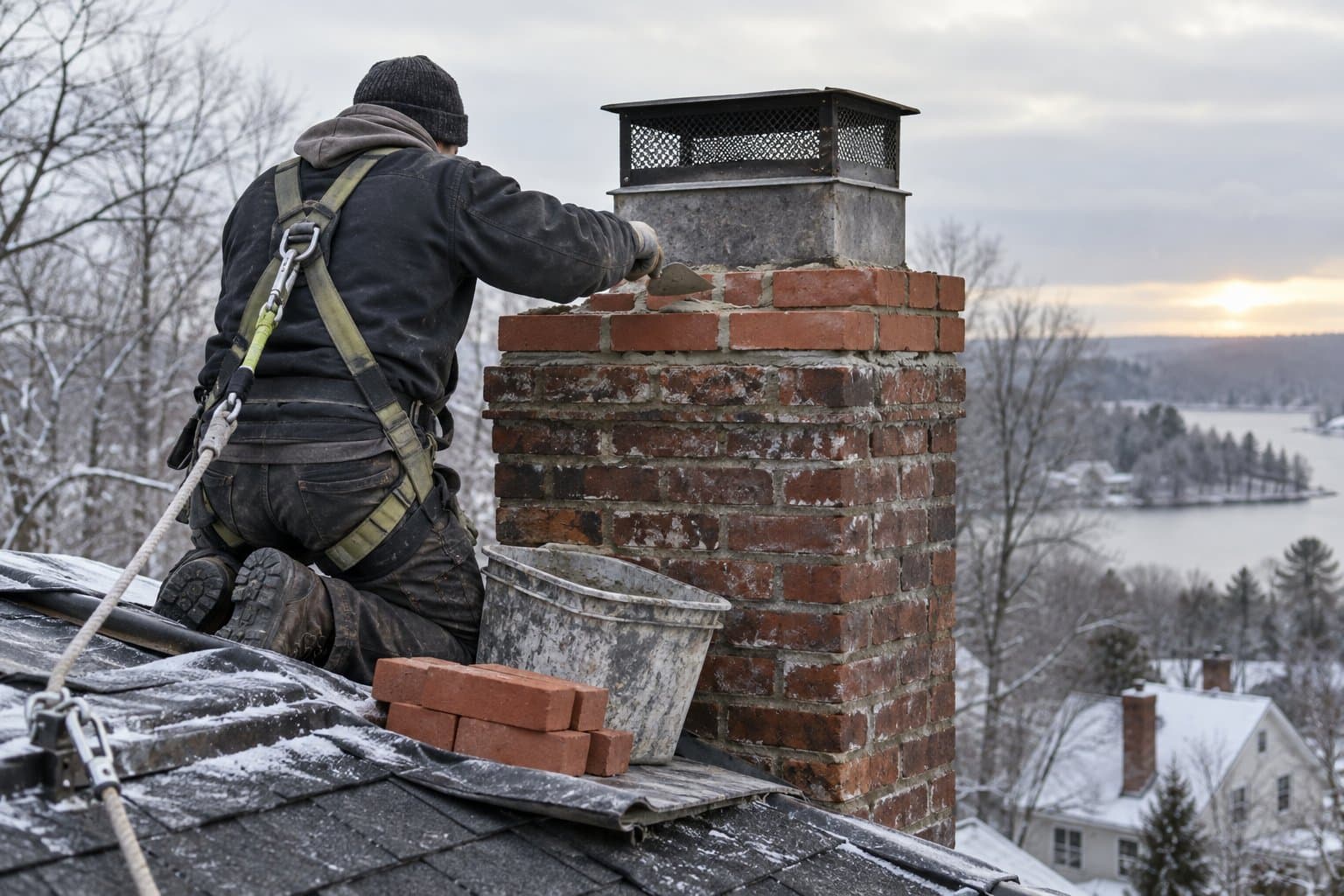
- Rebuild above the rooflineThis is the usual answer. The sound masonry below the roof stays, and everything above it comes down and goes back up new.
- Full rebuild where the structure has goneIf the damage runs below the roofline, the chimney is rebuilt from a proper footing, with new flashing where it meets the roof.
- New crown, cap and linerA rebuild includes a new crown and cap to keep water out of the top, and a new liner so the flue inside is sound as well as the brick outside.
- Brick and mortar matchedThe technician matches brick and mortar as closely as the house allows, which matters on older Mount Vernon homes where the chimney is visible from the street.
- A price before any workThe technician gives you the price after the inspection and before anything starts. You approve it first.
Why this happens in Mount Vernon, NY
Timing matters here. Masonry needs temperatures above freezing to cure properly, so a rebuild in a cold-winter city like Mount Vernon is warm-month work. If your chimney is failing in January, the realistic plan is an inspection now, a temporary cover over the stack to keep weather out, and the rebuild scheduled once the cold breaks. Across New York, exterior masonry rebuilding and repointing concentrate in the warmer months for exactly this reason, so booking early in the season helps.
Mount Vernon is one of the most densely built cities in Westchester, with century-old brick and frame homes on tight lots. Repointing and chimney repair are everyday issues here, and many houses are two- and three-family conversions, which can mean more than one flue in a single stack. Plenty of those chimneys are still active venting flues rather than decorative, especially where there has been an oil-to-gas conversion, so what is happening to the brick affects how the heating system vents. Permits for chimney work in New York are issued locally, not by the state, and structural masonry work such as rebuilding above the roofline typically requires one, so the Mount Vernon building department should be called before work begins.
Questions people ask
- Can the rebuild happen in winter in Mount Vernon?
- Usually not. Mortar needs temperatures above freezing to cure, and Mount Vernon winters drop below freezing regularly. The inspection can happen now, and a temporary cover can protect the stack until the weather allows the rebuild.
- Do I need a permit?
- In New York, permits are issued by the local building department rather than a state agency, and structural masonry work such as rebuilding a chimney above the roofline usually needs one. Routine sweeping and inspection generally do not. Call the Mount Vernon building department before work begins to confirm what applies to your job.
- Does the whole chimney have to come down?
- Often not. Rebuilding above the roofline is the usual answer when the masonry below is still sound. A full rebuild with a proper footing and new flashing is for cases where the structure itself has gone.
- How do I check who is doing the work?
- New York has no statewide chimney-sweep or masonry license, and this work is regulated locally. Westchester County runs its own home improvement contractor licensing program, so you can verify current requirements with the county consumer affairs or licensing office before the job starts.
- My house is a two-family. Does that change anything?
- It can. Two-family conversions are common in Mount Vernon, and a single stack may carry more than one flue serving different appliances. Ask the technician to photograph and account for each flue in the inspection.
One call
One Call Chimney is a referral and scheduling service that arranges chimney work with independent sweeps and masons across all fifty states; we are not the contractor and we do not do the work ourselves. Call (866) 576-7943 and we will arrange the inspection — the estimate is free, and the technician gives you the price before any work starts, for you to approve first.
More from One Call Chimney
Nearby
Answers
Free tool
Something else in this area
- Cracked crown or crumbling brick
- Damper stuck or broken
- Liner damaged or missing
- Smoke comes back into the room
- Never been swept
- Water coming in
- Something living up there
- Smells of smoke or damp
One Call Chimney arranges the visit; the technician does the work and gives you the price.