
Water coming in in Freeport, NY
A damp patch on the ceiling beside the chimney means water is getting into the structure somewhere above and running down inside it. It is rarely the bricks themselves soaking through all at once. It is usually one entry point — the flashing where the chimney meets the roof, a cracked crown on top, an open flue with no cap, or a mortar joint that has opened up — and the water finds its way down from there to the first place it can show itself.
Phones answered around the clock · free estimate
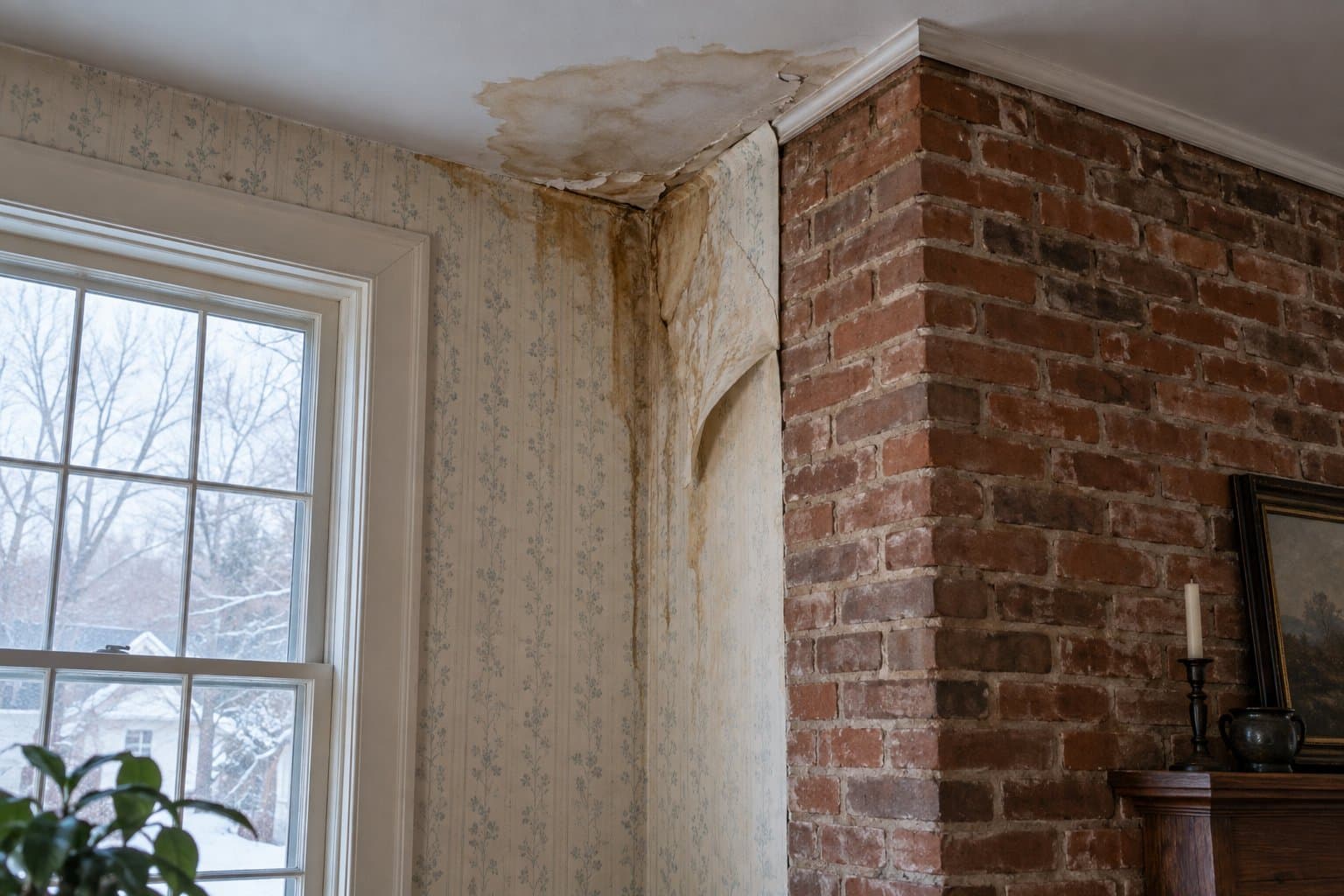
Freeport makes this worse in two ways. Winters here bring freezing temperatures and freeze-thaw cycles, and across New York those cycles are hard on chimney crowns, mortar joints and brick faces, especially once a flue has absorbed moisture. Water gets in, freezes, expands, and the crack is bigger next time. On top of that, Freeport sits on Long Island's South Shore along the back bays, and nor'easters and wind-driven rain push water sideways into joints that ordinary rain would simply run past. Salt-laden air off the water also accelerates rust on metal chimney caps, so the one part that should be keeping rain out of the flue is often the part that has failed.
While you wait — please don't
- Do not just seal over it. Coating the outside of a chimney traps the water already in the masonry and hides the real entry point, which keeps leaking.
- Stay clear of the chimney base. A chimney that has been wet for years can become structurally unsound, and falling brick is a hazard at the base — keep people and pets away from it outside.
- Do not light a fire until the flue has been looked at. Water damage can crack or break down a liner, and a damaged liner can let heat and combustion gases reach places they should never go.
- Treat fumes as an emergency. If anyone feels dizzy, sick or headachy, or a carbon monoxide alarm sounds, get everyone outside and call 911 before anything else.
- Do not get on the roof yourself. Wet, older roofing on a two-storey Freeport home is no place to be diagnosing flashing, and most leaks look nothing like their source from below.
What the technician does
- The entry point gets tracedThe technician works out where the water is actually getting in rather than sealing over the stain. The stain inside is the end of the path, not the start of it.
- Flashing is checked and replacedWhere the chimney meets the roof is the most common way in. New flashing is counter-flashed into the mortar joint so water runs out over the top of it instead of behind it.
- The crown is repaired or recastThe crown is the slab on top of the chimney. Cracks there let water straight down into the masonry, and recasting it gives the water somewhere to shed.
- A cap is fittedAn open flue is a hole pointed at the sky. A cap keeps rain out and keeps animals out at the same time.
- Repointing and brick replacementOpen mortar joints are raked out and repointed, and spalled brick — brick whose face has popped off after freezing — is cut out and replaced.
- Breathable water repellent where appropriateOn sound masonry, a breathable repellent sheds driven rain while still letting the chimney dry out. It is applied where it suits the brick, not as a substitute for the repair.
Why this happens in in Freeport, NY
Much of Freeport's housing stock dates from the early-to-mid 20th century — Capes, Colonials, bungalows and split-levels — and masonry fireplaces and chimneys appear mainly in those pre-war homes. Many have been re-clad in vinyl or aluminum siding over the years, which changes nothing about the chimney itself: the original brick, crown and flashing are still doing the work. Across New York, unlined or clay-tile masonry chimneys are very common in housing this age, and a flue that has been taking on water for years is exactly where that shows up first.
Timing matters here. Demand across Freeport spikes in late summer and fall ahead of hurricane and nor'easter season, and again after the first hard freezes. A leak found in autumn is worth dealing with before winter, because freeze and thaw widens every crack it finds. Exterior masonry work like repointing and rebuilding also concentrates in the warmer months statewide, since mortar needs to cure without freezing — so if the repair involves brickwork, the season you call in can affect how the work is scheduled. The same goes for homes in South Freeport, along the Bayview Avenue corridor and on the canal-front streets off Woodcleft, where salt air is working on metal caps and flashing year-round.
Questions people ask
- The stain is on the ceiling, not near the roof. Is it really the chimney?
- Often, yes. Water entering at the flashing or crown runs down inside the structure and appears at the first ceiling or wall it reaches. That is why the entry point is traced rather than assumed from where the damp shows.
- Could it be condensation instead of a leak?
- It can be. Humid summers in New York keep unused flues damp, which encourages creosote odors and interior staining, and humidity is high year-round in Freeport. The technician looks at both possibilities before deciding what the repair is.
- Why do chimney caps fail so fast around here?
- Freeport sits on the back bays, and salt-laden air accelerates rust on metal chimney caps and other exterior metal. A rusted-through cap stops keeping rain out of the flue, and the water goes straight down the chimney from there.
- Do I need a permit for this?
- In New York permits are issued locally, by the municipal or county building department, not by a state agency. Routine inspection generally does not need one, but structural masonry work such as rebuilding a chimney above the roofline typically does. Call the local building department before work begins.
- Is there a statewide chimney licence I should ask about?
- New York does not issue a statewide licence for chimney sweeping, inspection or masonry repair — it is handled locally. Nassau County runs its own home improvement contractor licensing program, so check current requirements with the county consumer affairs or licensing office.
- What is One Call Chimney?
- We are a referral and scheduling service that arranges chimney work with independent sweeps and masons across all fifty states. We are not the contractor and we do not perform the work ourselves. Ask the technician to show you what the camera or photos found and to put the reasoning in writing.
One call
One call to (866) 576-7943 and we arrange for a technician to come out and look at your Freeport chimney. The estimate is free — the technician inspects the chimney and gives you the price before any work starts, and you approve it first.
More from One Call Chimney
Nearby
Answers
Free tool
Something else in this area
- Damper stuck or broken
- Never been swept
- Something living up there
- Smells of smoke or damp
- Cracked crown or crumbling brick
- Smoke comes back into the room
- Liner damaged or missing
- Rebuild or new chimney
One Call Chimney arranges the visit; the technician does the work and gives you the price.