Something living up there in Freeport, NY
If you can hear scratching, chirping, flapping or scrabbling behind the fireplace, something has got into the flue. Usually it is a bird, a nest, or an animal that climbed down and cannot climb back out. The sound carries through the masonry, so it can seem closer or further away than it is. The important part is simple: do not light a fire to move it, and do not open the damper to look until you know what is above you.
Phones answered around the clock · free estimate
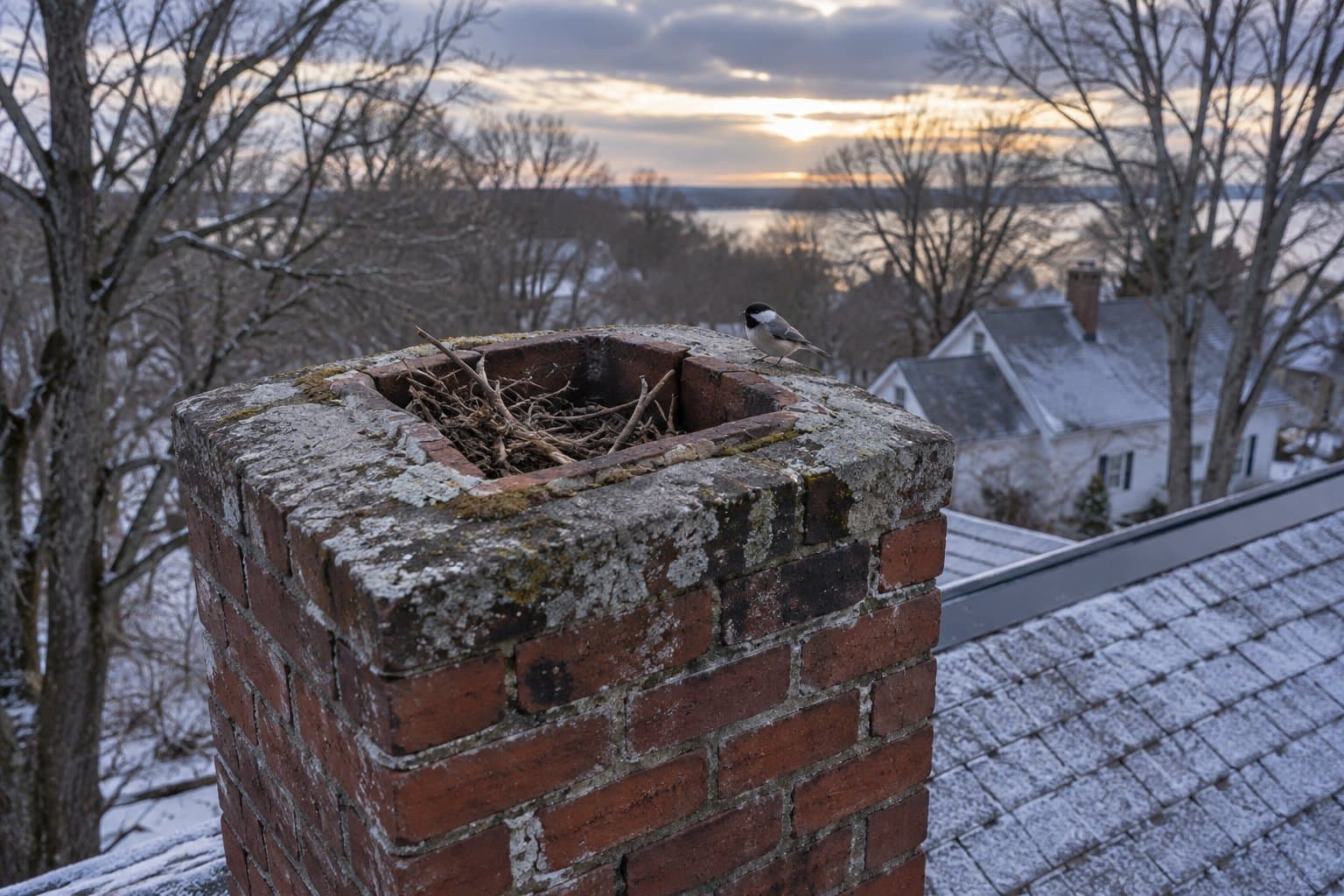
Nearly every case comes back to the same thing — an open flue with no cap, or a cap whose mesh has gone. That happens a lot in Freeport. The salt air off the back bays rusts metal chimney caps and vent covers faster than it does inland, and the village's housing stock is largely early-to-mid 20th century, with masonry fireplaces and chimneys mostly in the pre-war homes. Add nor'easters and winter freeze-thaw working on crowns and mortar, and an older chimney top can open up without anyone noticing from the ground.
While you wait — please don't
- Do not light a fire. Burning an animal out is cruel, and dry nesting material packed in a flue is a common cause of chimney fires.
- Stop using the fireplace until the flue is clear. A nest or a body in the flue is a blockage, and a blocked flue pushes smoke and carbon monoxide back into the room.
- If anyone feels dizzy, sick or has a sudden headache, get outside. Those are carbon monoxide symptoms — leave the house, then call 911 from outside.
- Do not reach in or poke at the damper. Droppings and nesting debris carry disease, a frightened animal bites, and you can drop the whole mess into the firebox.
- Do not seal the top off. Capping a flue with something alive in it traps the animal, and a dead animal in a chimney is a far worse job than a live one.
What the technician does
- Identify what is in thereThe animal gets identified before anything is touched. Birds, a nest, and a mammal stuck on the smoke shelf are three different jobs.
- Removal or humane evictionSome species are removed directly; others need a humane eviction and a wildlife specialist. In many places nesting birds are legally protected, so the species decides the method.
- Nesting material and debris outTwigs, droppings and packed debris come out of the flue and the smoke chamber. This is the part that would have burned if you had lit a fire.
- Sweep and inspectThe flue is swept and inspected top to bottom so you know what the blockage left behind and whether the liner took any damage.
- A cap that fits, with meshA properly sized cap with mesh is fitted to the flue. Without that, you are booking the same visit again next spring.
- Price before work startsThe technician looks at the chimney, then gives you the price. Nothing goes ahead until you approve it.
Why this happens in Freeport, NY
Spring is the peak for this. Birds nest, the flue sits unused and quiet, and an uncapped top looks like an open invitation. Freeport's humidity stays high year-round, and across New York humid summers keep unused flues damp, which is why an old nest left in place can turn into creosote odour and staining long after the birds have gone. If you have heard noises in April and ignored them, it is worth having the flue looked at before the heating season.
The salt-laden air along the Woodcleft Canal waterfront, the Nautical Mile and the south-end blocks is hard on metal. Chimney caps rust, mesh corrodes through, and the opening gets wider every winter. On houses that were raised or rebuilt after Hurricane Sandy's 2012 flooding, mechanicals were relocated and flues often changed with them — worth confirming what each flue now serves before you burn anything. New York has no statewide chimney sweep licence; this work is licensed locally, and several downstate counties run their own home improvement contractor programs, so check current requirements with your county consumer affairs or licensing office. Permits here are issued by your local building department, not by a state agency, and routine sweeping and inspection generally do not need one.
Questions people ask
- Can I just wait for it to leave on its own?
- Sometimes an adult bird comes and goes freely, but a nest stays, and an animal that fell down the flue usually cannot climb back out. Waiting means nesting material builds up and a blockage forms. Have it identified first — that decides everything else.
- Why does this keep happening to my chimney?
- An uncapped flue is almost always the whole cause. In Freeport, salt air off the bays rusts caps and mesh, so a cap fitted years ago may be open now even if it looks fine from the street.
- Is it safe to use the fireplace once the animal is gone?
- Not until the flue has been cleared, swept and inspected. Nesting material and droppings left in the smoke chamber are a fire risk, and you want to know the liner is sound before you burn.
- My house was raised after Sandy. Does that change anything?
- It can. Raised and rebuilt homes along the canal-front streets often had mechanicals relocated, so confirm which appliance each flue serves and that everything is properly vented before use.
- Do you do the work yourselves?
- No. One Call Chimney is a referral and scheduling service that arranges the work with independent sweeps and masons across all fifty states. We are not the contractor and we do not perform the work.
- How do I know what I am paying for?
- Every job gets a free estimate — the technician inspects the chimney and gives you the price before any work starts, and you approve it first. Ask to see the camera footage from the flue and ask for the reasoning in writing.
One call
One call sets it up: (866) 576-7943, and we arrange a sweep to come out to your Freeport home. The estimate is free, and the price is agreed with you before any work begins.
More from One Call Chimney
Nearby
Answers
Free tool
Something else in this area
- Damper stuck or broken
- Never been swept
- Water coming in
- Smells of smoke or damp
- Cracked crown or crumbling brick
- Smoke comes back into the room
- Liner damaged or missing
- Rebuild or new chimney
One Call Chimney arranges the visit; the technician does the work and gives you the price.