
Damper stuck in Freeport, NY
The handle will not move, or it moves and nothing happens. In most cases the damper plate has rusted into its frame, or the pivot pins and the handle linkage have corroded and seized. Sometimes the plate is welded shut by rust and old soot. Sometimes it has dropped off its pivots and sits open permanently. Either way, the cast iron is doing what cast iron does when water keeps reaching it.
Phones answered around the clock · free estimate
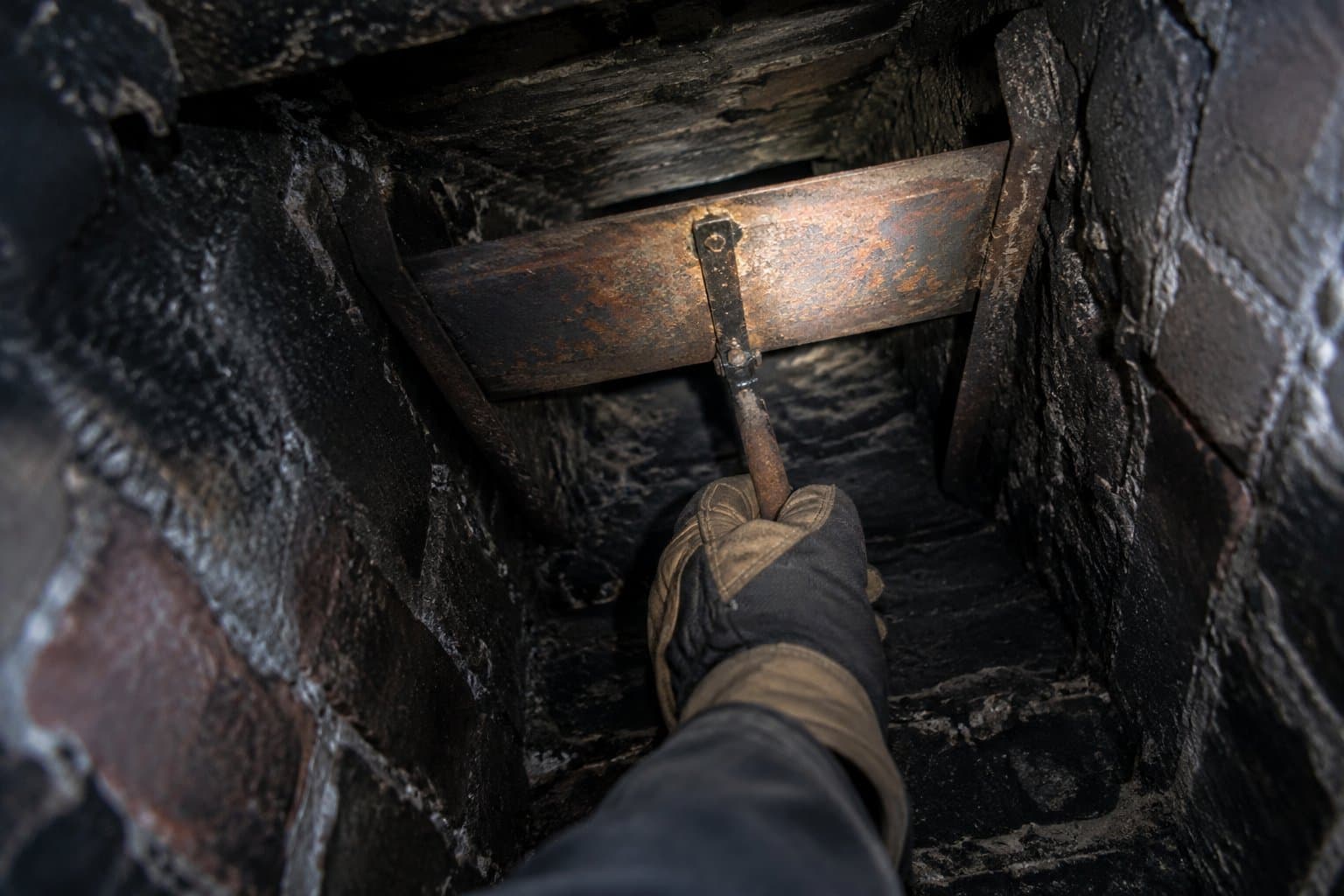
Water reaching it is the usual story here. Freeport sits on Long Island's South Shore along the back bays, so humidity is high all year and salt-laden air speeds up rust on metal chimney caps and anything metal inside the flue. An uncapped or badly capped flue lets rain straight down onto the damper. Winter adds freeze-thaw cycles and nor'easters with wind-driven rain, and New York's humid summers keep an unused flue damp between heating seasons. Masonry fireplaces here show up mainly in the older pre-war housing stock — the Capes, Colonials and bungalows — which means a lot of these dampers have been rusting for decades.
While you wait — please don't
- Do not light a fire until you know it is open. Burning with a closed or half-closed damper pushes smoke and carbon monoxide back into the room instead of up the flue.
- Do not force the handle. Forcing a rusted damper can crack the frame out of the masonry, which turns a hardware repair into a masonry repair.
- Stop using the fireplace if smoke came into the room. Smoke in the room means the flue is not carrying it away, and that needs to be looked at before the next fire.
- Treat carbon monoxide as an emergency. If a CO alarm sounds, or anyone has a headache, nausea, dizziness or is unusually sleepy, get everyone outside into fresh air and call 911.
- Never close a damper on warm ashes. Embers can smoulder for a long time after the flames are gone, and a closed damper sends that smoke and gas indoors.
What the technician does
- The damper is inspected firstThe technician looks at the plate, frame, pivots and handle to see whether the damper can be freed or whether the frame is past saving. You get the price before anything is done.
- Freed, cleaned and re-seatedWhere the frame is sound, the plate is worked loose, the rust and soot are cleaned off the seat, and the damper is re-seated so it closes flat and opens fully.
- Hardware replacedHandles, pivots and the small linkage parts are the pieces that usually give out first. These can be replaced without disturbing the masonry.
- A top-sealing damper where the throat damper is finishedIf the original throat damper is beyond repair, a top-sealing damper can be fitted at the top of the flue instead. It seals with a gasket at the crown and is operated by a cable down into the firebox.
- Flue swept while it is accessibleWith the damper open and the hardware out of the way, the flue can be swept in the same visit rather than as a second trip.
- A cap fitted to stop the waterFixing the damper without fixing what rusted it just restarts the clock. A cap keeps the rain off the damper and the smoke shelf.
Why this happens in Freeport, NY
Salt air is the part of this that Freeport homeowners feel more than most. The same conditions that rust gate hinges, exterior locks and dryer-vent covers on the South Shore work on a metal chimney cap and on the cast iron damper sitting at the bottom of the flue. On the canal-front streets off Woodcleft and Guy Lombardo Avenue, where houses sit directly on tidal water, that salt spray is constant. Many owners there raised or rebuilt after Hurricane Sandy's 2012 surge flooded large parts of the village, and relocated mechanicals and new flue runs still have to survive the same air.
Timing matters too. Across New York, demand climbs in late summer and fall as people get ready for the heating season, and climbs again mid-winter when draft and odour problems show up. In Freeport that fall rush also overlaps with hurricane and nor'easter season, and there is a second wave after the first hard freezes. A damper stuck open is quietly expensive — it vents heated air up the flue all winter — so it is worth sorting before the cold sets in rather than during it. Outdoor masonry work, if the frame turns out to need it, is easier in the warmer months when mortar can cure without freezing.
Questions people ask
- Can I just leave the damper open and keep using the fireplace?
- An open damper is safer than a closed one, but it is not free. Through a Freeport winter you are sending heated air straight up the flue every day, and you are leaving the flue open to wind-driven rain and damp. It is also worth confirming it is genuinely fully open and not hanging loose off its pivots.
- Why does this keep happening to chimneys around here?
- Rust from an uncapped flue is the usual cause, and Freeport's humid, salt-laden air accelerates it. Rain falling straight down the flue lands on the damper plate and the smoke shelf, and freeze-thaw cycles through the winter work the corrosion deeper into the frame.
- Do I need a permit for damper work?
- In New York, permits are issued locally by the municipal or county building department, not by a state agency, and routine sweeping and inspection generally do not require one. Installing a wood stove, pellet stove or insert, relining a flue as part of an appliance installation, or rebuilding masonry above the roofline usually does. Requirements vary between jurisdictions, so call the local building department before work begins.
- Is a top-sealing damper worth it on a coastal house?
- It seals at the top of the flue with a gasket rather than down in the throat, so it keeps rain, damp air and debris out of the chimney entirely. On the South Shore, where salt air and wind-driven rain are the main drivers of corrosion, that matters. The technician will tell you whether your throat damper can be saved first.
- Who actually comes out, and are they licensed?
- One Call Chimney is a referral and scheduling service that arranges the work with independent sweeps and masons — we are not the contractor and we do not perform the work. New York does not issue a statewide chimney-sweep licence; licensing or registration is handled at the city or county level, and several downstate counties, Nassau among them, run their own home improvement contractor programmes. Verify current requirements with the county consumer affairs or licensing office covering Freeport.
One call
One call to (866) 576-7943 gets a damper repair visit arranged at your Freeport home, anywhere from the Nautical Mile to North Freeport. The estimate is free — the technician inspects the chimney and gives you the price before any work starts, and nothing happens until you approve it.
More from One Call Chimney
Nearby
Answers
Free tool
Something else in this area
- Never been swept
- Water coming in
- Something living up there
- Smells of smoke or damp
- Cracked crown or crumbling brick
- Smoke comes back into the room
- Liner damaged or missing
- Rebuild or new chimney
One Call Chimney arranges the visit; the technician does the work and gives you the price.