
Something living up there in Hempstead, NY
You hear scratching, fluttering or chirping coming from the fireplace or the flue. Something has gotten into the chimney. Usually it is a bird that has nested on the smoke shelf, or an animal that climbed or fell in and cannot climb back out. The sound often gets louder in the morning and evening, and it may come and go for days.
Phones answered around the clock · free estimate
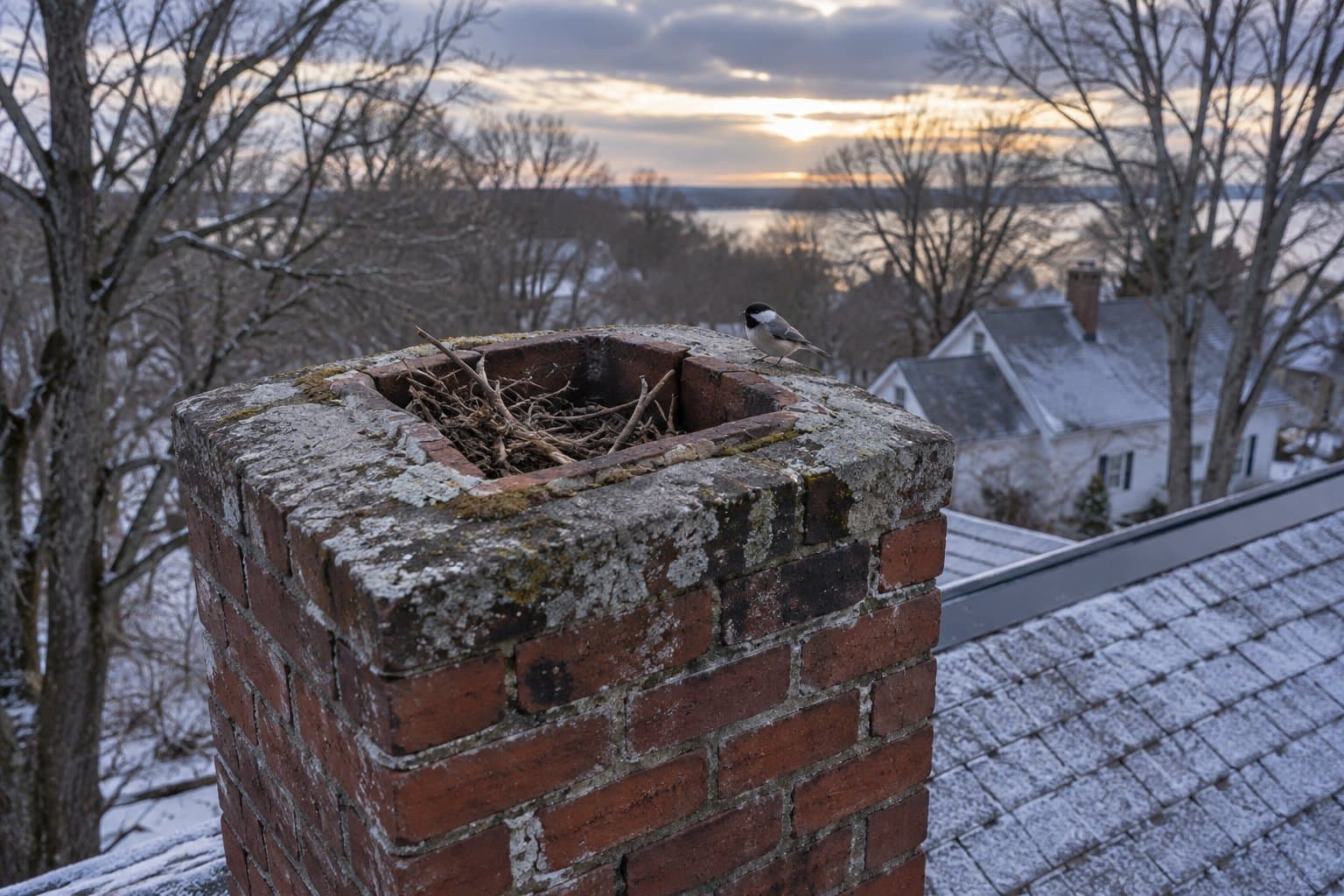
Almost every case starts the same way: the flue has no cap, or the cap has lost its mesh. An open flue is a dry, sheltered shaft that looks like a hollow tree to a nesting bird. Hempstead sits about five miles inland from the South Shore bays, and salt-laden air and nor'easter winds reach the village and corrode chimney caps and flashing over time. Masonry chimneys serving older boilers and fireplaces are widespread here, much of the housing stock predates 1960, and a cap that rusted through a few winters ago leaves the top wide open.
While you wait — please don't
- Do not light a fire. Lighting a fire to drive an animal out is cruel, and burning nesting material is a common cause of chimney fires.
- Stop using the fireplace until it is checked. A nest on the smoke shelf is a blockage, and a blocked flue can push smoke and carbon monoxide back into the room.
- Get outside and call 911 if anyone feels sick. Headache, dizziness, nausea or a CO alarm sounding means everyone leaves the house first and calls from outside.
- Do not open the damper to look. Opening the damper can drop a frightened animal, loose nesting material and droppings straight into your living room.
- Do not handle droppings or a dead animal yourself. Droppings carry disease, and in many places nesting birds are legally protected, so the species needs to be identified before anything is moved.
What the technician does
- The animal is identified firstNothing is removed until the technician knows what is up there. The species decides what is legal and what is safe, because nesting birds are protected in many places.
- Removal or humane evictionDepending on what is found, the animal is removed or humanely evicted, with a wildlife specialist brought in where the species requires it.
- Nesting material and debris come outTwigs, leaves, feathers and droppings are cleared from the smoke shelf, damper and flue. This is the material that would otherwise burn.
- The flue is swept and inspectedOnce it is clear, the flue is swept and inspected so you know whether the liner, damper and crown are sound. Ask to see the camera footage and ask for the reasoning in writing.
- A properly sized cap with mesh is fittedThis is the part that actually ends the problem. A cap sized to your flue, with mesh, keeps birds and animals out and keeps rain off the flue.
Why this happens in Hempstead, NY
Spring is the peak. Birds nest in spring, and an uncapped flue is the whole cause. In Hempstead that lines up with the early-spring surge in chimney work after winter freeze-thaw damage, when crowns and mortar joints that took a beating over the winter start showing it. New York winters run a long heating season, roughly October through April, and repeated freeze-thaw cycles are hard on crowns, mortar and brick — the same damage that can loosen or lift a cap.
Housing here matters too. Older Nassau County homes often still run oil or gas boilers vented into unlined masonry chimneys, so that flue may be an active venting flue, not a decorative one. A nest in a chimney that vents a boiler is a serious blockage year-round, not just in heating season. Downtown Hempstead, the Hofstra University area, West Hempstead and the surrounding neighborhoods share the same older wood-frame Colonials, Capes and Tudors with masonry chimneys, and coastal storms and mature street trees mean crown and cap damage is a recurring problem across the village.
Questions people ask
- Can you just scare it out?
- No. Noise, smoke and fire are not removal methods, and fire is dangerous with nesting material in the flue. The animal is identified first, then removed or humanely evicted, with a wildlife specialist where the species requires it.
- It sounds like birds. Is that different?
- Often yes. Nesting birds are legally protected in many places, so the species has to be identified before anything is touched. That is part of the work, not an extra step you have to arrange yourself.
- Why does this keep happening to my Hempstead chimney?
- If it has happened more than once, the flue is almost certainly open at the top. Salt-laden coastal air and nor'easter winds reach Hempstead and corrode caps and flashing, and winter freeze-thaw cycles work on the crown underneath. A properly sized cap with mesh is what stops the repeat.
- Do I need a permit for this in Hempstead?
- In New York, permits are issued locally by the municipal or county building department, not by a state agency. Routine sweeping and inspection generally do not require one, but structural masonry work such as rebuilding a chimney above the roofline typically does. Call your local building department before that kind of work begins.
- Is the sweep licensed?
- New York does not issue a statewide chimney-sweep license; licensing and registration are handled at the city or county level, and Nassau County runs its own home improvement contractor licensing program. We are a referral and scheduling service, not the contractor, so ask the technician directly and verify with the county licensing office.
One call
One call to (866) 576-7943 and we arrange the work with an independent sweep who covers Hempstead. The estimate is free — the technician inspects the chimney and gives you the price before any work starts, and you approve it first.
More from One Call Chimney
Nearby
Answers
Free tool
Something else in this area
- Smoke comes back into the room
- Never been swept
- Water coming in
- Smells of smoke or damp
- Cracked crown or crumbling brick
- Damper stuck or broken
- Liner damaged or missing
- Rebuild or new chimney
One Call Chimney arranges the visit; the technician does the work and gives you the price.