
Who to call for animal in the chimney in Valley Stream, NY
Valley Stream is full of 1920s to 1950s Tudors, colonials and capes, and from Gibson to Westwood many of them still have the original masonry chimney. If you can hear scratching or birds in yours, an animal has almost certainly got into the flue and settled in. Birds, squirrels and raccoons all do this. The usual cause is a flue with no cap, or a cap with no mesh. One Call Chimney is a referral and scheduling service. We arrange the job with an independent sweep who works in Valley Stream. Look for a technician who identifies the animal before touching anything, brings in a wildlife specialist when the species calls for it, shows you camera footage of the flue, and explains in writing what they recommend.
Phones answered around the clock · free estimate
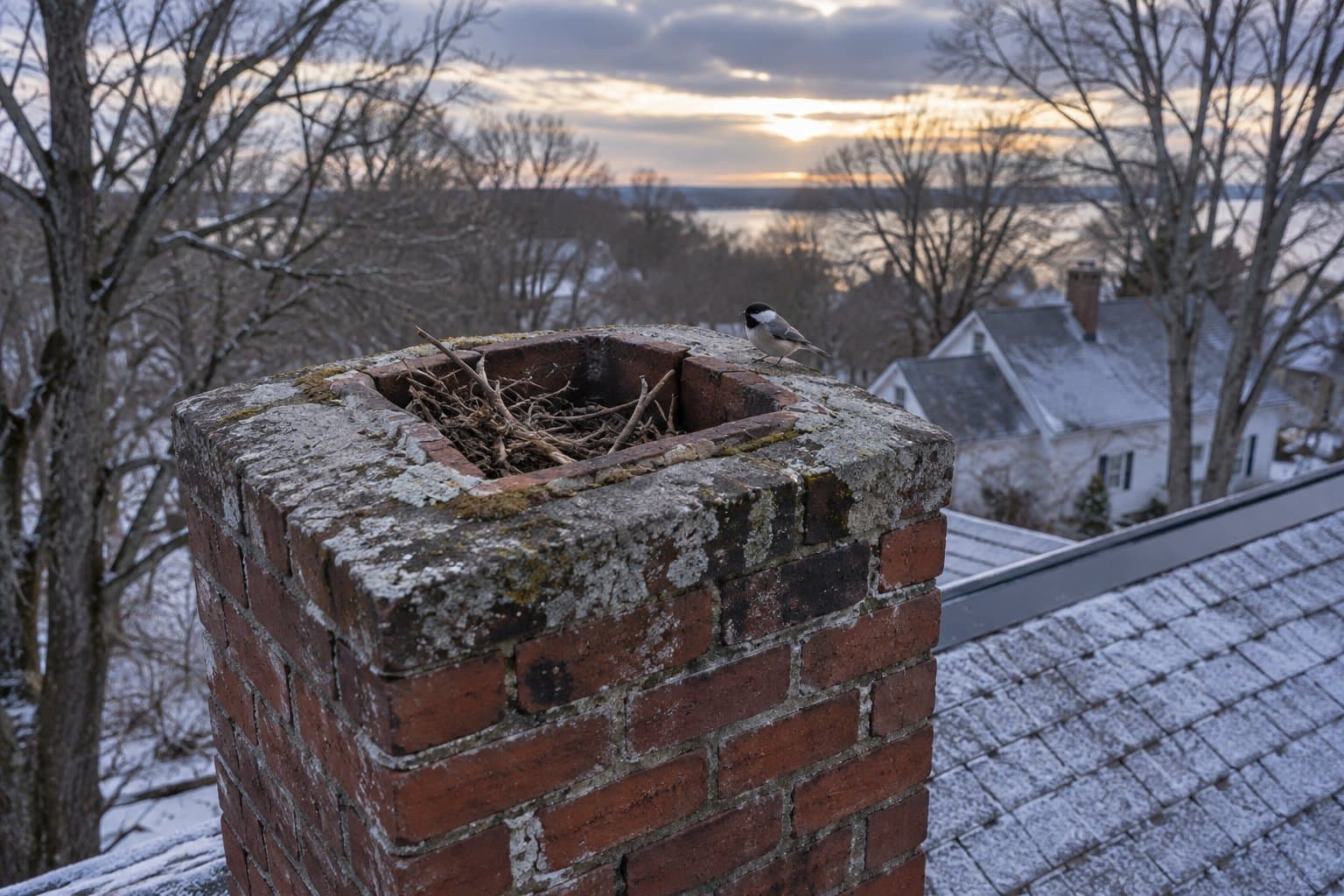
It happens here because the way in is open and the season invites it. Spring nesting is the peak, and a chimney with no cap is the whole cause. New York's humid summers also keep unused flues damp. Freeze and thaw through the winter, and nor'easters on top of it, are hard on chimney crowns and mortar, so a small gap can become a bigger one. An animal only needs one way down.
While you wait — please don't
- Do not light a fire to drive it out. It is cruel to the animal, and burning nesting material is a common cause of chimney fires.
- Do not use the fireplace until it is checked. A nest or debris can block the flue and push smoke and carbon monoxide into the room, so stop using it until a technician has looked.
- Get outside and call 911 if anyone feels unwell. Headache, dizziness or nausea while smoke is in the house can point to carbon monoxide, so leave first and call 911.
- Do not clear the nest or droppings yourself. Droppings carry disease, and in many places nesting birds are legally protected, so removal should be done properly.
What the technician does
- You call, we arrange the visitCall (866) 576-7943 and One Call Chimney arranges an independent sweep for this exact problem. We are not the contractor and we do not do the work.
- The animal is identified firstThe technician works out what is in the flue before anything is done. That decides how it gets out.
- Removal or humane evictionWhere the species requires it, a wildlife specialist is brought in to remove the animal or evict it humanely.
- Nest and debris come outNesting material and debris are cleared from the flue so nothing is left to block it or catch fire.
- The flue is swept and inspectedAfter the sweep, the technician inspects the flue. Ask to see the camera footage.
- A cap with mesh is fittedA properly sized cap with mesh closes the opening so the animal cannot come back. You get the price and approve it before any work starts.
Why this happens in Valley Stream, NY
Many Valley Stream homes still have older oil or converted gas heating systems venting into original clay-lined masonry chimneys. A flue that has sat quiet since a conversion is an easy place for a nest. If an animal has been in there, it is a good time to have the flue inspected as well as swept. That includes the older blocks near the Gibson and Westwood LIRR stations, and the streets around Mill Brook, Hungry Harbor and North and South Valley Stream.
Demand here rises in early spring after freeze-thaw and nor'easter damage, and again in late summer and fall as people get ready for hurricane season and heating season. Neighbors in Lynbrook, Malverne and Elmont deal with the same weather. If you hear something in the flue in spring, do not wait for fall. If the technician finds the crown cracked or the mortar open, ask what they recommend and why, in writing.
Questions people ask
- Why do I hear birds in my Valley Stream chimney in spring?
- Spring nesting is the peak, and a flue with no cap is the whole cause. Birds treat the open flue as a sheltered spot. A cap with mesh closes it off once the flue is clear.
- Can I just light a fire to get them out?
- No. It is cruel, and burning nesting material is a common cause of chimney fires. In many places nesting birds are also legally protected, so the right step is to have the animal identified first.
- Does this need a permit in Valley Stream?
- In New York, chimney permits are issued locally, not by the state. Routine sweeping and inspection generally do not need one. If the inspection leads to relining or structural masonry work, call the local building department before work begins.
- Does New York license chimney sweeps?
- There is no statewide chimney sweep license. Licensing or registration is handled by the city or county, and some downstate counties, including Nassau, run their own home improvement programs. Check with the consumer affairs or licensing office where the work will be done.
- How much will it cost?
- The estimate is free. The technician inspects the chimney and gives you the price before any work starts, and you approve it first.
One call
Call (866) 576-7943 and One Call Chimney will arrange a technician for the animal in your Valley Stream chimney. The estimate is free, and the price is agreed with you before any work starts.
More from One Call Chimney
Nearby
Answers
Free tool
Something else in this area
- Smoke comes back into the room
- Never been swept
- Water coming in
- Smells of smoke or damp
- Cracked crown or crumbling brick
- Damper stuck or broken
- Liner damaged or missing
- Rebuild or new chimney
One Call Chimney arranges the visit; the technician does the work and gives you the price.