
Damper stuck in Hempstead, NY
You pushed or pulled the damper handle and nothing moved. Or it moved part way and jammed. That plate sits in the throat of the fireplace, just above the firebox, and it is almost always rust that has seized it. Water has been getting into the flue, settling on the damper plate and frame, and the metal has locked itself in place. Sometimes the handle or pivot has broken instead, and the plate is fine but there is nothing left to move it with.
Phones answered around the clock · free estimate
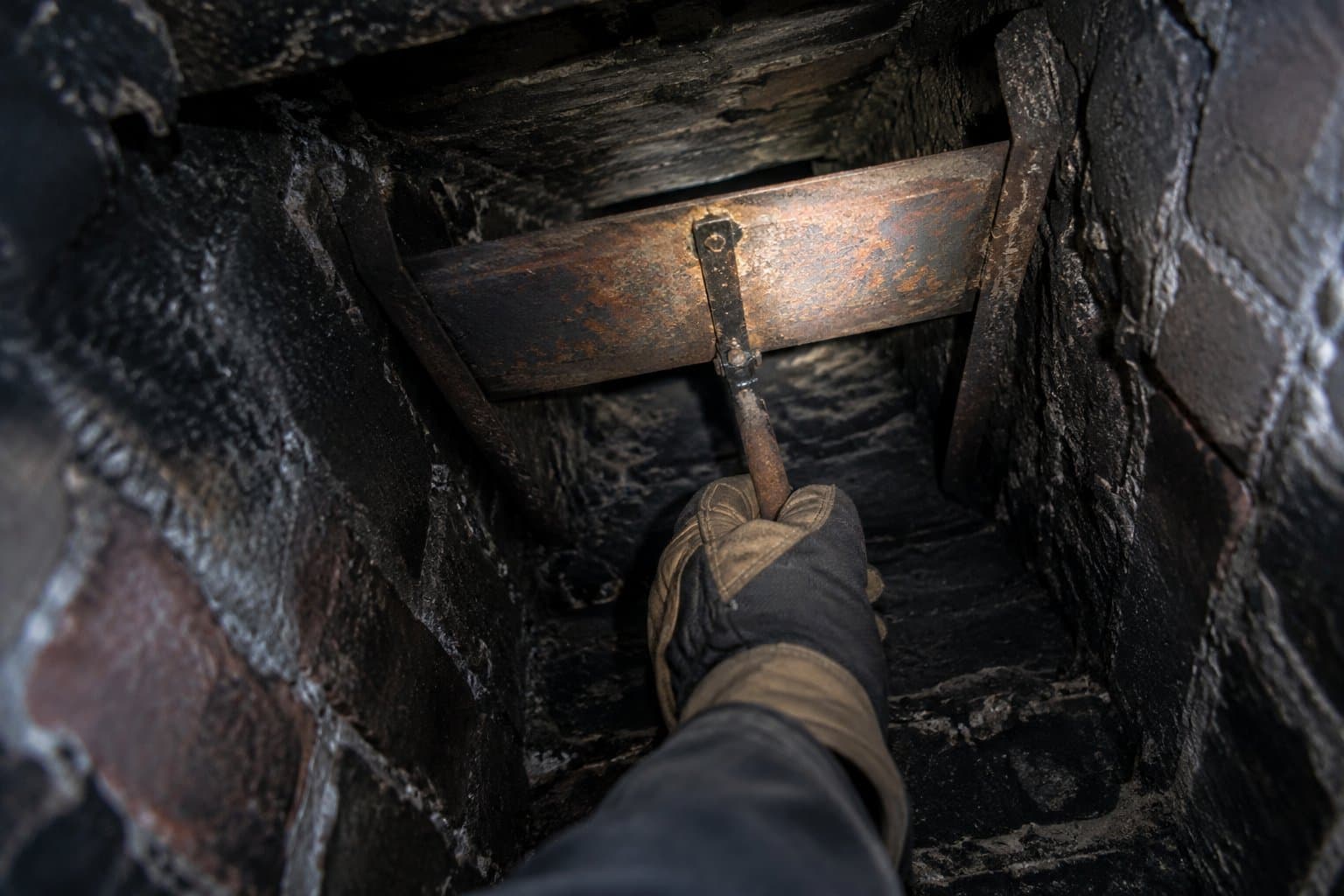
Hempstead gets this a lot. The village sits about five miles inland from the South Shore bays, so salt-laden air and nor'easter winds reach it and speed up corrosion on chimney caps and flashing. Add repeated winter freeze-thaw cycles, humid summers that keep an unused flue damp, and an uncapped or poorly capped flue, and a damper gets a steady diet of moisture. Much of Hempstead's housing predates 1960, and masonry chimneys serving older fireplaces and boilers are widespread here, so a lot of these dampers have been rusting quietly for decades.
While you wait — please don't
- Do not light a fire until you know the damper is open. A closed or partly closed damper sends smoke and carbon monoxide straight back into the room instead of up the flue.
- Do not force the handle. A rusted damper can snap its frame under pressure, and that turns a hardware repair into masonry work inside the throat.
- Get out and call 911 if anyone feels sick. Headache, dizziness, nausea or a sounding CO alarm during or after a fire means everyone leaves the house first and calls from outside.
- If smoke has already come into the room, stop using the fireplace. Smoke pushing back into the house means the flue is not clearing, and the fireplace should stay cold until someone has looked up it.
What the technician does
- The damper gets looked at, not guessed atThe technician opens up the firebox, gets light on the throat and works out whether the plate is seized, the hardware has failed, or debris is wedged behind it. You get told which it is.
- Freed, cleaned and re-seatedWhere the plate can be saved, the rust and scale come off and the damper is re-seated so it sits flat and seals when closed. A damper that does not seat is a hole in your house all winter.
- Handles, pivots and hardware replacedBroken handles, worn pivots and missing hardware are swapped out so the damper actually moves from the control, not from someone reaching up into the throat.
- A top-sealing damper where the throat damper is finishedIf the original frame is beyond repair, a top-sealing damper can be fitted at the top of the flue instead. It seals at the crown and keeps weather out of the chimney.
- The flue swept while it is accessibleWith the damper open and the gear already set up, the flue gets swept. It is the sensible time to do it.
- A cap fitted to stop the waterIf the flue is open to the sky, that is where the rust came from. A cap stops the rain going in and stops the next damper rusting shut the same way.
Why this happens in Hempstead, NY
A damper stuck open is the quieter problem, and it is the expensive one. The flue becomes an open pipe from your living room to the roof, and through a Long Island heating season — roughly October through April downstate — you pay to heat air that leaves up the chimney. People often do not notice until a room never feels warm or a draught runs along the floor near the hearth. In older Hempstead homes with masonry chimneys, a damper that will not close is worth dealing with before the cold sets in rather than after.
Timing helps. Across New York, demand climbs sharply in late summer and fall as everyone gets ready for the heating season, and again mid-winter when draft and odor problems show up. In Hempstead there is a second spike in early spring, after winter freeze-thaw has worked on crowns and mortar. Storms matter here too — tropical systems like Irene in 2011 and Sandy in 2012, plus winter wind-driven rain, bring downed limbs that damage chimney crowns and caps, and a damaged cap is how water starts reaching the damper in the first place.
Questions people ask
- How do I check whether my damper is open?
- With the fireplace cold, look up into the throat with a flashlight. You should see the plate, and when the damper is open you should see daylight or the dark of the flue above it. If you cannot tell, treat it as closed and do not light a fire.
- Why do dampers rust shut so often in Hempstead?
- Hempstead sits on the coastal plain a few miles from the South Shore bays, so salt air and nor'easter winds reach the village and corrode chimney caps and flashing. Once the cap is gone or damaged, rain falls straight down the flue onto the damper, and humid summers keep it damp year round.
- Will I need a permit for this?
- In New York, permits are issued locally by the municipal or county building department, not by a state agency. Routine sweeping and inspection generally do not need one, while structural masonry work above the roofline typically does. Call your local building department before work begins if you are unsure.
- Is there a state chimney licence I should ask about?
- New York does not issue a statewide licence for chimney sweeping, inspection or masonry repair. Nassau County runs its own home improvement contractor licensing program, so you can verify current requirements with the county consumer affairs or licensing office for work done in Hempstead.
- Who actually turns up at my house?
- One Call Chimney is a referral and scheduling service covering all fifty states. We arrange the work with independent sweeps and masons — we are not the contractor and we do not perform the work ourselves. Ask the technician to show you what they found and to put their reasoning in writing.
One call
Call (866) 576-7943 and we will arrange for a technician to come out to your Hempstead home and look at the damper. The estimate is free, the price is given to you before any work starts, and nothing happens until you approve it.
More from One Call Chimney
Nearby
Answers
Free tool
Something else in this area
- Smoke comes back into the room
- Never been swept
- Water coming in
- Something living up there
- Smells of smoke or damp
- Cracked crown or crumbling brick
- Liner damaged or missing
- Rebuild or new chimney
One Call Chimney arranges the visit; the technician does the work and gives you the price.