
Animal in the Chimney, booked with one call, in Elgin, IL
Elgin has a large cluster of 19th-century homes in and around the Elgin Historic District, and many still have their original brick chimneys. If you can hear scratching or birds in yours, an animal has almost certainly got in through the top of an uncapped flue and settled in. The job usually means identifying the animal, getting it out the right way, clearing the nest and debris, sweeping and inspecting the flue, and fitting a mesh cap. Plan around the season, because nesting birds can change how and when removal happens.
Phones answered around the clock · free estimate
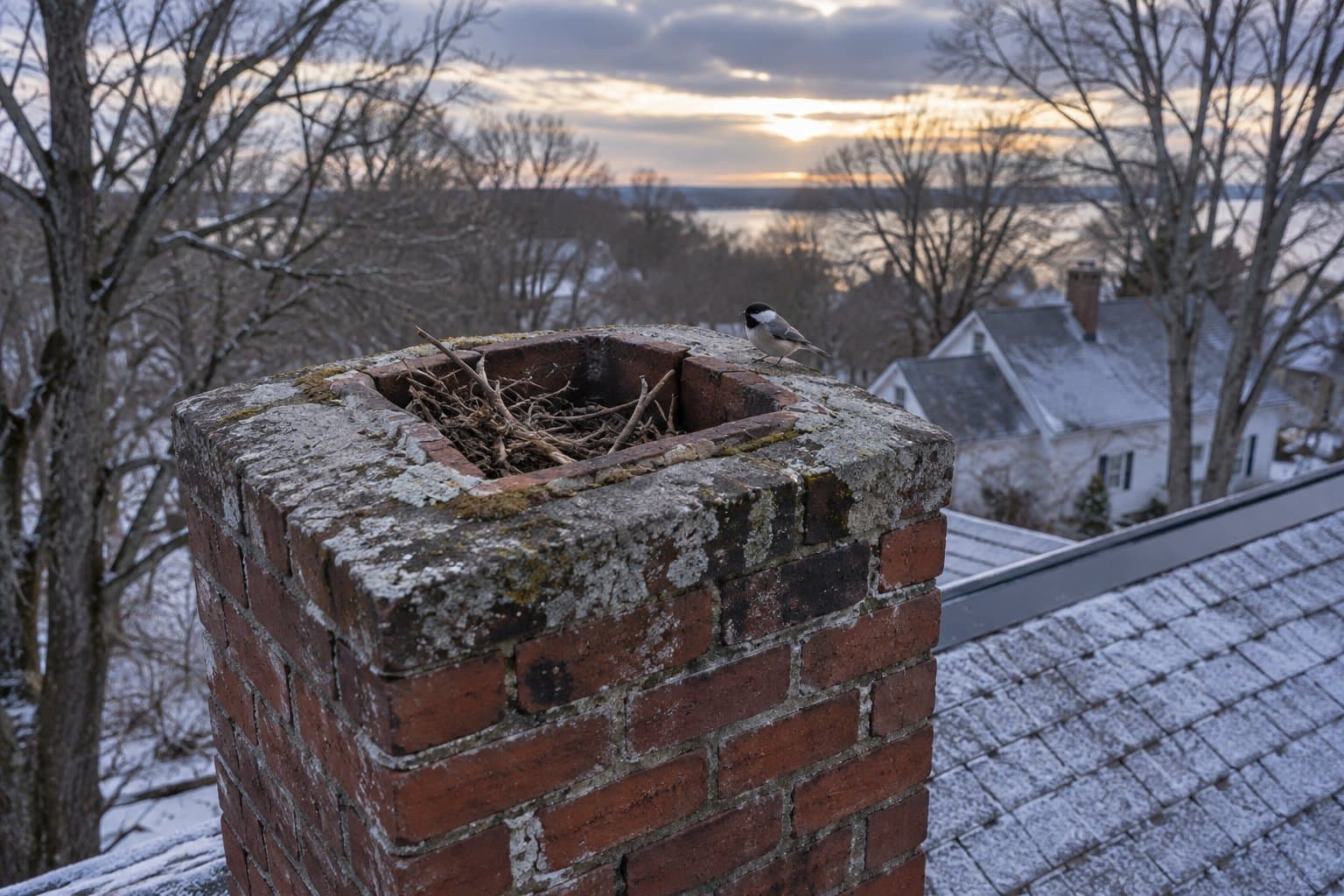
It happens here because the flue is open to the sky. Illinois has a long heating season, and flues sit unused in the warm months. A dark, sheltered shaft is an easy place for birds and other animals to nest. Elgin's freeze-thaw cycles also wear on old mortar and crowns, which can add gaps and rough edges. The open top is the main cause, though, and a cap fixes that.
While you wait — please don't
- Do not light a fire to drive it out. It is cruel to the animal, and burning nesting material is a common cause of chimney fires.
- Do not use the fireplace until it is checked. A nest can block the flue and push smoke and carbon monoxide into the room, so if anyone has a headache, dizziness or nausea, get outside and call 911.
- Do not pull out the nest yourself. Droppings carry disease, and in many places nesting birds are legally protected.
- Do not seal the top while something is inside. Trapping an animal in the flue can leave it to die there and cause odors and a blockage.
What the technician does
- Free estimate firstThe technician inspects the chimney and gives you the price before any work starts. You approve it first.
- The animal is identifiedNothing is done until the technician knows what is up there. The species decides the next step.
- Removal or humane evictionWhere the species requires it, a wildlife specialist handles removal or eviction. The animal is not smoked out.
- Nest and debris clearedNesting material and debris come out of the flue, so nothing is left to catch fire or block the draft.
- Flue swept and inspectedThe flue is swept and inspected afterward. You can ask to see the camera footage of what the technician found.
- A mesh cap is fittedA properly sized cap with mesh goes on top so the animals cannot get back in.
Why this happens in Elgin, IL
Spring nesting is the peak, and in Elgin it follows a winter of snow, sub-zero cold snaps and road salt. Homes near the river and downtown, and in areas like Gifford Park, often have original masonry chimneys with clay flue liners and old mortar. Those are the chimneys that need liner inspections before each heating season. If an animal has been in one, the sweep's inspection after the nest is out is a good chance to check the liner and the crown too.
Newer homes on the far west side, in subdivisions like Bowes Creek and Cobblers Crossing, tend to have gas fireplaces. Open vents and chimney tops can still attract animals there. Late fall and early spring are the busy times for chimney work in Elgin. Booking before the heating season, or soon after you first hear noises, gives you room to plan. Illinois permits are issued locally, so if the inspection leads to relining or rebuilding above the roofline, confirm requirements with the building department before that work begins.
Questions people ask
- Why do I hear birds in my Elgin chimney in spring?
- Spring is peak nesting season, and an uncapped flue gives birds a sheltered place to build. The cap is what keeps them out. Once the nest is cleared and a mesh cap is fitted, the noise should stop.
- Does my older Elgin home make this more likely?
- Older brick chimneys in and around the historic district are often original, with clay liners and aging mortar. If the top is open, animals can get in. The technician will inspect the flue while clearing it, so you also learn what condition the liner and masonry are in.
- Can I just wait until the animal leaves?
- Waiting can leave a nest in the flue, and nesting material is a fire risk once you light the fireplace again. Birds may also be protected while nesting, which is why the species is identified first. Do not use the fireplace until it has been cleared and inspected.
- Will I need a permit?
- In Illinois permits are issued locally. Routine sweeping and basic inspection generally are not permitted work, but relining or rebuilding a chimney commonly is. Check with the building department of your city or village before that kind of work starts.
- Is the estimate really free?
- Yes. Every job starts with a free estimate. The technician inspects the chimney and gives you the price before any work begins, and you approve it first.
One call
Call One Call Chimney at (866) 576-7943 and we will arrange an independent technician for the animal in your Elgin chimney. The estimate is free, and the price is agreed with you before any work starts.
More from One Call Chimney
Nearby
Answers
Free tool
Something else in this area
- Never been swept
- Water coming in
- Smoke comes back into the room
- Smells of smoke or damp
- Cracked crown or crumbling brick
- Damper stuck or broken
- Liner damaged or missing
- Rebuild or new chimney
One Call Chimney arranges the visit; the technician does the work and gives you the price.