
Stop using the fireplace
Chimney Relining, booked with one call, in Elgin, IL
Elgin has a large concentration of 19th-century homes in and around the historic district, and many of them still have their original brick chimneys, clay flue liners and old mortar. If someone has told you the liner is cracked and needs relining, that is planned work, and it is worth doing before the next heating season. The job usually means a camera look inside the flue, a new liner sized to your appliance, and the cap and crown dealt with at the same time. Plan to keep the fireplace, stove or furnace flue out of use until it is done.
Phones answered around the clock · free estimate
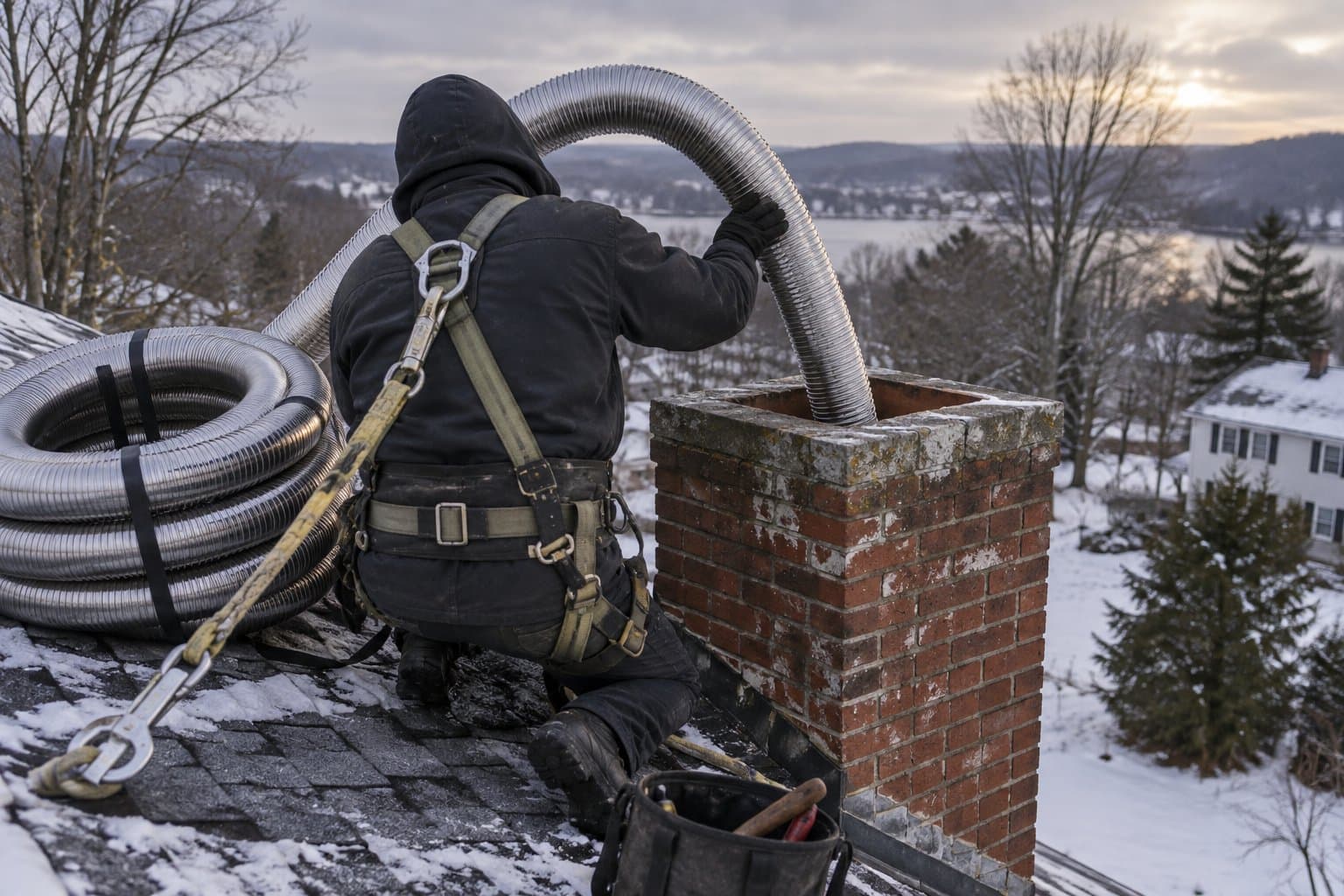
Clay tiles crack for a few reasons. A chimney fire can split them. Years of freeze-thaw cycles and sub-zero cold snaps work on the masonry around them. Illinois also has a long heating season, typically October into April, so a flue gets months of steady use. Humid summers add moisture to the masonry, which can speed up liner corrosion. A cracked liner lets heat and carbon monoxide reach the structure of the house, so it needs a proper fix, not a patch.
While you wait — please don't
- Do not use the fireplace or stove. A damaged liner can let heat and carbon monoxide reach the structure of the house, so the appliance should stay off until the flue is verified.
- Get outside and call 911 if anyone feels unwell. Headache, dizziness or nausea while an appliance is running can point to carbon monoxide, so leave the house first and make the call from outside.
- Do not relight after a chimney fire. After any chimney fire the flue must be inspected before it is used again, because clay tiles can crack in the heat.
- Do not convert to gas without checking the liner. Converting to gas without relining leaves acidic condensate attacking the masonry.
What the technician does
- Camera inspection firstThe technician runs a camera through the flue to see the cracks for themselves. Ask to see the footage and ask for the reasoning in writing.
- Liner sized to the applianceA stainless steel liner is matched to what is connected to it, and insulated where it is required.
- Cast-in-place where it fitsWhere it is appropriate for your chimney, the technician may recommend a cast-in-place lining instead, and explain why.
- Appliance and flue matchedSize, material and termination are checked together, so the flue suits the stove, insert, furnace or water heater it serves.
- Cap and crown addressedThe cap and crown are looked at during the same visit, since water getting in at the top works against a new liner.
- Price first, then your approvalThe technician inspects the chimney and gives you the price before any work starts. Nothing begins until you approve it.
Why this happens in Elgin, IL
In Elgin, the older homes near the river and downtown, including the Elgin Historic District and the streets around it, often have original brick chimneys with clay liners and aging mortar. Those chimneys usually need tuckpointing and liner inspections before each heating season. If your house is one of them, a liner problem may sit alongside mortar or crown wear, and it makes sense to look at all of it together. Many newer Elgin homes have gas fireplaces, and older masonry chimneys that now vent a gas furnace or water heater need a properly sized liner.
Timing matters here. Demand in Elgin rises in late fall, as homeowners prepare chimneys for winter, and again in early spring after freeze-thaw damage and the start of severe storm season. Masonry repairs tend to be done in the warmer months, when mortar can cure without freezing. If you are planning a relining, calling before the cold arrives gives you more room to choose a time. Road salt, snow and repeated freezing all stress exposed brick, so the crown and joints are worth checking while the flue is open.
Questions people ask
- Can I keep using my fireplace until it is relined?
- No. A damaged liner can let heat and carbon monoxide reach the house structure, so the appliance should not be used until the flue is verified. If anyone feels dizzy, sick or has a headache, get outside and call 911.
- Does my older Elgin home need a permit to reline?
- Permits in Illinois are issued locally, and relining commonly requires one. Rules vary between jurisdictions, so confirm with the local building department before work begins. Ask the technician what they will handle.
- I am switching to gas in my brick chimney. Do I need a liner?
- Often yes. Converting to gas without relining leaves acidic condensate attacking the masonry. Many Elgin homes have old clay liners, so a camera inspection is the place to start.
- When is the best time to schedule relining in Elgin?
- Demand picks up in late fall and again in early spring. Booking ahead of the heating season gives you more flexibility. Masonry work around the crown is easier in warmer months, when mortar can cure.
- Who does the work, and what does the estimate cost?
- One Call Chimney is a referral and scheduling service. We arrange the job with an independent sweep or mason, and we are not the contractor. The estimate is free, and the technician gives you the price after inspecting and before any work starts.
One call
Call (866) 576-7943 and One Call Chimney will arrange your Elgin relining with an independent technician. The estimate is free, and you approve the price before any work starts.
More from One Call Chimney
Something else in this area
- Never been swept
- Water coming in
- Smoke comes back into the room
- Something living up there
- Smells of smoke or damp
- Cracked crown or crumbling brick
- Damper stuck or broken
- Rebuild or new chimney
One Call Chimney arranges the visit; the technician does the work and gives you the price.