
Something living up there in Evanston, IL
Evanston has a lot of homes that are a century old or more, and many of them still have the original masonry chimney. If you can hear scratching or birds in the flue, something has almost certainly got in through the top and settled in. The usual cause is a chimney with no cap, or a cap with no mesh, which leaves an open hole to the sky.
Phones answered around the clock · free estimate
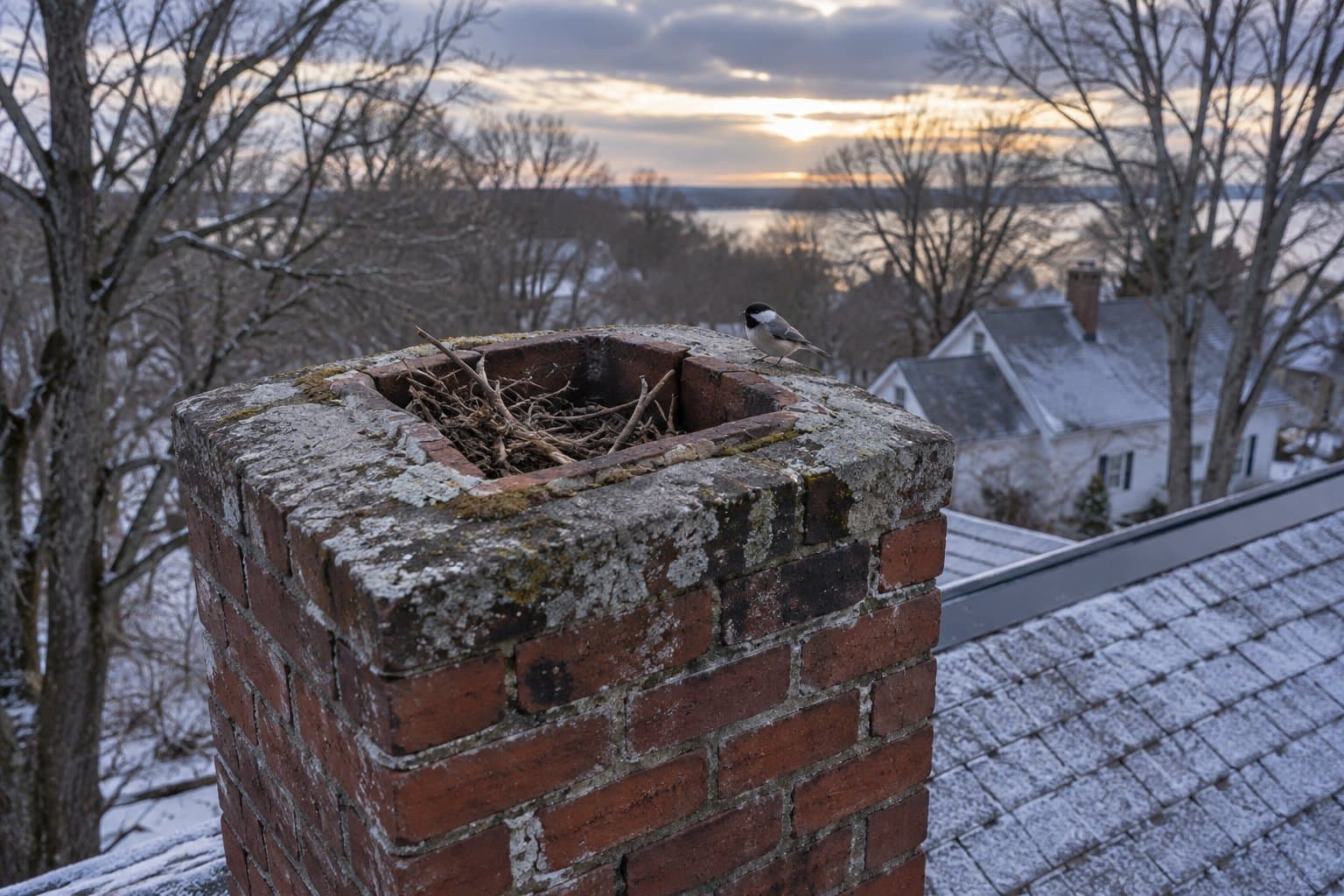
It happens here for plain reasons. A flue is a dark, sheltered shaft, and in spring birds and small animals go looking for exactly that. Illinois also has a long heating season, roughly October into April, and then a warm, humid summer when the fireplace sits unused. An unused flue with an open top is easy to move into.
While you wait — please don't
- Do not light a fire to drive it out. It is cruel to the animal, and burning nesting material is a common cause of chimney fires.
- Do not use the fireplace until the flue is checked. A nest or debris can block the flue, and a blocked flue can push smoke and carbon monoxide into the room.
- Do not reach in or pull out the nest yourself. Droppings carry disease, and in many places nesting birds are legally protected.
- If smoke enters the room or anyone feels dizzy or sick, get outside and call 911. Headache, nausea and drowsiness can be signs of carbon monoxide, and fresh air comes first.
What the technician does
- You call, and the job is arrangedOne Call Chimney is a referral and scheduling service. We arrange the work with an independent sweep or mason. We are not the contractor and we do not perform the work.
- The animal is identified firstThe technician works out what is in there before anything is done. The species decides how it can be handled.
- Removal or humane evictionWhere the species requires it, a wildlife specialist is brought in. The animal is removed or encouraged out without harm.
- Nesting material and debris are clearedThe flue is emptied of nest, droppings and anything else that has fallen down.
- The flue is swept and inspectedOnce it is clear, the technician sweeps it and looks it over for damage the animal or the weather may have caused.
- A properly sized cap with mesh is fittedThis closes the opening that let the animal in. You get the estimate and the price before any work starts, and you approve it first.
Why this happens in Evanston, IL
Spring nesting is the peak, and an uncapped flue is the whole cause. Evanston's older housing makes this common. Many houses here are brick or frame, built from the late 1800s through the mid-1900s, with masonry chimneys and fireplaces that have seen a lot of weather. Original chimneys are often the ones missing a cap, or carrying one that has worn out.
Evanston's weather also works on the top of the chimney. Repeated freeze-thaw cycles and heavy road salt are hard on masonry, and across Illinois that cycle can leave cracked crowns, spalled brick and worn mortar joints. Wind-driven rain and snow off Lake Michigan can add water at the crown and cap. A technician who is already up there for the animal can look at these as well. Whether you are in South Evanston, Ridgeville or near Central Street, the first step is the same: find out what is in the flue and close the top.
Questions people ask
- Can I just wait for the bird or animal to leave on its own?
- Sometimes an adult leaves, but a nest with young in it will keep an animal there. Waiting also leaves nesting material in the flue, which is a fire risk once you use the fireplace again. It is better to have it identified and dealt with properly.
- Why is spring the busy time for this in Evanston?
- Spring is nesting season, and an uncapped flue is an open invitation. After a cold, snowy Evanston winter, a quiet chimney top looks like a good place to build.
- My Evanston house is very old. Does that make this more likely?
- It can. Many Evanston homes are a century old or more, and original chimneys often have no cap or a worn one. Freeze-thaw damage and road salt can also open up the crown, which gives animals another way in.
- Do I need a permit to have an animal removed and a cap fitted?
- Permits in Illinois are issued locally. Routine sweeping and basic inspection generally are not permitted work, but rules vary between jurisdictions. Ask your local building department if you are unsure, especially if relining or rebuilding comes up.
One call
One call to (866) 576-7943 gets the job arranged with an independent local technician for what is living in your Evanston chimney. The estimate is free, and the price is agreed with you before any work starts.
More from One Call Chimney
Something else in this area
- Liner damaged or missing
- Rebuild or new chimney
- Water coming in
- Smells of smoke or damp
- Cracked crown or crumbling brick
- Damper stuck or broken
- Smoke comes back into the room
- Never been swept
One Call Chimney arranges the visit; the technician does the work and gives you the price.