
Animal in the Chimney, booked with one call, in Hoffman Estates, IL
Hoffman Estates grew from a 1950s planned suburb, so many homes here are now 40 to 60 years old, and plenty of them have masonry fireplaces and chimneys that have stood open for decades. If you can hear scratching or birds in yours, an animal has almost certainly got in through the top of the flue and settled inside. The job usually means identifying the animal, getting it out safely, clearing the nest and debris, sweeping and inspecting the flue, and fitting a properly sized cap with mesh. Plan around spring, because that is when nesting peaks.
Phones answered around the clock · free estimate
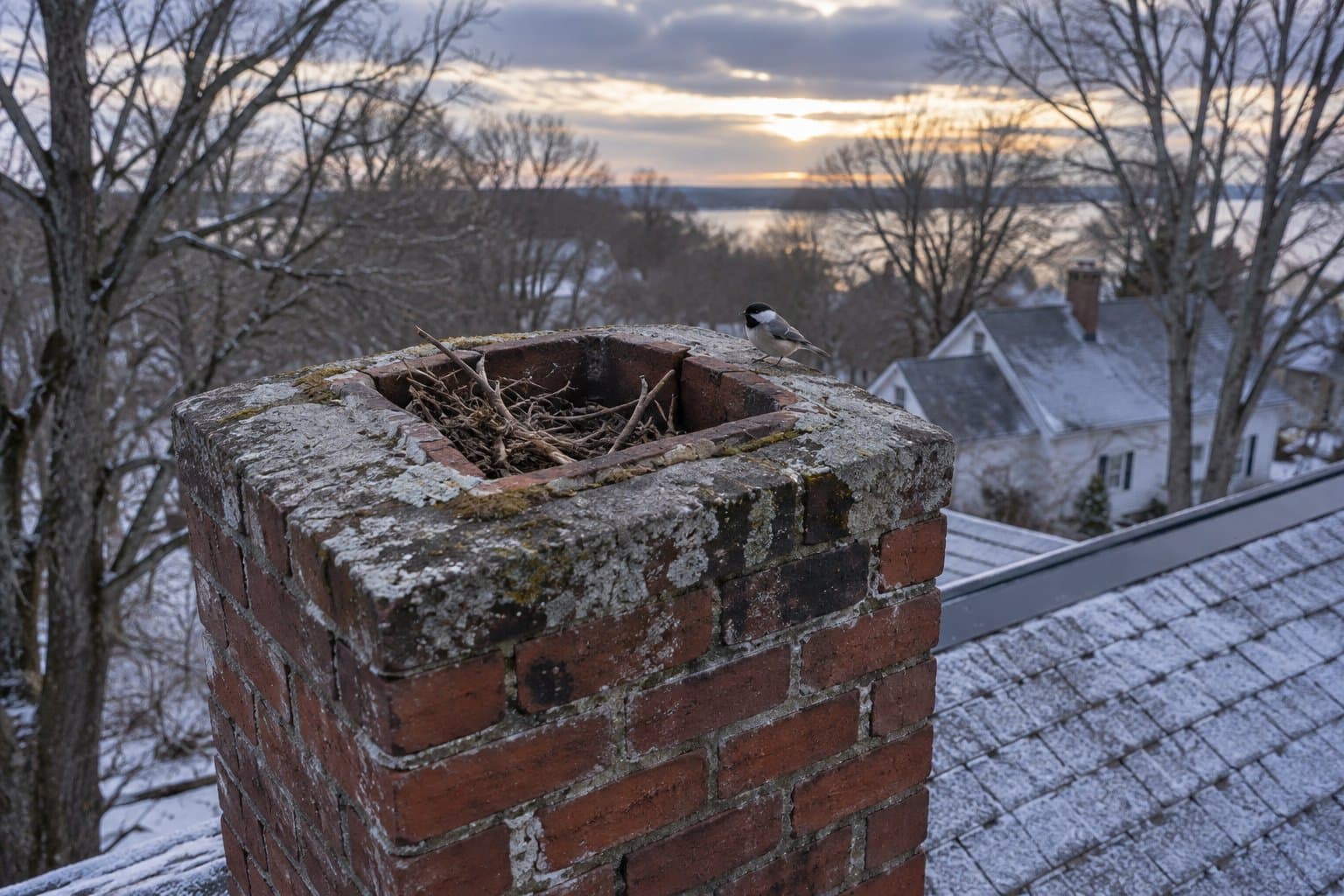
An uncapped flue is the whole cause. To a bird or a raccoon, an open chimney looks like a sheltered hollow. Illinois has a long heating season, from about October into April. After that, flues sit unused through humid summers. Winter freeze-thaw cycles also crack crowns and spall brick, which can leave more gaps for animals and water to get in.
While you wait — please don't
- Do not light a fire to drive it out. It is cruel to the animal, and burning nesting material is a common cause of chimney fires.
- Do not use the fireplace until it is checked. Nests and debris can block the flue and push smoke into the room. If smoke fills the room, or anyone has a headache, dizziness or nausea, get everyone outside and call 911.
- Do not reach in or pull the nest out yourself. Droppings and nesting material can carry disease, and you may not be able to tell what is living up there.
- Do not disturb nesting birds. In many places nesting birds are legally protected, so removal should be planned with a wildlife specialist.
What the technician does
- You call and describe the soundsCall (866) 576-7943 and say what you are hearing and when. We arrange the visit with an independent sweep or wildlife specialist. We are a referral and scheduling service, not the contractor.
- The animal is identified firstThe technician works out what is in the chimney before anything is done. The species decides how it is removed.
- Removal or humane evictionWhere the species requires it, a wildlife specialist handles removal or humane eviction. Nothing is burned and no one is rushed.
- Nest and debris come out, flue is swept and inspectedNesting material and droppings are cleared. The flue is then swept and inspected so you know what condition it is in.
- A mesh cap is fittedA properly sized cap with mesh closes the opening that caused the problem.
- You see the price before work startsThe estimate is free. The technician inspects the chimney and gives you the price first. Nothing starts until you approve it.
Why this happens in Hoffman Estates, IL
Most Hoffman Estates homes date from the 1960s through the 1990s. Many are ranches, split-levels and two-story houses, and many of the older ones have masonry fireplaces and chimneys. At 40 to 60 years old, chimneys like these are at the age where repairs are common. A missing or worn cap is one of the first things to check. If you are also planning other chimney work, the same visit can look at the crown and masonry.
Spring and summer storms, hail and strong winds hit the area, and winter brings subzero nights and repeated freeze-thaw cycles. Those swings crack and spall masonry chimneys. Spring nesting is the peak for animals in chimneys, so the cap is best fitted once the animal is out and before the next season. Masonry work is best planned for warmer months, when mortar can cure without freezing. If your home is in a townhome or HOA community, check what your association requires before any exterior work.
Questions people ask
- Why do I hear birds in my Hoffman Estates chimney in spring?
- Spring nesting is the peak, and an open flue with no cap is the whole cause. Birds treat it as a sheltered spot. A cap with mesh stops it from happening again.
- Can I just wait for the animal to leave?
- It may leave on its own, but the nest and droppings stay behind and can block the flue. Where nesting birds are involved, they may be legally protected, so removal should be planned. Call (866) 576-7943 and we will arrange a free estimate.
- Do older Hoffman Estates homes get this more often?
- Many homes here are 40 to 60 years old, and many older ones have masonry chimneys. Caps wear out or were never fitted, and freeze-thaw cycles crack crowns and brick. I can't say how often it happens, but an old, uncapped chimney is an easy way in.
- Do I need a permit to fit a cap or have the flue swept?
- Illinois permits are issued locally. Routine sweeping and basic inspection are generally not permitted work. Relining, or rebuilding above the roofline, commonly is, so ask the Hoffman Estates building department before any larger work.
- Can I use the fireplace after the animal is gone?
- Not until the debris is cleared and the flue has been swept and inspected. A leftover nest can block the flue. If smoke ever enters the room, stop using the fireplace.
One call
One call to (866) 576-7943 gets the job arranged, and the estimate is free. The technician inspects the chimney and gives you the price before any work starts, and you approve it first.
More from One Call Chimney
Nearby
Answers
Free tool
Something else in this area
- Smoke comes back into the room
- Never been swept
- Water coming in
- Smells of smoke or damp
- Cracked crown or crumbling brick
- Damper stuck or broken
- Liner damaged or missing
- Rebuild or new chimney
One Call Chimney arranges the visit; the technician does the work and gives you the price.